


ABSTRACT
Background and Aim: Meat is highly susceptible to oxidative deterioration, moisture loss, discoloration, and microbial contamination during processing, storage, and distribution, leading to reduced quality, shortened shelf-life, and increased food waste. Growing consumer demand for natural, safe, and environmentally sustainable preservation strategies has accelerated interest in edible coatings and films as alternatives to conventional synthetic preservatives and petroleum-based packaging. This review provides a comprehensive overview of recent advances in edible coatings and films for meat preservation, emphasizing biomaterial selection, functional mechanisms, technological innovations, practical applications, and remaining challenges. The reviewed literature demonstrates that protein-, polysaccharide-, and lipid-based biopolymers, either individually or as composite formulations, effectively improve meat preservation by reducing oxygen (O2) and water vapor permeability, delaying lipid oxidation, maintaining color stability, minimizing moisture loss, and suppressing the growth of spoilage and pathogenic microorganisms. Incorporation of functional additives, including natural antioxidants, antimicrobial compounds, probiotics, and nanoencapsulated bioactives, further enhances preservation efficacy while supporting the development of active packaging systems. Recent innovations, including nanocomposite formulations, smart edible films incorporating freshness indicators, and integration with complementary preservation technologies such as modified atmosphere packaging, high-pressure processing, cold plasma, and ultraviolet treatment, have further expanded the functionality and commercial potential of edible coating technologies. Nevertheless, widespread industrial adoption remains constrained by challenges related to formulation stability, mechanical performance, large-scale manufacturing, cost-effectiveness, regulatory harmonization, nanoparticle safety, consumer acceptance, and validation under commercial processing conditions. Future research should prioritize standardized evaluation protocols, optimization of multifunctional composite formulations, long-term safety assessment of nano-enabled systems, industrial scalability, and integration with intelligent packaging technologies to facilitate commercial implementation. Overall, edible coatings and films represent sustainable, multifunctional, and environmentally friendly preservation systems capable of improving meat quality, safety, and shelf-life while reducing dependence on synthetic preservatives and conventional plastic packaging. Continued technological innovation and regulatory alignment will be essential to accelerate their transition from laboratory research to routine industrial application and support the development of next-generation sustainable meat preservation systems.
Keywords: active packaging, biopolymer, edible coating, edible film, meat preservation, nanoencapsulation, shelf-life extension, smart packaging.
INTRODUCTION
Meat is a major source of high-quality animal protein and essential nutrients; however, it is highly susceptible to deterioration during processing, distribution, and storage because of physical, chemical, and microbiological factors [1]. Maintaining meat quality and safety is essential for protecting consumer health, sustaining the economic value of the meat industry, and supporting global food security [2]. Meat deterioration is primarily associated with lipid oxidation, myoglobin pigment degradation, microbial proliferation, and the subsequent loss of desirable sensory attributes, including color, texture, and flavor [3]. Lipid oxidation generates peroxides, aldehydes, and ketones that contribute to off-flavors, nutritional losses, and reduced shelf-life, whereas myoglobin oxidation diminishes the visual appeal of meat products [4]. Furthermore, contamination and proliferation of foodborne pathogens, including Listeria monocytogenes, Salmonella spp., and Escherichia coli, pose significant food safety concerns, particularly in fresh and ready-to-eat meat products [5].
Conventional preservation strategies, including refrigeration, freezing, vacuum packaging, and synthetic preservatives, are widely used to extend the shelf-life of meat products. Nevertheless, these approaches have important limitations, including concerns regarding environmental sustainability, chemical residues, packaging waste, and potential adverse effects on sensory quality [6]. Growing consumer preference for natural, safe, and environmentally sustainable foods has therefore accelerated research into edible coatings and films as promising alternatives to conventional preservation technologies [7]. These edible systems form thin protective layers or standalone wraps around meat products, acting as semipermeable barriers that reduce O2 and water vapor transmission, retard lipid oxidation, minimize moisture loss, and suppress microbial growth [8]. Moreover, edible coatings and films can serve as carriers for bioactive compounds, including antimicrobial agents, antioxidants, and probiotics, thereby functioning as active packaging systems with multiple preservation mechanisms [9].
Edible coatings and films are commonly formulated from protein-, polysaccharide-, and lipid-based biopolymers. Protein-based materials, such as gelatin, whey protein, and soy protein, generally provide excellent mechanical strength and gas barrier properties, whereas polysaccharides, including chitosan, alginate, and pectin, offer superior O2 barrier characteristics and film-forming ability. Lipid-based materials primarily contribute hydrophobic properties that reduce water vapor permeability [10, 11]. Composite formulations combining proteins, polysaccharides, and lipids can overcome the limitations of individual biopolymers, resulting in improved barrier performance, flexibility, and mechanical stability [12]. Furthermore, incorporation of functional bioactive compounds through technologies such as nanoencapsulation enhances the stability, controlled release, bioavailability, antimicrobial efficacy, and antioxidant performance of edible coating systems [13].
Recent technological advances have transformed edible coatings and films from passive barrier materials into multifunctional active and intelligent packaging systems capable of preserving meat quality while simultaneously monitoring freshness and product quality [14]. These innovations not only improve food safety and shelf-life extension but also support sustainable food production by reducing reliance on synthetic preservatives and conventional petroleum-based packaging materials, thereby meeting increasing consumer demand for environmentally responsible preservation technologies [15].
Despite considerable progress in the development of edible coatings and films, several important knowledge gaps remain. Existing reviews have predominantly focused on individual coating materials, specific bioactive compounds, or isolated preservation mechanisms, with relatively limited integration of recent advances in composite and nanocomposite formulations, smart edible packaging, nanoencapsulation technologies, and their practical application across different meat systems. Furthermore, the growing body of evidence regarding multifunctional coatings, integration with emerging preservation technologies such as modified atmosphere packaging, high-pressure processing, ultraviolet treatment, and cold plasma, as well as challenges related to industrial scalability, regulatory compliance, consumer acceptance, and commercial implementation, has not been comprehensively synthesized. Consequently, a contemporary review that critically integrates material selection, functional mechanisms, technological innovations, practical applications, evaluation methods, and future development priorities is needed to provide a comprehensive understanding of the current state of edible coating technologies for meat preservation.
This review aims to provide a comprehensive and up-to-date synthesis of edible coatings and films for meat preservation. Specifically, it discusses the classification and characteristics of edible coating materials, their functional mechanisms, applications in fresh and processed meat products, methods used to evaluate preservation efficacy, and the major technological challenges limiting industrial implementation. In addition, the review highlights recent advances in multifunctional edible coatings, nanotechnology, smart packaging systems, and integration with complementary preservation technologies while identifying current research gaps and future perspectives. By critically consolidating the available evidence, this review seeks to provide researchers, food scientists, and the meat industry with a scientific foundation for developing sustainable, safe, and effective edible coating technologies that enhance meat quality, extend shelf-life, and support next-generation active food packaging systems.
LITERATURE SEARCH AND DATA COLLECTION
This review was conducted as a structured narrative (scoping-oriented) literature synthesis to provide a comprehensive overview of edible coatings and edible films for meat preservation, encompassing biomaterial classifications, mechanisms of action, applications in fresh and processed meat products, evaluation methodologies, and current technological challenges. A systematic literature search was performed using the major scientific databases Scopus, Web of Science, PubMed, and Google Scholar, covering publications from 2015 to 2025 to capture both foundational studies and the most recent advances in the field. The search strategy employed combinations of the following keywords: edible coating, edible film, meat, poultry, processed meat, active packaging, antimicrobial, antioxidant, essential oils, biopolymers, protein, polysaccharide, lipid, composite, nanocomposite, nanoencapsulation, modified atmosphere packaging (MAP), high-pressure processing (HPP), and shelf-life.
Priority was given to peer-reviewed articles published in English to ensure inclusion of high-quality and contemporary evidence, whereas seminal earlier publications were retained when necessary to support fundamental concepts and definitions. Titles and abstracts were initially screened for relevance to edible coatings and edible films applied to meat systems, followed by full-text evaluation to confirm eligibility. Studies focusing primarily on non-meat food matrixes, lacking preservation-related outcome measures, containing duplicate datasets, or providing insufficient methodological information were excluded.
Relevant information from eligible studies was extracted and organized according to: (i) coating formulation, biopolymer type, and functional additives; (ii) target meat products and storage or processing conditions; and (iii) preservation outcomes, including chemical indicators (e.g., thiobarbituric acid reactive substances [TBARS], pH, and water-holding capacity (WHC)), microbiological parameters (e.g., total plate count (TPC) and specific foodborne pathogens), sensory characteristics, and shelf-life evaluation. The extracted evidence was synthesized comparatively to identify emerging trends, technological advantages, existing limitations, research gaps, and practical considerations related to regulatory compliance, food safety, consumer acceptance, and industrial scalability.
CONCEPT AND CLASSIFICATION OF EDIBLE COATINGS AND FILMS
Edible coatings and edible films are biopolymer based preservation technologies designed for direct application to food products, providing an additional protective layer that is safe for consumption together with the food [16, 17]. Both systems function as protective barriers that regulate mass transfer, including the diffusion of gases, water vapor, and volatile compounds, while also providing protection against mechanical damage and microbial contamination [18]. Their application in meat preservation has become increasingly important because meat is highly susceptible to lipid oxidation, discoloration, moisture loss, and microbial proliferation, all of which contribute to quality deterioration and reduced shelf-life [19].
Table 1 summarizes the principal biopolymer groups used in edible coatings and edible films, highlighting their physicochemical properties, technological functions, and preservation mechanisms in meat products [16–19].
Although edible coatings and edible films perform similar preservation functions, they differ considerably in their preparation methods and physical characteristics. Edible coatings are applied directly onto food surfaces by dipping, spraying, or brushing, thereby forming a thin, adherent protective layer [20]. In contrast, edible films are manufactured separately as free-standing sheets through casting or extrusion before being applied as wraps or incorporated into active packaging systems [21]. These differences in fabrication methods influence film thickness, mechanical strength, flexibility, and diffusion barrier properties, ultimately determining their suitability for different meat products and storage conditions [22].
| Biopolymer group | Examples | Physicochemical and mechanical properties | Technological function | Protective mechanisms in meat preservation |
|---|---|---|---|---|
| Protein-based | Gelatin, whey protein, soy protein | Flexible, high tensile strength, good adhesion, excellent film-forming ability, and dense polymeric matrix | Forms edible coatings by dipping, spraying, or brushing, and edible films by casting or extrusion that adhere uniformly to meat surfaces | Acts as an effective oxygen barrier, delays lipid oxidation, preserves myoglobin stability and meat color, and serves as a carrier matrix for antioxidants and antimicrobial compounds |
| Polysaccharide-based | Chitosan, alginate, starch, cellulose derivatives | Low oxygen permeability, strong gel-forming capacity, high transparency, good structural integrity, and moderate flexibility | Produces stable edible coatings and films suitable for refrigerated storage while regulating gas and moisture transfer | Suppresses microbial growth (particularly through the antimicrobial activity of chitosan), reduces moisture loss, delays spoilage, and extends shelf-life |
| Lipid-based | Beeswax, fatty acids, glycerol lipids | Hydrophobic, excellent water vapor barrier properties, relatively low flexibility, and semi-transparent appearance | Functions primarily as a moisture barrier, either alone or as a component of composite edible coatings and films | Minimizes moisture loss, maintains meat juiciness, reduces dehydration, and limits oxidative deterioration during storage |
Table 1. Characteristics, technological functions, and protective mechanisms of major biopolymers used in edible coatings and films for meat preservation [16–19].
| Biopolymer group | Examples | Physicochemical and mechanical properties | Technological function | Protective mechanisms in meat preservation |
|---|---|---|---|---|
| Protein-based | Gelatin, whey protein, soy protein | Flexible, high tensile strength, good adhesion, excellent film-forming ability, and dense polymeric matrix | Forms edible coatings by dipping, spraying, or brushing, and edible films by casting or extrusion that adhere uniformly to meat surfaces | Acts as an effective oxygen barrier, delays lipid oxidation, preserves myoglobin stability and meat color, and serves as a carrier matrix for antioxidants and antimicrobial compounds |
| Polysaccharide-based | Chitosan, alginate, starch, cellulose derivatives | Low oxygen permeability, strong gel-forming capacity, high transparency, good structural integrity, and moderate flexibility | Produces stable edible coatings and films suitable for refrigerated storage while regulating gas and moisture transfer | Suppresses microbial growth (particularly through the antimicrobial activity of chitosan), reduces moisture loss, delays spoilage, and extends shelf-life |
| Lipid-based | Beeswax, fatty acids, glycerol lipids | Hydrophobic, excellent water vapor barrier properties, relatively low flexibility, and semi-transparent appearance | Functions primarily as a moisture barrier, either alone or as a component of composite edible coatings and films | Minimizes moisture loss, maintains meat juiciness, reduces dehydration, and limits oxidative deterioration during storage |
Composite films = Edible films produced by combining two or more classes of biopolymers (e.g., proteins, polysaccharides, and lipids) to improve barrier, mechanical, and functional properties.
Figure 1illustrates the fundamental differences between edible coatings, which are formed directly on the meat surface by dipping, spraying, or brushing, and edible films, which are preformed separately and subsequently applied to meat products. Both systems function as protective barriers that reduce O2 and moisture transfer, retard lipid oxidation, suppress microbial growth, preserve sensory attributes, and extend the shelf-life of fresh and processed meat products.
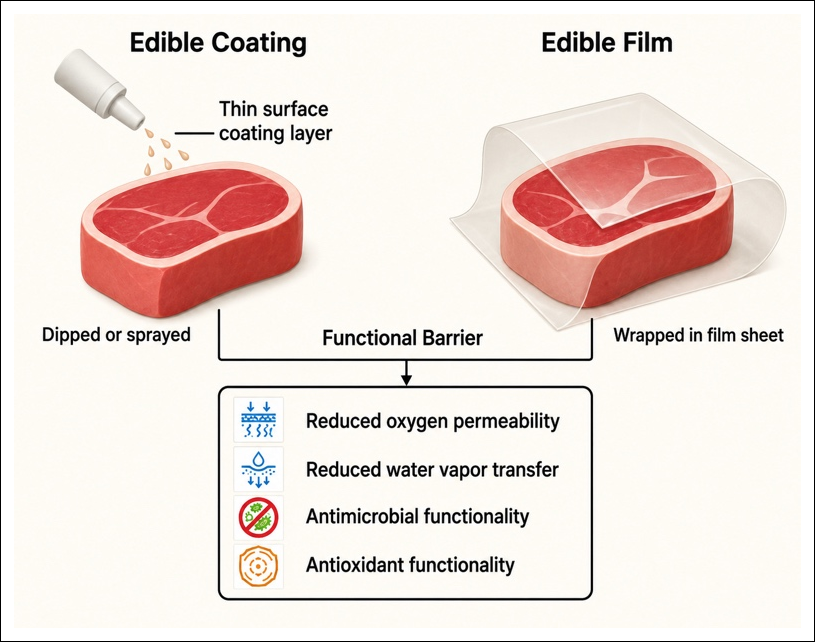
Figure 1. Conceptual overview of edible coatings and edible films used for meat preservation. [Source: Figure prepared by Bima Putra Pratama, with the assistance of ChatGPT (OpenAI, GPT-5.5) for AI-assisted figure generation and Canva for graphic design and final layout].
REGULATORY DEFINITIONS AND APPLICATION METHODS
Edible coatings and edible films are classified as food-contact materials by regulatory authorities, including the U.S. Food and Drug Administration (FDA) and the European Food Safety Authority (EFSA) [23]. The FDA recognizes edible coating materials as food additives provided they comply with established safety requirements. For example, biopolymers such as gelatin, chitosan, and alginate are generally recognized as safe for application to meat products [24]. Similarly, the EFSA evaluates the safety of edible coating materials under Regulation (EC) No. 1935/2004, which requires that food-contact materials do not pose risks to consumer health.
Edible coatings and edible films are further classified according to their application techniques, including dipping, spraying, brushing, casting, and extrusion, as well as their physical thickness [24]. Edible coatings typically form thin, uniform layers measuring approximately 5–100 μm, whereas edible films are generally thicker (0.1–1.0 mm) because they are produced as independent sheets for wrapping or incorporation into packaging systems [25]. The selected application method and film thickness directly influence the mechanical strength, barrier performance, flexibility, and overall preservation efficacy of the edible material [26].
MATERIALS USED FOR EDIBLE COATINGS AND FILMS
The effectiveness of edible coatings and edible films in meat preservation is largely determined by the selection of appropriate constituent materials [27]. These materials not only serve as the structural matrix but also influence the mechanical properties, barrier performance, and functional characteristics of the coating, including antimicrobial and antioxidant activities [28]. The use of individual biopolymers, composite formulations, and nanocomposite technologies enriched with functional additives has enabled the development of multifunctional coating systems capable of extending shelf-life while maintaining the physicochemical, microbiological, and sensory quality of meat products [29]. Figure 2categorizes the principal biopolymer groups, including protein-based, polysaccharide-based, and lipid-based materials, and highlights representative examples together with their key physicochemical characteristics and functional roles in enhancing barrier properties, mechanical stability, and preservation efficacy.

Figure 2. Major classes of biopolymers used in edible coatings and edible films for meat preservation. [Source: Figure prepared by Bima Putra Pratama, with the assistance of ChatGPT (OpenAI, GPT-5.5) for AI-assisted figure generation and Canva for graphic design and final layout].
Biopolymers
Biopolymers constitute the primary structural components of edible coatings and edible films, forming a protective matrix on the surface of meat products [30]. These materials are generally classified into three major groups: protein-based, polysaccharide-based, and lipid-based biopolymers, each possessing distinct physico-chemical properties, technological functions, and preservation mechanisms that contribute to reducing meat deterioration [31]. Selection of an appropriate biopolymer depends on the intended application, storage conditions, and desired quality attributes of the final meat product [32].
Protein-based biopolymers, including gelatin, whey protein, and soy protein, produce films with excellent mechanical properties, such as high tensile strength, flexibility, and strong adhesion to meat surfaces [33]. Protein molecules form cohesive three-dimensional networks through hydrogen bonding and covalent interactions, thereby reducing O2 permeability and delaying lipid oxidation [34]. In addition, protein-based coatings effectively encapsulate and deliver bioactive compounds, including antioxidants and antimicrobial agents, thereby enhancing their preservation efficiency [35].
Polysaccharide-based biopolymers, such as chitosan, alginate, starch, and cellulose derivatives, exhibit excellent film-forming ability, low O2 permeability, high transparency, and favorable gel-forming characteristics [36]. Chitosan possesses inherent antimicrobial activity through electrostatic interactions with negatively charged bacterial cell membranes, leading to disruption of membrane integrity and inhibition of microbial growth [37]. Furthermore, polysaccharide-based coatings remain stable under refrigerated storage conditions, making them particularly suitable for fresh and processed meat products [38].
Lipid-based biopolymers, including beeswax, fatty acids, and lipid derivatives, primarily function as hydrophobic barriers that effectively reduce water vapor transmission and moisture loss [39]. Their hydrophobic nature makes them valuable components of multilayer edible coating systems designed to preserve juiciness and minimize dehydration during storage [40]. However, lipid-based films generally exhibit lower mechanical strength and transparency than protein- and polysaccharide-based films; consequently, they are more commonly incorporated as external layers within composite formulations [41].
Combining these three classes of biopolymers through composite and nanostructured formulations produces coatings with more balanced mechanical properties and improved barrier performance that are better suited to the complex preservation requirements of meat products [42]. Nevertheless, large-scale industrial implementation requires consideration of production costs, raw material availability, manufacturing scalability, and economic feasibility. The production cost of protein- and polysaccharide-based coatings may be reduced by utilizing agricultural and food-processing by-products as renewable raw materials. In addition, the potential allergenicity associated with ingredients such as whey protein and soy protein necessitates appropriate labeling to ensure consumer safety [43].
Biodegradability is another important characteristic of biopolymer based coatings that supports environ-mental sustainability. Although these materials provide environmentally friendly alternatives to conventional synthetic packaging, further investigation into degradation kinetics, recycling potential, and industrial processing is needed to facilitate their commercial application. Overall, biopolymer based edible coatings and films represent sustainable preservation systems capable of extending shelf-life, improving food safety, and maintaining the sensory quality of meat products.
Composite and nanocomposite films
Recent advances in edible coating technology have increasingly focused on composite and nanocomposite formulations to improve mechanical properties, gas barrier performance, and structural stability [44]. Composite systems combine two or more polymers, such as protein-polysaccharide, polysaccharide-lipid, or protein-lipid formulations, to compensate for the limitations of individual materials [45]. For example, combining proteins with polysaccharides enhances tensile strength while reducing O2 permeability, whereas incorporation of lipid components effectively decreases water vapor transmission [46]. These synergistic interactions produce films with balanced barrier characteristics that better preserve the physicochemical and sensory quality of meat during storage [47].
Nanocomposite technology further enhances edible film performance through incorporation of nano-structured materials, including nanochitosan, nanoclay, lipid nanoemulsions, and naturally derived nanoparticles [48]. These nanomaterials strengthen the polymer matrix while improving antimicrobial activity, antioxidant stability, mechanical properties, and thermal resistance [49]. Nanochitosan exhibits enhanced antimicrobial activity because of its greater ability to interact with and penetrate microbial cell membranes, whereas plant-derived nanoparticles containing bioactive compounds effectively reduce lipid oxidation and protein degradation during refrigerated storage [50]. Similarly, essential oil nanoemulsions improve the solubility, stability, and controlled release of antimicrobial and antioxidant compounds within the polymer matrix, thereby providing simultaneous protection against oxidative deterioration and microbial spoilage [51, 52]. The incorporation of nanoclay also enhances O2 and water vapor barrier properties by increasing the tortuosity of diffusion pathways within the polymer network [53].
Safety and regulatory considerations of nanocomposites: Despite their technological advantages, nano-composite edible films present several safety and regulatory challenges that require careful consideration. One major concern is the potential migration of nanoparticles from packaging materials into meat products, which may present toxicological risks if migration exceeds acceptable safety limits. Although currently available evidence indicates that certain nanomaterials, such as nanochitosan, exhibit favorable safety profiles, comprehensive long-term toxicological evaluations remain limited [54]. Consequently, rigorous regulatory assessment is essential to ensure that nanomaterials used in food applications comply with established safety standards developed by regulatory authorities, including the FDA and EFSA [55].
Consumer acceptance also represents an important challenge for commercialization. Public concerns regarding the safety of nano-enabled food packaging, together with the absence of harmonized international regulations governing nanomaterials in foods, continue to limit widespread adoption. Nevertheless, when supported by comprehensive safety assessments, transparent regulatory frameworks, and effective public education, nanocomposite technologies offer substantial benefits for extending shelf-life, reducing food spoilage, and improving food safety.
Functional additives
Functional additives play an essential role in enhancing the performance of edible coatings and edible films by transforming passive barrier systems into active preservation technologies capable of minimizing oxidative deterioration and microbial contamination [54]. Common functional additives include antimicrobial agents, antioxidants, plasticizers, and emulsifiers, all of which improve the physicochemical stability and functional performance of edible films during storage [55]. The selection of these additives depends on the characteristics of the biopolymer matrix, storage conditions, and the intended quality attributes of the final meat product [56].
Antimicrobial additives commonly incorporated into edible coatings include essential oils, plant extracts, and probiotics [57]. Essential oils derived from thyme, oregano, and rosemary contain bioactive constituents such as carvacrol and thymol that disrupt bacterial cell membranes, impair cytoplasmic integrity, and inhibit essential microbial enzymes [58]. Likewise, plant extracts rich in flavonoids and phenolic compounds exert antimicrobial effects through metal ion chelation and disruption of cellular transport processes [59]. Probiotics incorporated into edible coatings suppress pathogenic microorganisms through competitive exclusion and production of bacteriocins, thereby creating unfavorable conditions for spoilage microorganisms [60].
Natural antioxidants, including vitamin E, polyphenols, and plant-derived extracts, are incorporated to inhibit lipid oxidation and protein degradation, the principal causes of undesirable changes in meat color, flavor, texture, and nutritional quality during storage [61]. These compounds function by scavenging free radicals, chelating pro-oxidant metal ions, and stabilizing lipid membranes [62]. For example, catechins and ascorbic acid delay oxidative rancidity while preserving the desirable red color of meat by inhibiting the conversion of oxymyoglobin to metmyoglobin [63].
Plasticizers and emulsifiers are equally important in optimizing film properties. Plasticizers such as glycerol and sorbitol improve flexibility while reducing brittleness by decreasing intermolecular interactions within the polymer matrix [64]. Emulsifiers, including lecithin and Tween 80, promote homogeneous dispersion of hydrophobic compounds, particularly essential oils, thereby improving film uniformity and stability [65, 66].
The concentration of functional additives must be carefully optimized to balance preservation efficacy with sensory acceptability. Essential oils are typically incorporated at concentrations ranging from 0.5% to 5%, depending on their antimicrobial potency and intended application [67]. Similarly, probiotics are generally incorporated at concentrations ranging from 106 to 109 CFU/cm², depending on the microbial strain and desired functionality [68]. Excessive concentrations of essential oils or other highly active compounds may adversely affect the flavor and aroma of meat products. These undesirable sensory effects can be minimized through nanoencap-sulation, which provides controlled release of bioactive compounds while maintaining their antimicrobial and antioxidant activities throughout storage [69, 70].
FUNCTIONAL PROPERTIES OF EDIBLE COATINGS AND FILMS
Edible coatings and edible films function not only as physical protective layers but also as active preservation systems that improve the safety, stability, and quality of meat products. Their functional performance is primarily determined by their barrier properties, antimicrobial and antioxidant activities, and mechanical and structural characteristics, all of which contribute to extending shelf-life while maintaining the physicochemical, micro-biological, and sensory quality of fresh and processed meat products. Figure 3summarizes the principal technological functions of edible coatings and films, including inhibition of lipid oxidation, reduction of microbial contamination, regulation of moisture and gas transfer, preservation of color and texture, maintenance of sensory quality, and extension of shelf-life through improved physicochemical and microbiological stability.
Barrier properties
Barrier properties are among the most important functional characteristics of edible coatings and edible films because they regulate the transfer of gases and water vapor between the meat surface and the surrounding environment. Effective control of O₂ and carbon dioxide (CO₂) permeability is essential for minimizing lipid oxidation, maintaining myoglobin stability, and limiting microbial proliferation during storage [71]. Films with low O2 permeability reduce free radical formation and inhibit the oxidation of oxymyoglobin to metmyoglobin, thereby preserving the desirable bright red color of fresh meat [72]. Likewise, controlled CO₂ permeability helps maintain conditions that suppress spoilage microorganisms while supporting a balanced microbial ecosystem on the meat surface [73].
Resistance to water vapor transmission is equally important because it minimizes moisture loss and preserves the texture, tenderness, and juiciness of meat products [74]. Lipid-based coatings, together with protein-lipid and polysaccharide-lipid composite systems, exhibit excellent resistance to water vapor migration, making them particularly suitable for refrigerated storage [75]. In contrast, hydrophilic biopolymers such as proteins and polysaccharides provide excellent O2 barrier properties but generally require hydrophobic modifications to improve resistance to moisture transfer [76]. The barrier performance of edible films is further influenced by polymer density, crystallinity, pore structure, and intermolecular interactions. Modern composite and nanocomposite formulations enhance these characteristics by increasing diffusion tortuosity, thereby creating more complex pathways that reduce the movement of gases and water vapor through the polymer matrix [77, 78].

Figure 3. Functional properties and preservation mechanisms of edible coatings and edible films applied to meat products. [Source: Figure prepared by Bima Putra Pratama with the assistance of ChatGPT (OpenAI, GPT-5.5) for AI-assisted figure generation and Canva for graphic design and final layout].
Antimicrobial activity
The incorporation of antimicrobial agents into edible coatings and edible films represents an effective strategy for extending the shelf-life of meat products by suppressing pathogenic and spoilage microorganisms, including L. monocytogenes, Staphylococcus aureus, Salmonella spp., and psychrotrophic bacteria [79, 80]. In addition to functioning as physical barriers, these systems act as active delivery platforms that gradually release antimicrobial compounds during storage, thereby providing prolonged microbial inhibition [81].
The antimicrobial mechanisms depend on the chemical characteristics of the incorporated bioactive compounds and their interactions with microbial cells [82]. Phenolic constituents present in essential oils disrupt microbial cell membranes, increase membrane permeability, induce oxidative stress, and ultimately cause cell death [83, 84]. Chitosan possesses intrinsic antimicrobial activity through electrostatic interactions between its positively charged amino groups and negatively charged microbial cell surfaces, resulting in membrane disruption, leakage of intracellular components, and inhibition of protein synthesis [85].
The antimicrobial effectiveness of edible coatings also depends on whether the incorporated compounds exert bacteriostatic or bactericidal effects [86]. Bacteriostatic agents inhibit microbial growth without directly killing microorganisms, whereas bactericidal agents actively destroy microbial cells [87, 88]. Distinguishing between these mechanisms is important for selecting appropriate antimicrobial systems for different meat products and storage conditions [89]. In addition, increasing attention has been directed toward preventing biofilm formation on meat surfaces because microbial biofilms substantially increase resistance to conventional antimicrobial treatments [90, 91]. Controlled release technologies, particularly nanoencapsulation, further enhance antimicrobial performance by maintaining sustained release of bioactive compounds throughout storage, thereby ensuring prolonged protection against microbial contamination [92].
Antioxidant function
Lipid oxidation and myoglobin oxidation are the principal biochemical processes responsible for deterioration of meat quality during storage, particularly under aerobic conditions [93]. Lipid oxidation produces aldehydes, ketones, and other secondary oxidation products that contribute to rancidity, off-flavors, nutritional losses, and reduced consumer acceptability [94]. Simultaneously, oxidation of myoglobin converts oxymyoglobin into metmyoglobin, resulting in undesirable discoloration from bright red to brown and reducing the visual appeal of fresh meat [95]. Edible coatings and edible films enriched with natural antioxidants effectively delay both oxidative processes, thereby extending shelf-life and preserving product quality [96].
Natural antioxidants, including plant polyphenols, essential oils, and vitamin E, protect meat through multiple mechanisms, including scavenging free radicals, neutralizing reactive O2 species (ROS), and chelating transition metal ions such as Fe²⁺ and Cu²⁺ that catalyze lipid oxidation reactions [97, 98]. Certain antioxidants exhibit greater affinity for lipid-rich environments, providing enhanced protection against intramuscular lipid oxidation and cellular membrane degradation [99, 100].
Synthetic antioxidants, including butylated hydroxytoluene (BHT) and butylated hydroxyanisole (BHA), have traditionally been used to control oxidative deterioration in meat products; however, increasing consumer preference for naturally derived ingredients has encouraged the development of edible coatings containing plant-derived antioxidants [101]. Natural compounds, such as rosemary extract and catechins, have demonstrated comparable effectiveness in preserving meat color, delaying rancidity, and maintaining overall product quality while addressing consumer concerns regarding synthetic food additives [102, 103].
Mechanical and structural properties
The mechanical and structural characteristics of edible coatings and edible films are fundamental determinants of their protective performance during meat processing, handling, transportation, and storage [104, 105]. Mechanical properties commonly evaluated include tensile strength, elongation at break, and film thickness, which collectively determine the ability of the film to withstand external stress while maintaining flexibility and providing a continuous protective barrier over the meat surface [106, 107]. Protein-based films, particularly those prepared from gelatin and whey protein, generally exhibit superior tensile strength because of extensive hydrogen bonding and strong intermolecular interactions within the polymer network [108, 109].
Film elasticity is particularly important for coating meat products with irregular or deformable surfaces because it enables the coating to stretch without cracking during handling and storage [110, 111]. Plasticizers such as glycerol and sorbitol improve flexibility by reducing intermolecular forces within the polymer matrix, thereby decreasing brittleness and increasing elongation capacity [112, 113]. Composite formulations combining hydrophilic and hydrophobic biopolymers further optimize the balance between tensile strength and elasticity, producing films that exhibit both structural integrity and sufficient flexibility for practical application [114].
Film thickness is another critical factor influencing barrier performance and overall preservation efficacy [115]. Although thicker films generally provide superior resistance to O2 and water vapor transmission, excessive thickness may adversely affect the appearance, texture, and overall sensory acceptability of meat products [116]. Therefore, optimization of film thickness is essential to achieve an appropriate balance between effective barrier protection and desirable sensory characteristics, thereby maximizing the commercial applicability of edible coatings and edible films for meat preservation [117].
APPLICATIONS IN MEAT AND MEAT PRODUCTS
Edible coatings and edible films have emerged as innovative preservation technologies for fresh and processed meat products because of their ability to extend shelf-life, preserve sensory attributes, and improve microbiological safety [118]. These systems have been successfully applied to a wide range of meat products, including beef, poultry, goat meat, pork, sausages, nuggets, and smoked meats, while also serving as functional components of active packaging systems that provide multiple preservation benefits [119].
Applications in fresh meat
The application of edible coatings and edible films to fresh meat, including beef, poultry, goat meat, and pork, has gained considerable attention as a sustainable and environmentally friendly preservation strategy [120]. These coatings form a thin protective barrier on the meat surface that slows O2 diffusion, minimizes moisture loss, and inhibits the growth of spoilage microorganisms [121]. Consequently, edible coatings help maintain the physicochemical, microbiological, nutritional, and sensory quality of meat during refrigerated storage while reducing dependence on synthetic preservatives [122].
Table 2 summarizes the application of edible coatings and edible films to different fresh meat products, including the coating materials, incorporated bioactive compounds, and their effects on chemical stability, microbiological quality, sensory attributes, and shelf-life [123–133].
| Meat type | Edible coating/film material | Bioactive compound(s)/Additive(s) | Effects on meat quality and shelf-life | References |
|---|---|---|---|---|
| Beef | Protein-based coatings and films (gelatin and whey protein) and chitosan | Plant-derived antioxidants (rosemary extract, green tea extract, and oregano essential oil) | Inhibits lipid oxidation and myoglobin degradation, maintains the desirable bright red color, reduces TBARS values, and suppresses the growth of Pseudomonas spp. | [123–125] |
| Poultry | Alginate-based edible coatings containing essential oil nanoemulsions | Thyme essential oil and basil essential oil | Delays lipid oxidation, inhibits Campylobacter spp. and Salmonella spp., and enhances the distribution and penetration of bioactive compounds on the meat surface | [126–128] |
| Lamb/Goat | Chitosan- and pectin-based edible coatings | Polyphenols (quercetin) | Reduces moisture loss, delays lipid oxidation, preserves color and sensory quality, and minimizes the development of characteristic goaty odor | [129–131] |
| Pork | Polysaccharide- and protein-based edible coatings and films | Natural antioxidants (tocopherols and fruit peel extracts), bacteriocins, and probiotics | Delays lipid oxidation and off-flavor development, suppresses the growth of Listeria monocytogenes, and extends refrigerated shelf-life | [132, 133] |
Table 2. Applications of edible coatings and films for preserving the quality and extending the shelf-life of fresh meat.
| Meat type | Edible coating/film material | Bioactive compound(s)/Additive(s) | Effects on meat quality and shelf-life | References |
|---|---|---|---|---|
| Beef | Protein-based coatings and films (gelatin and whey protein) and chitosan | Plant-derived antioxidants (rosemary extract, green tea extract, and oregano essential oil) | Inhibits lipid oxidation and myoglobin degradation, maintains the desirable bright red color, reduces TBARS values, and suppresses the growth of Pseudomonas spp. | [123–125] |
| Poultry | Alginate-based edible coatings containing essential oil nanoemulsions | Thyme essential oil and basil essential oil | Delays lipid oxidation, inhibits Campylobacter spp. and Salmonella spp., and enhances the distribution and penetration of bioactive compounds on the meat surface | [126–128] |
| Lamb/Goat | Chitosan- and pectin-based edible coatings | Polyphenols (quercetin) | Reduces moisture loss, delays lipid oxidation, preserves color and sensory quality, and minimizes the development of characteristic goaty odor | [129–131] |
| Pork | Polysaccharide- and protein-based edible coatings and films | Natural antioxidants (tocopherols and fruit peel extracts), bacteriocins, and probiotics | Delays lipid oxidation and off-flavor development, suppresses the growth of Listeria monocytogenes, and extends refrigerated shelf-life | [132, 133] |
TBARS = Thiobarbituric acid reactive substances. Scientific names are italicized according to taxonomic conventions.
In beef, protein-based films prepared from gelatin or whey protein and enriched with natural antioxidants such as rosemary extract, green tea extract, or oregano essential oil have consistently demonstrated excellent antioxidant activity by suppressing lipid oxidation and delaying myoglobin degradation [123]. These formulations effectively preserve the characteristic bright red color of fresh beef while significantly reducing TBARS during refrigerated storage [124]. Chitosan-based coatings have also demonstrated strong antimicrobial activity against Pseudomonas spp., one of the principal spoilage microorganisms responsible for quality deterioration in fresh beef [125].
Poultry meat is particularly susceptible to oxidative deterioration because of its high content of unsaturated fatty acids and elevated metabolic activity [126]. Polysaccharide-based coatings, particularly alginate combined with thyme or basil essential oils, effectively retard lipid oxidation while reducing populations of Campylobacter spp. and Salmonella spp., two major foodborne pathogens associated with poultry products [127]. Furthermore, nanoemulsified essential oils improve the stability of edible coatings and enhance the penetration and controlled release of bioactive compounds on the meat surface, thereby increasing antimicrobial and antioxidant effectiveness [128].
Goat meat possesses unique lipid and protein compositions that influence oxidative stability and the development of characteristic flavor during storage [129]. Chitosan- and pectin-based coatings effectively reduce moisture loss and lipid oxidation, while incorporation of natural polyphenols such as quercetin improves color stability and preserves desirable flavor characteristics [130]. These coatings also reduce the formation of volatile ketone compounds responsible for the characteristic goaty odor that develops during storage [131].
In pork, edible coatings formulated from protein- or polysaccharide-based biopolymers and enriched with natural antioxidants such as tocopherols and fruit peel extracts effectively inhibit lipid oxidation, thereby minimizing rancidity and undesirable flavor changes [132]. In addition, chitosan coatings containing bacteriocins or probiotics suppress the growth of L. monocytogenes, contributing to prolonged refrigerated shelf-life and improved microbiological safety [133].
Applications in processed meat products
Edible coatings and edible films have been increasingly incorporated into processed meat products, including sausages, nuggets, bacon, and smoked meats, as effective preservation systems that enhance food safety, maintain product quality, and prolong shelf-life [134]. These edible layers, produced from natural biopolymers such as proteins, polysaccharides, and lipids, provide additional protection against oxidative, microbiological, and physical deterioration while maintaining desirable product characteristics [68].
Table 3 summarizes the application of edible coatings and edible films in processed meat products, including coating materials, incorporated bioactive compounds, and their effects on oxidative stability, textural properties, microbiological quality, and storage stability [135–145].
| Processed meat product | Edible coating/film material | Bioactive compound(s)/Additive(s) | Effects on product quality and shelf-life | References |
|---|---|---|---|---|
| Sausage | Protein-based coatings and films (gelatin and whey protein) and chitosan | Rosemary extract, tocopherol, probiotics, and bacteriocins | Enhances oxidative stability, reduces fat coalescence and lipid rancidity, preserves color and flavor, and inhibits the growth of Lactobacillus spp. and Listeria monocytogenes | [135–137] |
| Nugget | Polysaccharide-based coatings and films (alginate and starch) containing essential oil nanoemulsions | Oregano essential oil and thyme essential oil | Controls oil migration, reduces drip loss, improves texture and moisture retention, inhibits Staphylococcus aureus and Escherichia coli, and decreases oil uptake during frying, thereby lowering fat content | [138–141] |
| Smoked meat | Protein-based coatings and films (fish protein) and chitosan | Polyphenols (catechin and quercetin) and protective cultures | Enhances surface antioxidant capacity, inhibits xerotolerant microorganisms and pathogens such as Listeria spp., improves moisture retention, and prevents case hardening during storage | [142–145] |
Table 3. Applications of edible coatings and films for preserving the quality and extending the shelf-life of processed meat products.
| Processed meat product | Edible coating/film material | Bioactive compound(s)/Additive(s) | Effects on product quality and shelf-life | References |
|---|---|---|---|---|
| Sausage | Protein-based coatings and films (gelatin and whey protein) and chitosan | Rosemary extract, tocopherol, probiotics, and bacteriocins | Enhances oxidative stability, reduces fat coalescence and lipid rancidity, preserves color and flavor, and inhibits the growth of Lactobacillus spp. and Listeria monocytogenes | [135–137] |
| Nugget | Polysaccharide-based coatings and films (alginate and starch) containing essential oil nanoemulsions | Oregano essential oil and thyme essential oil | Controls oil migration, reduces drip loss, improves texture and moisture retention, inhibits Staphylococcus aureus and Escherichia coli, and decreases oil uptake during frying, thereby lowering fat content | [138–141] |
| Smoked meat | Protein-based coatings and films (fish protein) and chitosan | Polyphenols (catechin and quercetin) and protective cultures | Enhances surface antioxidant capacity, inhibits xerotolerant microorganisms and pathogens such as Listeria spp., improves moisture retention, and prevents case hardening during storage | [142–145] |
TBARS = Thiobarbituric acid reactive substances (where applicable). Scientific names are italicized according to taxonomic conventions.
In sausages, which contain complex protein-fat emulsion systems, edible coatings based on milk proteins or chitosan improve oxidative stability while reducing lipid separation during refrigerated storage [135]. The incorporation of natural antioxidants such as rosemary extract and tocopherols effectively delays lipid oxidation, thereby minimizing discoloration, flavor deterioration, and formation of undesirable volatile compounds [136]. Moreover, coatings containing probiotics or bacteriocins inhibit the growth of Lactobacillus spp. and L. monocytogenes, providing additional protection for ready-to-eat sausage products that are susceptible to post-processing contamination [137].
In nuggets, edible coatings improve product stability by reducing oil migration and preserving structural integrity during frozen storage [138]. Alginate- and starch-based coatings form stable matrixes that reduce drip loss and minimize structural damage associated with repeated freezing and thawing cycles [139]. Incorporation of nanoemulsified oregano or thyme essential oils further enhances antimicrobial activity against S. aureus and E. coli without adversely affecting sensory quality during chilled or frozen storage [140]. In addition, edible coatings reduce oil absorption during deep-fat frying, resulting in products with improved nutritional quality and lower fat content [141].
Smoked meat products are particularly susceptible to oxidative deterioration because of their relatively high lipid content and exposure to elevated temperatures during smoking [142]. Fish protein- and chitosan-based films enriched with natural polyphenols such as catechin and quercetin significantly enhance antioxidant activity while suppressing the growth of microorganisms that tolerate low-moisture environments [143]. Edible coatings can also function as carriers of protective microbial cultures that produce natural antimicrobial compounds, thereby providing additional protection against Listeria spp., one of the most important pathogens associated with ready-to-eat smoked meat products [144]. Furthermore, hydrophilic coatings help retain internal moisture and reduce case hardening in certain smoked and cured meat products [145].
Integration into active packaging systems
The integration of edible coatings and edible films into active packaging systems represents a significant advancement in meat preservation technology by enhancing microbiological stability, oxidative resistance, and sensory quality throughout storage [17]. Unlike conventional passive packaging, active edible packaging interacts dynamically with the packaged product through controlled release of antimicrobial agents, antioxidants, and compounds that regulate moisture and gas exchange, thereby actively preserving meat quality [146].
Active edible packaging systems are commonly produced from polysaccharides such as chitosan, alginate, and pectin, as well as proteins including gelatin, whey protein, and soy protein. These biopolymers serve as matrixes for controlled release of bioactive compounds, providing prolonged protection against lipid oxidation and microbial contamination [147]. Incorporation of essential oils such as oregano, thyme, and rosemary, nanoemulsified phenolic compounds, and bacteriocins such as nisin has demonstrated selective antimicrobial activity against L. monocytogenes, Salmonella spp., and Pseudomonas spp. while preserving the sensory quality of meat products [148].
This technology also enables the development of multilayer packaging systems consisting of an inner edible layer containing functional bioactive compounds and an outer layer that provides additional mechanical protection [149]. Furthermore, intelligent edible packaging incorporating pH-sensitive indicators or anthocyanin-based colorimetric sensors enables real-time monitoring of meat freshness and early detection of spoilage, providing valuable information for both consumers and the meat industry [150].
Despite these technological advances, widespread industrial implementation remains constrained by several challenges, including maintaining bioactive compound stability during thermal processing, achieving compatibility with conventional packaging materials, complying with food safety regulations, and improving consumer acceptance of edible bioactive ingredients [111]. Continued advances in nanoencapsulation, composite biopolymer engineering, and moisture- or pH-responsive controlled release systems are expected to address many of these limitations and facilitate the broader commercial application of edible active packaging for meat preservation [151].
EVALUATION METHODS FOR COATING EFFECTIVENESS
Evaluation of the effectiveness of edible coatings and edible films is essential for determining their ability to preserve meat quality, extend shelf-life, and improve food safety. Comprehensive assessment includes chemical, microbiological, sensory, and shelf-life evaluations, which collectively provide a reliable measure of coating performance under different storage conditions [152]. These complementary analytical approaches enable assessment of the capacity of edible coatings to reduce lipid oxidation, suppress microbial growth, preserve physicochemical characteristics, and maintain consumer acceptability throughout storage [28].
Table 4 summarizes the principal analytical methods used to evaluate the effectiveness of edible coatings and edible films applied to meat products, including chemical, microbiological, sensory, and shelf-life assessment parameters [22, 24, 152–163].
Chemical evaluation
Chemical analyses are widely employed to assess changes in the physicochemical integrity of meat during storage [153]. Measurement of TBARS is one of the most commonly used indicators of lipid oxidation because oxidative degradation of unsaturated fatty acids produces aldehydes, ketones, and other secondary oxidation products responsible for rancidity and quality deterioration [154]. Monitoring pH provides valuable information regarding microbial activity, protein stability, and postmortem biochemical changes, with substantial pH alterations often indicating microbial proliferation or deterioration of meat quality [155].
WHC is another important quality parameter because it reflects the ability of meat to retain its intrinsic moisture during storage and processing, directly influencing texture, juiciness, yield, and consumer acceptability [156]. Effective edible coatings are expected to maintain WHC by minimizing drip loss, reducing moisture migration, and preserving the structural integrity of muscle proteins throughout storage [22].
Microbiological evaluation
Microbiological assessment is fundamental for determining the effectiveness of edible coatings in controlling spoilage microorganisms and foodborne pathogens [10]. TPC is routinely used to estimate the overall aerobic microbial population on the meat surface, whereas enumeration of specific microorganisms, including lactic acid bacteria and pathogenic bacteria such as L. monocytogenes, Salmonella spp., and E. coli, provides a more comprehensive assessment of microbiological quality and food safety [157].
Edible coatings incorporating antimicrobial compounds, including chitosan, essential oils, bacteriocins, and other natural bioactive agents, are generally expected to significantly reduce microbial populations compared with uncoated control samples [158]. Sustained antimicrobial activity achieved through controlled release systems further enhances microbiological stability during prolonged storage.
Sensory evaluation
Sensory evaluation is indispensable for determining consumer acceptance of edible coating technologies because preservation strategies must maintain desirable organoleptic properties while extending shelf-life [159]. Sensory assessment is commonly performed by trained panels and consumer groups using standardized evaluation protocols that assess color, aroma, texture, flavor, and overall acceptability.
Maintenance of the characteristic bright red color indicates successful preservation of myoglobin stability, whereas retention of desirable aroma and flavor reflects effective inhibition of lipid oxidation and microbial spoilage [160]. Texture evaluation is equally important because edible coatings should not adversely affect tenderness, surface appearance, adhesiveness, or mouthfeel [161]. An ideal edible coating preserves sensory quality while remaining imperceptible to consumers.
| Evaluation category | Parameter/Method | Purpose | Indicators assessed | References |
|---|---|---|---|---|
| Chemical | TBARS | Evaluate the extent of lipid oxidation | Quantifies secondary lipid oxidation products (primarily aldehydes), indicates oxidative rancidity, and assesses oxidative stability, particularly in lipid-rich meat products | [152–154] |
| pH | Assess biochemical stability and microbial activity | Reflects postmortem biochemical changes and microbial metabolism; deviations indicate spoilage progression and reduced product stability | [152, 155] | |
| WHC | Evaluate the ability of meat to retain water | Determines moisture retention, texture, juiciness, cooking yield, and drip loss during storage and processing | [22, 152, 156] | |
| Microbiological | TPC | Assess the total aerobic microbial population | Provides an overall estimate of microbial load and serves as an early indicator of microbial spoilage | [152, 157] |
| Specific microbial analysis | Detect spoilage and foodborne pathogenic microorganisms | Evaluates antimicrobial efficacy against target microorganisms, including Lactobacillus spp., Listeria monocytogenes, Salmonella spp., and Escherichia coli | [152, 157, 158] | |
| Sensory | Trained sensory panel and consumer evaluation | Assess organoleptic quality and consumer acceptability | Evaluates appearance, color, aroma, texture, flavor, and overall acceptability; detects off-flavor development and color deterioration during storage | [152, 159–161] |
| Shelf-life assessment | Periodic quality evaluation during storage | Determine the effectiveness of edible coatings and films under practical storage conditions | Monitors changes in chemical, microbiological, physical, and sensory quality at predetermined storage intervals to estimate shelf-life under refrigeration, freezing, or MAP | [24, 152, 162, 163] |
Table 4. Methods used to evaluate the effectiveness of edible coatings and films for meat preservation
| Evaluation category | Parameter/Method | Purpose | Indicators assessed | References |
|---|---|---|---|---|
| Chemical | TBARS | Evaluate the extent of lipid oxidation | Quantifies secondary lipid oxidation products (primarily aldehydes), indicates oxidative rancidity, and assesses oxidative stability, particularly in lipid-rich meat products | [152–154] |
| pH | Assess biochemical stability and microbial activity | Reflects postmortem biochemical changes and microbial metabolism; deviations indicate spoilage progression and reduced product stability | [152, 155] | |
| WHC | Evaluate the ability of meat to retain water | Determines moisture retention, texture, juiciness, cooking yield, and drip loss during storage and processing | [22, 152, 156] | |
| Microbiological | TPC | Assess the total aerobic microbial population | Provides an overall estimate of microbial load and serves as an early indicator of microbial spoilage | [152, 157] |
| Specific microbial analysis | Detect spoilage and foodborne pathogenic microorganisms | Evaluates antimicrobial efficacy against target microorganisms, including Lactobacillus spp., Listeria monocytogenes, Salmonella spp., and Escherichia coli | [152, 157, 158] | |
| Sensory | Trained sensory panel and consumer evaluation | Assess organoleptic quality and consumer acceptability | Evaluates appearance, color, aroma, texture, flavor, and overall acceptability; detects off-flavor development and color deterioration during storage | [152, 159–161] |
| Shelf-life assessment | Periodic quality evaluation during storage | Determine the effectiveness of edible coatings and films under practical storage conditions | Monitors changes in chemical, microbiological, physical, and sensory quality at predetermined storage intervals to estimate shelf-life under refrigeration, freezing, or MAP | [24, 152, 162, 163] |
MAP = Modified atmosphere packaging; TBARS = Thiobarbituric acid reactive substances; TPC = Total plate count; WHC = Water-holding capacity. Scientific names are italicized according to taxonomic conventions.
Shelf-life evaluation
Shelf-life studies provide comprehensive information regarding the practical effectiveness of edible coatings under commercial storage conditions [24]. Coated meat products are periodically evaluated throughout storage using chemical, microbiological, and sensory analyses under refrigerated, frozen, or MAP conditions [162]. Monitoring these quality parameters over time enables accurate determination of the ability of edible coatings to preserve product quality, maintain microbiological safety, and delay spoilage.
The integration of chemical, microbiological, and sensory findings provides a comprehensive assessment of preservation performance and facilitates estimation of the commercial shelf-life of coated meat products under realistic storage conditions [163]. These evaluations also provide valuable information for optimizing coating formulations and supporting their industrial implementation in modern meat preservation systems.
TECHNOLOGICAL CHALLENGES AND LIMITATIONS
Despite the considerable potential of edible coatings and edible films to extend shelf-life while preserving the quality and safety of meat products, several technological, regulatory, economic, and consumer-related challenges continue to limit their widespread commercial application [9]. Addressing these limitations is essential for successful industrial implementation and long-term adoption of this preservation technology.
Stability of coating materials and bioactive compounds
One of the major challenges is maintaining the chemical and physical stability of both the polymer matrix and incorporated bioactive compounds throughout production, storage, and application [120]. Antimicrobial and antioxidant agents may gradually lose their activity because of exposure to heat, light, O2, or interactions with meat constituents such as proteins and lipids [164]. Consequently, reductions in bioactive stability may compromise the long-term effectiveness of edible coatings during storage.
Protein- and polysaccharide-based coatings are also highly sensitive to environmental moisture. Excessive moisture absorption may alter viscosity, induce swelling or cracking, reduce mechanical strength, and impair barrier performance, ultimately decreasing their protective efficacy [165]. Therefore, improving the structural stability of hydrophilic biopolymers remains a major research priority for commercial applications.
Safety and biodegradability considerations
Edible coatings and edible films must provide effective preservation while remaining safe for human consumption and environmentally sustainable. Although their biodegradability represents a significant environ-mental advantage over conventional petroleum-based packaging materials, rapid biodegradation may compromise coating integrity before the intended shelf-life of the product has been achieved [166]. Consequently, coating formulations must achieve an appropriate balance between biodegradability and functional durability.
Safety evaluation is particularly important when edible coatings incorporate functional ingredients such as nanoparticles, essential oils, or concentrated phenolic extracts. These compounds require comprehensive assessment of potential toxicity, migration into food, and interactions with meat components to ensure compliance with food safety regulations while avoiding undesirable effects on product quality or consumer health [167, 168].
Industrial scalability and economic feasibility
Although numerous laboratory-scale studies have demonstrated the effectiveness of edible coatings and edible films, translating these technologies to industrial production remains challenging. Large-scale manufac-turing requires optimization of formulation, mixing, casting, drying, coating application, and packaging processes to ensure consistent product quality while maintaining production efficiency [169].
Economic feasibility is another important consideration. High-quality biopolymers, natural bioactive compounds, and advanced technologies such as nanoencapsulation, nanoemulsification, and controlled release systems can substantially increase manufacturing costs, potentially limiting commercial competitiveness [170]. Furthermore, implementation within existing meat processing facilities often requires modification of production lines, specialized coating equipment, and process validation, thereby increasing initial capital investment and operational complexity [119].
Consumer acceptance and regulatory compliance
Successful commercialization depends not only on technological performance but also on consumer acceptance and market willingness to pay for products containing edible coatings [171]. Consumer perception may be influenced by concerns regarding edible packaging materials, natural bioactive compounds, and particularly nanotechnology-based ingredients. Transparent labeling, effective risk communication, and consumer education will therefore be important for improving market acceptance.
Regulatory approval remains another major challenge. Commercial application requires compliance with national and international food safety regulations governing food additives, edible packaging materials, labeling requirements, migration limits, and product quality standards. Regulatory agencies such as the U.S. FDA, the EFSA, and the Indonesian Food and Drug Authority (BPOM) require comprehensive evidence demonstrating the safety of edible coating components, their interactions with food matrixes, migration behavior, and potential effects on sensory quality before commercial approval can be granted [172–174]. Failure to satisfy these regulatory requirements may significantly delay or prevent market adoption.
Environmental sustainability
Environmental sustainability is an increasingly important consideration when evaluating edible coating technologies. Although biopolymer-based coatings have considerable potential to reduce dependence on petroleum-based plastics, comprehensive life cycle assessment (LCA) studies are required to objectively compare their environmental performance with conventional packaging systems. Such assessments should evaluate carbon footprint, energy consumption, resource utilization, waste generation, biodegradability, and overall environmental sustainability throughout the product life cycle [175]. These evaluations will provide critical information regarding the true environmental benefits and commercial sustainability of edible coatings and edible films for future meat packaging applications.
FUTURE PROSPECTS
Edible coatings and edible films have demonstrated considerable potential as sustainable preservation technologies for meat products. Nevertheless, continued technological innovation is required to further improve their functionality, commercial feasibility, and industrial applicability. Current research is primarily focused on three emerging areas: nanoencapsulation, smart edible films, and integration with complementary preservation technologies [9, 11].
Nanoencapsulation technologies
Nanoencapsulation has emerged as one of the most promising strategies for improving the stability, bioavailability, and controlled release of bioactive compounds incorporated into edible coatings and edible films [175]. This technology involves encapsulating antimicrobial and antioxidant compounds, including essential oils, polyphenols, vitamins, and other functional ingredients, within nanoscale delivery systems that are compatible with the polymer matrix [14]. The exploration of new natural bioactive compounds is also expanding to marine and plant-derived resources. For example, extracts of the sea cucumber Holothuria edulis have demonstrated strong antioxidant activity, indicating the broader potential of marine-derived compounds as functional ingredients for future food preservation systems [176]. Similarly, capsaicin has been reported to exhibit antioxidant and antimicrobial activities, although its incorporation into edible coating systems requires further evaluation regarding effective concentration, sensory compatibility, and safety [177].
Application of nanoencapsulation in fresh and processed meat products enables sustained release of bioactive compounds throughout storage, thereby prolonging antimicrobial and antioxidant activity while minimizing undesirable sensory effects associated with high concentrations of free bioactive compounds [178]. In addition to improving controlled release, nanoparticles increase the compactness of the polymer network, enhancing O2 and water vapor barrier properties through increased diffusion tortuosity. Consequently, nanoencapsulated edible coatings provide improved protection against lipid oxidation, moisture loss, and microbial deterioration [15].
Smart edible films
Smart edible films represent an emerging generation of intelligent packaging capable of simultaneously preserving meat quality and monitoring product freshness [179]. These systems incorporate responsive compounds that undergo visible changes, such as color variation, in response to alterations in pH, accumulation of microbial metabolites, or formation of oxidation products during storage [180].
By providing real-time information regarding product quality and safety, smart edible films improve supply chain monitoring, facilitate quality control, and reduce the risk of consumers purchasing or consuming deteriorated meat products [181]. Furthermore, integration of freshness indicators into edible films enables simultaneous preservation and quality monitoring without compromising barrier performance or the activity of incorporated antimicrobial and antioxidant compounds [182]. In the meat industry, the increasing use of Internet of Things-based sensors, rapid detection methods, and blockchain-supported traceability within food safety management systems further illustrates the potential for integrating smart films with digital monitoring and HACCP-based control strategies [183].
Integration with emerging preservation technologies
Combining edible coatings and edible films with other advanced preservation technologies offers significant opportunities to achieve synergistic preservation effects through multiple complementary mechanisms [184]. Integration with technologies such as HPP, MAP, ultraviolet-C (UV-C) irradiation, and cold plasma treatment has demonstrated considerable potential for improving microbiological safety while maintaining desirable physicochemical and sensory characteristics.
For example, edible coatings containing antimicrobial compounds combined with HPP or cold plasma treatment can substantially reduce microbial populations without adversely affecting meat quality [185]. Similarly, combining edible films with MAP enables more effective regulation of O2 and CO2 concentrations, thereby reducing microbial growth, delaying lipid oxidation, and extending product shelf-life while maintaining food safety [186]. Such hurdle-based preservation strategies provide more robust protection than individual preservation methods alone and are expected to become increasingly important for both fresh and processed meat products [187].
Technology readiness and future research directions
Although these emerging technologies have demonstrated promising laboratory-scale performance, additional research is required before widespread industrial implementation can be achieved. Nanoencapsulation systems, smart edible films, and integrated preservation technologies are currently considered to be at intermediate stages of technological development, generally corresponding to Technology Readiness Levels (TRLs) 4-6, indicating that further pilot-scale validation and industrial demonstration are required before commercial deployment [187].
Future research should therefore focus on improving manufacturing scalability, reducing production costs, optimizing long-term stability, and validating performance under commercial processing and distribution conditions. Comprehensive economic analyses, standardized industrial production protocols, and large-scale field studies will be essential to demonstrate commercial feasibility.
Equally important are harmonized regulatory frameworks governing the use of edible coating materials, bioactive compounds, and nanotechnology in food packaging. Greater international alignment among regulatory authorities, including the U.S. FDA and the EFSA, would facilitate product approval, international trade, and broader commercial adoption. In parallel, consumer education and transparent communication regarding the safety and environmental benefits of edible coatings will be critical for improving public acceptance. Addressing these scientific, technological, regulatory, and socioeconomic challenges will accelerate the transition of edible coatings and edible films from promising research innovations to commercially viable, sustainable preservation technologies for the global meat industry.
CONCLUSION
ECs and EFs have emerged as promising, sustainable preservation technologies that effectively improve the quality, safety, and shelf-life of fresh and processed meat products. The evidence synthesized in this review demonstrates that protein-, polysaccharide-, and lipid-based biopolymers provide complementary barrier functions against O2 and water vapor while serving as efficient carriers for antimicrobial and antioxidant compounds. Composite and nanocomposite formulations further enhance mechanical strength, barrier performance, and controlled release of bioactive agents, thereby reducing lipid oxidation, suppressing microbial proliferation, preserving desirable color and texture, and maintaining the overall sensory quality of meat during storage. Recent advances in nanoencapsulation, smart EFs, and the integration of ECs and EFs with MAP, HPP, UV-C treatment, and cold plasma have further expanded their functionality and commercial potential.
From a practical perspective, ECs and EFs offer the meat industry environmentally sustainable alternatives to synthetic preservatives and petroleum-based packaging materials. Their application can extend product shelf-life, reduce postharvest losses, improve food safety, preserve nutritional and sensory quality, and support increasing consumer demand for clean-label and environmentally responsible meat products. Furthermore, their integration into active and intelligent packaging systems provides opportunities for real-time quality monitoring, improved inventory management, and more efficient meat distribution throughout the supply chain.
A major strength of this review is its comprehensive synthesis of recent advances in EC and EF technologies, integrating current knowledge on biopolymer materials, composite and nanocomposite formulations, functional additives, preservation mechanisms, practical applications, evaluation methods, technological challenges, regulatory considerations, and emerging innovations. By critically consolidating evidence from recent studies, this review provides an updated scientific framework that may assist researchers, food scientists, and the meat industry in developing and implementing effective preservation strategies.
Despite these advances, several limitations remain. Most available studies have been conducted under laboratory or pilot-scale conditions, with relatively limited validation under commercial processing, packaging, transportation, and retail environments. Considerable variability in coating formulations, evaluation metho-dologies, storage conditions, and meat types also limits direct comparison among studies. In addition, challenges associated with industrial scalability, production costs, long-term stability of bioactive compounds, regulatory approval, nanoparticle safety, and consumer acceptance continue to constrain large-scale commercialization.
Future research should prioritize the development of standardized EC and EF formulations and harmonized evaluation protocols, together with large-scale industrial validation studies under commercial production conditions. Further investigations should focus on improving manufacturing scalability, reducing production costs, optimizing controlled release systems, and conducting comprehensive safety assessments of nanomaterials. Additional studies addressing LCA, regulatory harmonization among authorities such as the FDA and EFSA, and consumer acceptance will be essential to facilitate commercialization. Integration of ECs and EFs with smart packaging technologies, intelligent sensing systems, and emerging nonthermal preservation technologies is expected to further improve preservation efficiency and accelerate industrial adoption.
In conclusion, ECs and EFs represent scientifically sound and environmentally sustainable preservation technologies with substantial potential to transform modern meat preservation. Continued interdisciplinary research integrating food science, material engineering, nanotechnology, and packaging innovation will facilitate the transition of these technologies from laboratory research to commercial practice. Successfully addressing the remaining technological, economic, regulatory, and consumer-related challenges will enable ECs and EFs to become integral components of next-generation sustainable meat preservation systems, contributing to improved food safety, reduced environmental impact, and enhanced resilience of the global meat industry.
DATA AVAILABILITY
No new data were generated or analyzed in this review article. All information supporting the findings of this article is derived from the published literature cited in the manuscript.
GENERATIVE AI DECLARATION
The authors used generative artificial intelligence (ChatGPT, OpenAI, GPT-5.5) to assist with language editing and the preparation of selected figures, while Canva was used for graphic design and figure layout. All AI-assisted content was critically reviewed, revised, and verified by the authors. The literature search, selection of relevant studies, synthesis of evidence, interpretation of findings, and formulation of conclusions were conducted by the authors, who assume full responsibility for the accuracy, originality, and integrity of the article. No artificial intelligence tool was credited as an author.
AUTHORS’ CONTRIBUTIONS
BPP, ARK, MHE, and WT: Conceptualization, literature review, manuscript drafting, and original draft preparation. SSP, DAAK, and IFM: Manuscript review, editing, and critical revision for important intellectual content. BB, DAP, and SR: Literature acquisition, manuscript preparation, and critical review. ENU, IBM, BWKW, and EF: Figure preparation, reference management, visualization, and manuscript editing. All authors read and approved the final version of the manuscript.
COMPETING INTERESTS
The authors declare that they have no competing interests.
PUBLISHER’S NOTE
Veterinary World remains neutral with regard to jurisdictional claims in the published institutional affiliations.
ACKNOWLEDGMENTS
The authors sincerely thank all co-authors for their valuable collaboration, constructive discussions, and contributions to the preparation of this review, as well as Universitas Airlangga for its material and non-material support. This work was financially supported by the National Research and Innovation Agency (BRIN) and the Indonesia Endowment Fund for Education (LPDP) through the RIIM Program – Competitive Wave 7 (Decree No. 61/II.7/HK/2024), and the Rumah Program ORPP BRIN TA 2026. The funding agencies had no role in the conceptualization, literature collection, data interpretation, manuscript preparation, or decision to submit the manuscript for publication.
REFERENCES
- Zhu Y, Zhu J, Shi X, Fan M. Effects of freezing, frozen storage and thawing on the water status, quality, nutrition and digestibility of meat: a review. Food Sci Nutr 2025;13(8):e70774. [Google Scholar]
- Prates JAM. Improving meat quality, safety and sustainability in monogastric livestock with algae feed additives. Foods 2025;14(6):1007. [Google Scholar]
- Olvera-Aguirre G, Piñeiro-Vázquez AT, Sanginés-García JR, Zárate AS, Ochoa-Flores AA, Segura-Campos MR. Using plant-based compounds as preservatives for meat products: a review. Heliyon 2023;9(6):e17071. [Google Scholar]
- Dragoev SG. Lipid peroxidation in muscle foods: impact on quality, safety and human health. Foods 2024;13(5):797. [Google Scholar]
- Donkor ES, Sosah FK, Odoom A, Odai BT, Kunadu AP. How long do microorganisms survive and persist in food? A systematic review. Microorganisms 2025;13(4):901. [Google Scholar]
- Kamau PG, Cruz-Romero MC, Alzate PC, Morris MA, Kerry JP. Active packaging containing natural antimicrobials as a potential and innovative technology to extend shelf-life of fish products – a review. Food Packag Shelf-Life 2025;49:101500. [Google Scholar]
- Jurić M, Bandić LM, Carullo D, Jurić S. Technological advancements in edible coatings: emerging trends and applications in sustainable food preservation. Food Biosci 2024;58:103835. [Google Scholar]
- Bremenkamp I, Gallagher MJS. Edible coatings for ready-to-eat products: critical review of recent studies, sustainable packaging perspectives, challenges and emerging trends. Polymers 2025;17(3):376. [Google Scholar]
- Karnwal A, Kumar G, Singh R, Selvaraj M, Malik T, Al-Tawaha ARM. Natural biopolymers in edible coatings: applications in food preservation. Food Chem X 2025;25:102171. [Google Scholar]
- Silva SPM, Teixeira JA, Silva CCG. Recent advances in the use of edible films and coatings with probiotic and bacteriocin-producing lactic acid bacteria. Food Biosci 2023;56:103196. [Google Scholar]
- Devi LS, Jaiswal AK, Jaiswal S. Lipid incorporated biopolymer based edible films and coatings in food packaging: a review. Curr Res Food Sci 2024;8:100720. [Google Scholar]
- Li X, Li F, Zhang X, Tang W, Huang M, Huang Q. Interaction mechanisms of edible film ingredients and their effects on food quality. Curr Res Food Sci 2024;8:100696. [Google Scholar]
- Li S, Ren Y, Hou Y, Zhan Q, Jin P, Zheng Y. Polysaccharide-based composite films: promising biodegradable food packaging materials. Foods 2024;13(22):3674. [Google Scholar]
- Rezagholizade-Shirvan A, Soltani M, Shokri S, Radfar R, Arab M, Shamloo E. Bioactive compound encapsulation: characteristics, applications in food systems, and implications for human health. Food Chem X 2024;24:101953. [Google Scholar]
- Kumar A, Kumar A, Wei S, Chopra S, Rudra SG, Rabbani A. Biodegradable and smart packaging films for food quality and safety: a review. Appl Food Res 2025;5(2):101491. [Google Scholar]
- Dittoe DK, O'Bryan CA, Legako JF, Olson EG, Ricke SC. Developments and advances in materials for meats: active packaging, edible coatings, and smart packaging. Meat Muscle Biol 2025;9(1):20112. [Google Scholar]
- Usman I, Sana S, Jaffar HM, Munir M, Afzal A, Sukhera S. Recent progress in edible films and coatings: toward green and sustainable food packaging technologies. Appl Food Res 2025;5(2):101070. [Google Scholar]
- Perez-Vázquez A, Barciela P, Carpena M, Prieto MA. Edible coatings as a natural packaging system to improve fruit and vegetable shelf-life and quality. Foods 2023;12(19):3570. [Google Scholar]
- Moura-Alves M, Esteves A, Ciríaco M, Silva JA, Saraiva C. Antimicrobial and antioxidant edible films and coatings in the shelf-life improvement of chicken meat. Foods 2023;12(12):2308. [Google Scholar]
- Matloob A, Ayub H, Mohsin M, Ambreen S, Khan FA, Oranab S. A review on edible coatings and films: advances, composition, production methods, and safety concerns. ACS Omega 2023;8(32):28932-28944. [Google Scholar]
- Prakoso FAH, Indiarto R, Utama GL. Edible film casting techniques and materials and their utilization for meat based product packaging. Polymers 2023;15(13):2800. [Google Scholar]
- Mariño-Cortegoso S, Lestido-Cardama A, Sendón R, de Quirós ARB, Barbosa-Pereira L. The state of the art and innovations in active and edible coatings and films for functional food applications. Polymers 2025;17(18):2472. [Google Scholar]
- Oliveira I, Pinto T, Afonso S, Karaś M, Szymanowska U, Gonçalves B. Sustainability in bio-based edible films, coatings, and packaging for small fruits. Appl Sci 2025;15(3):1462. [Google Scholar]
- Vargas-Ramella M, Echegaray N, Campagnol PCB, Lorenzo JM. Natural polymer-based coatings for animal-derived products: a review of applications, functionality, characterization, and challenges. Foods 2025;14(13):2255. [Google Scholar]
- Kumar L, Ramakanth D, Akhila K, Gaikwad KK. Edible films and coatings for food packaging applications: a review. Environ Chem Lett 2022;20(1):875-900. [Google Scholar]
- Matar GH, Andac M. Recent advances in sustainable biopolymer films incorporating vanillin for enhanced food preservation and packaging. Polym Bull 2025;82(1):2751-2777. [Google Scholar]
- Song DH, Hoa VB, Kim HW, Khang SM, Cho SH, Ham JS. Edible films on meat and meat products. Coatings 2021;11(11):1344. [Google Scholar]
- Kurek M, Pišonić P, Ščetar M, Janči T, Čanak I, Filipec SV. Edible coatings for fish preservation: literature data on storage temperature, product requirements, antioxidant activity, and coating performance – a review. Antioxidants 2024;13(11):1417. [Google Scholar]
- Vanaraj R, Kumar SMS, Mayakrishnan G, Rathinam B, Kim SC. A current trend in efficient biopolymer coatings for edible fruits to enhance shelf-life. Polymers 2024;16(18):2639. [Google Scholar]
- Arshad MT, Naveed F, Rasheed A, Ikram A, Maqsood S, Hossain MS. Biopolymer based edible films and coatings: toward eco-friendly and safe food packaging. Int J Food Sci Technol 2025;60(2):vvaf213. [Google Scholar]
- Cazón P, Mateus AR, Silva AS. Advances in active packaging using natural biopolymers and fruit by-products for enhanced food preservation. Food Res Int 2025;213:116439. [Google Scholar]
- Baranwal J, Barse B, Fais A, Delogu GL, Kumar A. Biopolymer: a sustainable material for food and medical applications. Polymers 2022;14(5):983. [Google Scholar]
- Chen H, Wang J, Cheng Y, Wang C, Liu H, Bian H. Application of protein-based films and coatings for food packaging: a review. Polymers 2019;11(12):2039. [Google Scholar]
- Zubair M, Mujahid M, Shahzad S, Rauf Z, Hussain A, Ayyash M. Exploring protein-based films and coatings for active food packaging applications: a comprehensive review. Int J Biol Macromol 2025;320(Pt 3):146070. [Google Scholar]
- Khin MN, Ahammed S, Kamal MM, Saqib MN, Liu F, Zhong F. Investigating next-generation edible packaging: protein-based films and coatings for delivering active compounds. Food Hydrocolloids Health 2024;6:100182. [Google Scholar]
- Pillai ARS, Eapen AS, Zhang W, Roy S. Polysaccharide-based edible biopolymer based coatings for fruit preservation: a review. Foods 2024;13(10):1529. [Google Scholar]
- Kiskó G. Natural control of foodborne pathogens using chitosan. Microorganisms 2025;13(9):2036. [Google Scholar]
- Xue H, Feng J, Zhang K, Wang Y, Liao X, Tan J. Insights into the preparation, properties, application in food of polysaccharide-based edible films and coatings: an updated overview. Curr Res Food Sci 2025;11:101123. [Google Scholar]
- Milani JM, Nemati A. Lipid-based edible films and coatings: a review of recent advances and applications. J Packag Technol Res 2022;6(1):11-22. [Google Scholar]
- Pires AF, Díaz O, Cobos A, Pereira CD. A review of recent developments in edible films and coatings – focus on whey-based materials. Foods 2024;13(16):2638. [Google Scholar]
- Dhumal CV, Sarkar P. Composite edible films and coatings from food-grade biopolymers. J Food Sci Technol 2018;55(11):4369-4383. [Google Scholar]
- Ghanbarzadeh B, Oleyaei SA, Almasi H. Nanostructured materials utilized in biopolymer based plastics for food packaging applications. Crit Rev Food Sci Nutr 2015;55(12):1699-1723. [Google Scholar]
- Alemu TT, Intipunya P, Gebeyo BA. A comprehensive review of edible coatings for postharvest management of fruits and vegetables: enhancing food and nutrition security. Discover Agric 2025;3(1):190. [Google Scholar]
- Basumatary IB, Mukherjee A, Katiyar V, Kumar S. Biopolymer based nanocomposite films and coatings: recent advances in shelf-life improvement of fruits and vegetables. Crit Rev Food Sci Nutr 2022;62(7):1912-1935. [Google Scholar]
- Bealer EJ, Onissema-Karimu S, Rivera-Galletti A, Francis M, Wilkowski J, Salas-de la Cruz D. Protein-polysaccharide composite materials: fabrication and applications. Polymers 2020;12(2):464. [Google Scholar]
- Zhu Y, Zhu Y, Yang J, Wang Y, Tan C. Stabilization of high internal phase emulsions by combination of polysaccharide and protein: synergistic efficiency, mechanism, and application. Int J Biol Macromol 2025;310(Pt 4):143544. [Google Scholar]
- Mohamad N, Mazlan MM, Tawakkal ISMA, Talib RA, Kian LK, Fouad H. Development of active agents filled polylactic acid films for food packaging application. Int J Biol Macromol 2020;163:1451-1457. [Google Scholar]
- Peng B, Qi X, Qiao L, Lu J, Qian Z, Wu C. Nanocomposite-enabled next-generation food packaging: a comprehensive review on advanced preparation methods, functional properties, preservation applications, and safety considerations. Foods 2025;14(21):3688. [Google Scholar]
- Gupta A, Patel P, Shah S, Patel K. Nanocomposites in focus: tailoring drug delivery for enhanced therapeutic outcomes. Future J Pharm Sci 2025;11(1):37. [Google Scholar]
- Moadab FR, Azizkhani M. The effect of chitosan edible coating containing nanoemulsion of Eryngium campestre essential oil on the quality of ostrich meat during storage in refrigerator. Food Sci Nutr 2025;13(5):e70237. [Google Scholar]
- Bolgen UMG, Kayiran SD, Ozogul Y, Ozogul F. Essential oil-based nanoemulsions with current knowledge: formulation, characterization, and applications in food and pharmaceuticals. Ind Crops Prod 2025;233:121411. [Google Scholar]
- Kaur G, Panigrahi C, Agarwal S, Khuntia A, Sahoo M. Recent trends and advancements in nanoemulsions: production methods, functional properties, applications in food sector, safety and toxicological effects. Food Phys 2024;1:100024. [Google Scholar]
- Dumont MJ, Reyna-Valencia A, Emond JP, Bousmina M. Barrier properties of polypropylene/organoclay nanocomposites. J Appl Polym Sci 2007;103(1):618-625. [Google Scholar]
- Pham TT, Nguyen LLP, Dam MS, Baranyai L. Application of edible coating in extension of fruit shelf-life: review. AgriEngineering 2023;5(1):520-536. [Google Scholar]
- Quirós-Sauceda AE, Ayala-Zavala JF, Olivas GI, González-Aguilar GA. Edible coatings as encapsulating matrixes for bioactive compounds: a review. J Food Sci Technol 2014;51(9):1674-1685. [Google Scholar]
- Revutskaya N, Polishchuk E, Kozyrev I, Fedulova L, Krylova V, Pchelkina V. Application of natural functional additives for improving bioactivity and structure of biopolymer based films for food packaging: a review. Polymers 2024;16(14):1976. [Google Scholar]
- Chawla R, Sivakumar S, Kaur H. Antimicrobial edible films in food packaging: current scenario and recent nanotechnological advancements – a review. Carbohydr Polym Technol Appl 2021;2:100024. [Google Scholar]
- Knežević SV, Knežević S, Milanov D, Vranešević J, Pajić M, Kocić-Tanackov S. Essential oils as a novel anti-biofilm strategy against Salmonella Enteritidis isolated from chicken meat. Microorganisms 2025;13(10):2412. [Google Scholar]
- Takó M, Kerekes EB, Zambrano C, Kotogán A, Papp T, Krisch J. Plant phenolics and phenolic-enriched extracts as antimicrobial agents against food-contaminating microorganisms. Antioxidants 2020;9(2):165. [Google Scholar]
- Todorov SD, Popov I, Weeks R, Chikindas ML. Use of bacteriocins and bacteriocinogenic beneficial organisms in food products: benefits, challenges, concerns. Foods 2022;11(19):3145. [Google Scholar]
- Kumar AV, Hasan M, Mangaraj S, Pravitha M, Verma DK, Srivastav PP. Trends in edible packaging films and its prospective future in food: a review. Appl Food Res 2022;2(1):100118. [Google Scholar]
- Altanam SY, Darwish N, Bakillah A. Exploring the interplay of antioxidants, inflammation, and oxidative stress: mechanisms, therapeutic potential, and clinical implications. Diseases 2025;13(9):309. [Google Scholar]
- Castillo C, Pereira V, Abuelo A, Hernández J. Effect of supplementation with antioxidants on the quality of bovine milk and meat production. Sci World J 2013;2013:616098. [Google Scholar]
- Athanasopoulou E, Maurizzi E, Bigi F, Quartieri A, Pulvirenti A, Tsironi T. Comparative effect of different plasticizers on physicochemical properties of hydroxypropyl methyl cellulose (HPMC)-based films appropriate for gilthead seabream packaging. Carbohydr Polym Technol Appl 2025;10:100839. [Google Scholar]
- Karnwal A, Rauf A, Jassim AY, Selvaraj M, Al-Tawaha ARMS, Kashyap P. Advanced starch-based films for food packaging: innovations in sustainability and functional properties. Food Chem X 2025;29:102662. [Google Scholar]
- Blount RJS, Ferdaus MJ, da Silva RC. Influence of water content and emulsifiers on the stability and texture of oleogel-emulsions. Appl Food Res 2025;5(1):100796. [Google Scholar]
- Krishnan RR, Olasupo AD, Patel KH, Bolarinwa IF, Oke MO, Okafor C. Edible biopolymers with functional additives coatings for postharvest quality preservation in horticultural crops: a review. Front Sustain Food Syst 2025;9:1569458. [Google Scholar]
- Díaz-Montes E, Castro-Muñoz R. Edible films and coatings as food quality preservers: an overview. Foods 2021;10(2):249. [Google Scholar]
- Falguera V, Quintero JP, Jiménez A, Muñoz JA. Edible films and coatings: structures, active functions and trends in their use. Trends Food Sci Technol 2011;22(6):292-303. [Google Scholar]
- Moradinezhad F, Adiba A, Ranjbar A, Dorostkar M. Edible coatings to prolong the shelf-life and improve the quality of subtropical fresh/fresh-cut fruits: a review. Horticulturae 2025;11(6):577. [Google Scholar]
- Solinho J, Santos J, Vázquez M, Pinheiro R. Comparative study of preservation techniques for refrigerated Atlantic bonito fillets: effects of modified atmosphere packaging, vacuum packaging, and alginate coating on shelf-life and quality. Food Packag Shelf-Life 2025;50:101556. [Google Scholar]
- Sahraee S, Milani JM, Regenstein JM, Kafil HS. Protection of foods against oxidative deterioration using edible films and coatings: a review. Food Biosci 2019;32:100451. [Google Scholar]
- Sai-Ut S, Indriani S, Srisakultiew N, Kingwascharapong P, Suriyarak S, Issara U. The role of CO₂ levels in high-oxygen modified atmosphere packaging on microbial communities of chilled goat meat during storage and their relationship with quality attributes. Foods 2025;14(11):1837. [Google Scholar]
- Yadav V, Pal D, Gaba VK. Recently implemented edible coatings for extending the shelf-life of foods: a technological enhancement perspective. Sustain Chem One World 2025;8:100127. [Google Scholar]
- Zhang R, Wang W, Zhang H, Dai Y, Dong H, Hou H. Effects of hydrophobic agents on the physicochemical properties of edible agar/maltodextrin films. Food Hydrocoll 2019;88:283-290. [Google Scholar]
- Sudheer S, Bandyopadhyay S, Bhat R. Sustainable polysaccharide and protein hydrogel-based packaging materials for food products: a review. Int J Biol Macromol 2023;248:125845. [Google Scholar]
- Al-Harrasi A, Bhtaia S, Al-Azri MS, Makeen HA, Albratty M, Alhazmi HA. Development and characterization of chitosan and porphyran based composite edible films containing ginger essential oil. Polymers 2022;14(9):1782. [Google Scholar]
- Manzoor A, Khan T, Lone AH, Haque A, Banat F. Bioactive alginate and carrageenan nanocomposite packaging: a review of recent insights on fabrication techniques, applications and environmental concerns. Carbohydr Polym Technol Appl 2025;12:101011. [Google Scholar]
- Sirbu EE, Dinita A, Tănase M, Portoacă AI, Bondarev A, Enascuta CE. Influence of plasticizers concentration on thermal, mechanical, and physicochemical properties on starch films. Processes 2024;12(9):2021. [Google Scholar]
- Sánchez-Ortega I, García-Almendárez BE, Santos-López EM, Amaro-Reyes A, Barboza-Corona JE, Regalado C. Antimicrobial edible films and coatings for meat and meat products preservation. Sci World J 2014;2014:248935. [Google Scholar]
- Fu Y, Dudley EG. Antimicrobial-coated films as food packaging: a review. Compr Rev Food Sci Food Saf 2021;20(4):1-34. [Google Scholar]
- Muñoz-Tebar N, Pérez-Álvarez JA, Fernández-López J, Viuda-Martos M. Chitosan edible films and coatings with added bioactive compounds: antibacterial and antioxidant properties and their application to food products: a review. Polymers 2023;15(2):396. [Google Scholar]
- Dembińska K, Shinde AH, Pejchalová M, Richert A, Brzezinska MS. The application of natural phenolic substances as antimicrobial agents in agriculture and food industry. Foods 2025;14(11):1893. [Google Scholar]
- Kang H, Kim B. Bioactive compounds as inhibitors of inflammation, oxidative stress and metabolic dysfunctions via regulation of cellular redox balance and histone acetylation state. Foods 2023;12(5):925. [Google Scholar]
- Ke CL, Deng FS, Chuang CY, Lin CH. Antimicrobial actions and applications of chitosan. Polymers 2021;13(6):904. [Google Scholar]
- El-Saadony MT, Saad AM, Sitohy M, Alkafaas SS, Dladla M, Ghosh S. Chitosan nanoparticles: green synthesis, biological activities, and sustainable frontiers in targeted drug delivery and cancer nanomedicine – a comprehensive review. Mater Today Bio 2025;35:102358. [Google Scholar]
- Darbandi A, Asadi A, Ari MM, Ohadi E, Talebi M, Zadeh MH. Bacteriocins: properties and potential use as antimicrobials. J Clin Lab Anal 2022;36(1):e24093. [Google Scholar]
- Bangar SP, Chaudhary V, Thakur N, Kajla P, Kumar M, Trif M. Natural antimicrobials as additives for edible food packaging applications: a review. Foods 2021;10(10):2282. [Google Scholar]
- Zheng K, Li B, Liu Y, Wu D, Bai Y, Xiang Q. Effect of chitosan coating incorporated with oregano essential oil on microbial inactivation and quality properties of refrigerated chicken breasts. LWT 2023;176:114547. [Google Scholar]
- Mansour HA, Abdelrahman HA, Zayed NER, Abdel-Naeem HHS. The effects of novel alginate-lauric arginate coatings with temperature on bacterial quality, oxidative stability, and organoleptic characteristics of frozen stored chicken drumsticks. Int J Biol Macromol 2023;239:124242. [Google Scholar]
- Gómez I, Janardhanan R, Ibañez FC, Beriain MJ. The effects of processing and preservation technologies on meat quality: sensory and nutritional aspects. Foods 2020;9(10):1416. [Google Scholar]
- Szpicer A, Bińkowska W, Stelmasiak A, Wojtasik-Kalinowska I, Czajkowska A, Mierzejewska S. Innovative microencapsulation techniques of bioactive compounds: impact on physicochemical and sensory properties of food products and industrial applications. Appl Sci 2025;15(22):11908. [Google Scholar]
- Huang X, Ahn DU. Lipid oxidation and its implications to meat quality and human health. Food Sci Biotechnol 2019;28(5):1275-1285. [Google Scholar]
- Wang D, Xiao H, Lyu X, Chen H, Wei F. Lipid oxidation in food science and nutritional health: a comprehensive review. Oil Crop Sci 2023;8(1):35-44. [Google Scholar]
- Henriott ML, Herrera NJ, Ribeiro FA, Hart KB, Bland NA, Calkins CR. Impact of myoglobin oxygenation level on color stability of frozen beef steaks. J Anim Sci 2020;98(7):skaa193. [Google Scholar]
- Antonino C, Difonzo G, Faccia M, Caponio F. Effect of edible coatings and films enriched with plant extracts and essential oils on the preservation of animal-derived foods. J Food Sci 2024;89(2):748-772. [Google Scholar]
- Sani IK, Hassani B, Rasul NH, Mansouri E, Eghbaljoo H, Kaveh M. Antioxidant packaging films: application for sustainable food protection. Curr Res Food Sci 2025;11:101222. [Google Scholar]
- Losada-Barreiro S, Sezgin-Bayindir Z, Paiva-Martins F, Bravo-Díaz C. Biochemistry of antioxidants: mechanisms and pharmaceutical applications. Biomedicines 2022;10(12):3051. [Google Scholar]
- Chandimali N, Bak SG, Park EH, Lim HJ, Won YS, Kim EK. Free radicals and their impact on health and antioxidant defenses: a review. Cell Death Discov 2025;11(1):19. [Google Scholar]
- Winarni I, Murniasih T, Novriyanti E, Tarman K, Safithri M. The anticancer and antioxidant potential of local sea cucumber Holothuria edulis, an ecology balancer of Labuan Bajo marine ecosystem. Case Stud Chem Environ Eng 2024;9:100625. [Google Scholar]
- Dragoev SG. Lipid peroxidation in muscle foods: impact on quality, safety and human health. Foods 2024;13(5):797. [Google Scholar]
- Abandansarie SSR, Ariaii P, Langerodi MC. Effects of encapsulated rosemary extract on oxidative and microbiological stability of beef meat during refrigerated storage. Food Sci Nutr 2019;7(12):3969-3978. [Google Scholar]
- Castro FVR, Andrade MA, Silva AS, Vaz MF, Vilarinho F. The contribution of a whey protein film incorporated with green tea extract to minimize the lipid oxidation of salmon (Salmo salar L.). Foods 2019;8(8):327. [Google Scholar]
- Liu Q, Huang H, Chen H, Lin J, Wang Q. Food-grade nanoemulsions: preparation, stability and application in encapsulation of bioactive compounds. Molecules 2019;24(23):4242. [Google Scholar]
- Weng S, Marcet I, Rendueles M, Díaz M. Edible films from the laboratory to industry: a review of the different production methods. Food Bioproc Technol 2025;18(1):3245-3271. [Google Scholar]
- Monasterio A, Núñez E, Brossard N, Vega R, Osorio FA. Mechanical and surface properties of edible coatings elaborated with nanoliposomes encapsulating grape seed tannins and polysaccharides. Polymers 2023;15(18):3774. [Google Scholar]
- Arruda TR, Machado GdO, Marques CS, Souza ALd, Pelissari FM, Oliveira TVd. An overview of starch-based materials for sustainable food packaging: recent advances, limitations, and perspectives. Macromol 2025;5(2):19. [Google Scholar]
- Yang Y, Fu J, Duan Q, Xie H, Dong X, Yu L. Strategies and methodologies for improving toughness of starch films. Foods 2024;13(24):4036. [Google Scholar]
- Mihalca V, Kerezsi AD, Weber A, Gruber-Traub C, Schmucker J, Vodnar DC. Protein-based films and coatings for food industry applications. Polymers 2021;13(5):769. [Google Scholar]
- Schenk S, Bucher M, Herrenbauer M, Schmid D, Schmid M. Challenges of alginate-based cast films in plastic-free food packaging applications: an overview. Polymers 2025;17(22):3061. [Google Scholar]
- Kumar L, Tyagi P, Lucia L, Pal L. Innovations in edible packaging films, coatings, and antimicrobial agents for applications in food industry. Compr Rev Food Sci Food Saf 2025;24(4):e70217. [Google Scholar]
- Thapliyal D, Verma S, Sen P, Kumar R, Thakur A, Tiwari AK. Natural fibers composites: origin, importance, consumption pattern, and challenges. J Compos Sci 2023;7(12):506. [Google Scholar]
- Eslami Z, Elkoun S, Robert M, Adjallé K. A review of the effect of plasticizers on the physical and mechanical properties of alginate-based films. Molecules 2023;28(18):6637. [Google Scholar]
- Jain A, Mason B, Brooks MSL. Development of tailored composite biopolymer film formulations using minimally refined chitosan from American lobster (Homarus americanus) shell waste for different food packaging applications. Polymers 2025;17(23):3132. [Google Scholar]
- Moghadas HC, Chauhan R, Smith JS. Application of plant oils as functional additives in edible films and coatings for food packaging: a review. Foods 2024;13(7):997. [Google Scholar]
- Petraru A, Amariei S. A novel approach about edible packaging materials based on oilcakes–a review. Polymers 2023;15(16):3431. [Google Scholar]
- Edo GI, Mafe AN, Ali ABM, Akpoghelie PO, Yousif E, Isoje EF. Evaluation of different antimicrobial polymeric coatings for food-contact surfaces. Discover Food 2025;5(1):179. [Google Scholar]
- Maftoonazad N, Badii F. Use of edible films and coatings to extend the shelf-life of food products. Recent Pat Food Nutr Agric 2009;1(2):162-170. [Google Scholar]
- Sun Q, Yuan Y, Xu B, Gao S, Zhai X, Xu F. Innovative technologies reshaping meat industrialization: challenges and opportunities in the intelligent era. Foods 2025;14(13):2230. [Google Scholar]
- Gagaoua M, Bhattacharya T, Lamri M, Oz F, Dib AL, Oz E. Green coating polymers in meat preservation. Coatings 2021;11(11):1379. [Google Scholar]
- Negi R, Yadav S. A comprehensive review on edible packaging and its formation methods with recent eco-friendly advancements. Biopolymers 2025;116(6):e70053. [Google Scholar]
- Lemoni Z, Evangeliou K, Lymperopoulou T, Mamma D. Incorporation of edible plant extracts as natural food preservatives: green extraction methods, antibacterial mechanisms and applications. Foods 2025;14(23):4000. [Google Scholar]
- Coşkun BK, Çalikoğlu E, Emiroğlu ZK, Candoğan K. Antioxidant active packaging with soy edible films and oregano or thyme essential oils for oxidative stability of ground beef patties. J Food Qual 2014;37(1):203-212. [Google Scholar]
- Barbosa-Pereira L, Aurrekoetxea GP, Angulo I, Paseiro-Losada P, Cruz JM. Development of new active packaging films coated with natural phenolic compounds to improve the oxidative stability of beef. Meat Sci 2014;97(2):249-254. [Google Scholar]
- Kanatt SR, Rao MS, Chawla SP, Sharma A. Effects of chitosan coating on shelf-life of ready-to-cook meat products during chilled storage. LWT Food Sci Technol 2013;53(1):321-326. [Google Scholar]
- Oke OE, Akosile OA, Oni AI, Opowoye IO, Ishola CA, Adebiyi JO. Oxidative stress in poultry production. Poultry Sci 2024;103(9):104003. [Google Scholar]
- Malvano F, Montone AMI, Capuano F, Colletti C, Roveri N, Albanese D. Effects of active alginate edible coating enriched with hydroxyapatite-quercetin complexes during the cold storage of fresh chicken fillets. Food Packag Shelf-Life 2022;32:100847. [Google Scholar]
- Eskandari Z, Osanloo M, Mazloomi SM, Zarenezhad E, Mollakhalili-Meybodi N, Nematollahi A. Bioactive edible films for chicken breast packaging: integration of chia seed mucilage with nanoemulsions of Cinnamomum zeylanicum and Satureja khuzestanica. Appl Food Res 2025;5(1):100959. [Google Scholar]
- Zhang R, Huang J, Zhou L, Wang W, Liu D, Zhang Y. Investigation of physicochemical properties, volatilome and microbial dynamics in goat meat under modified atmosphere and vacuum packaging. LWT 2025;223:117735. [Google Scholar]
- do Amaral DS, Cardelle-Cobas A, do Nascimento BMS, Madrugaa MS, Pintado MME. Goat sausages containing chitosan towards a healthier product: microbiological, physico-chemical textural evaluation. Food Funct 2016;7:4020-4029. [Google Scholar]
- Cunha LCM, Monteiro MLG, Lorenzo JM, Munekata PES, Muchenje V, de Carvalho FAL. Natural antioxidants in processing and storage stability of sheep and goat meat products. Food Res Int 2018;111:379-390. [Google Scholar]
- Pratama BP, Pranoto Y, Swasono RT. The identification of β-ocimene biosynthetic pathway through mevalonate acid (MVA) and 1-deoxy-D-xylulose 5-phosphate (DXP) pathways using crude enzyme extracts in Indonesian bay leaf/salam leaf (Syzygium polyanthum). Trop Life Sci Res 2022;33(2):1-18. [Google Scholar]
- Serio A, Chaves-López C, Sacchetti G, Rossi C, Paparella A. Chitosan coating inhibits the growth of Listeria monocytogenes and extends the shelf-life of vacuum-packed pork loins at 4 °C. Foods 2018;7(10):155. [Google Scholar]
- Nunes C, Silva M, Farinha D, Sales H, Pontes R, Nunes J. Edible coatings and future trends in active food packaging–fruits’ and traditional sausages’ shelf-life increasing. Foods 2023;12(17):3308. [Google Scholar]
- Jie Y, Chen F. Progress in the application of food-grade emulsions. Foods 2022;11(18):2883. [Google Scholar]
- Hoelscher H, Fell EL, Colet R, Nascimento LH, Backes ÂS, Backes GT. Antioxidant activity of rosemary extract, acerola extract and a mixture of tocopherols in sausage during storage at 8 °C. J Food Sci Technol 2024;61(1):69-83. [Google Scholar]
- Bertuci ML, Souza CVB, Alves Jr CA, Todorov SD, Penna ALB, Barretto ACDS. Bioprotective and technological roles of lactic acid bacteria in reduced-sodium fermented sausages. Foods 2025;14(21):3758. [Google Scholar]
- Liu S, Zhang L, Guo Y, Wang M, Cai H, Hong P. Study on quality characteristics, shelf-life prediction and frying mass transfer of breaded tilapia nuggets. Heliyon 2024;10(17):e36528. [Google Scholar]
- Parreidt TS, Müller K, Schmid M. Alginate-based edible films and coatings for food packaging applications. Foods 2018;7(10):170. [Google Scholar]
- Guo M, Zhang L, He Q, Arabi SA, Zhao H, Chen W. Synergistic antibacterial effects of ultrasound and thyme essential oils nanoemulsion against Escherichia coli O157:H7. Ultrason Sonochem 2020;66:104988. [Google Scholar]
- Lima LEM, Maciel BLL, Passos TS. Oil frying processes and alternative flour coatings: physicochemical, nutritional, and sensory parameters of meat products. Foods 2024;13(4):512. [Google Scholar]
- Tatiyaborworntham N, Oz F, Richards MP, Wu H. Paradoxical effects of lipolysis on the lipid oxidation in meat and meat products. Food Chem X 2022;14:100317. [Google Scholar]
- Eranda DHU, Chaijan M, Panpipat W, Karnjanapratum S, Cerqueira MA, Castro-Muñoz R. Gelatin-chitosan interactions in edible films and coatings doped with plant extracts for biopreservation of fresh tuna fish products: a review. Int J Biol Macromol 2024;280(Pt 2):135661. [Google Scholar]
- Jakobsen AN, Hoel S. Controlling Listeria monocytogenes in ready-to-eat salmon products using bioprotective cultures of lactic acid bacteria: what hinders the transition from research to industrial application? Int J Food Microbiol. 2025;225:111400. [Google Scholar]
- Stangierski J, Rezler R, Kawecki K. An analysis of changes in the physicochemical and mechanical properties during the storage of smoked and mould salamis made in Poland. Molecules 2023;28(13):5122. [Google Scholar]
- Yin X, Chen K, Cheng H, Chen X, Feng S, Song Y. Chemical stability of ascorbic acid integrated into commercial products: a review on bioactivity and delivery technology. Antioxidants 2022;11(1):153. [Google Scholar]
- Satheesh N, Geremew M, Parmar A. Edible packaging: sustainable solutions for food packaging. Diet Sens Gastronom Appl 2026;2(1):659-682. [Google Scholar]
- Kovačević Z, Čabarkapa I, Šarić L, Pajić M, Tomanić D, Kokić B. Natural solutions to antimicrobial resistance: the role of essential oils in poultry meat preservation with focus on gram-negative bacteria. Foods 2024;13(23):3905. [Google Scholar]
- Grafia AL, Gonzalez N, Pacheco C, Razuc MF, Acebal CC, López OV. Eco-friendly packaging for functional food. Processes 2025;13(7):2027. [Google Scholar]
- Xiong G, Zhou X, Zhang C, Xu X. A comprehensive review of intelligent packaging materials based on biopolymers: role of anthocyanins, type and properties of materials, and their application in monitoring meat freshness. Int J Biol Macromol 2024;282(Pt 6):137462. [Google Scholar]
- Taouzinet L, Djaoudene O, Fatmi S, Bouiche C, Amrane-Abider M, Bougherra H. Trends of nanoencapsulation strategy for natural compounds in the food industry. Processes 2023;11(5):1459. [Google Scholar]
- Syarifuddin A, Muflih MH, Izzah N, Fadillah U, Ainani AF, Dirpan A. Pectin-based edible films and coatings: from extraction to application on food packaging towards circular economy—a review. Carbohydr Polym Technol Appl 2025;9:100680. [Google Scholar]
- Jung Y, Oh S, Lee S, Lee HJ, Choo HJ, Jo C. Characterization of meat quality, storage stability, flavor-related compounds, and their relationship in Korean Woorimatdag No. 2 chicken breast meat during cold storage. Poultry Sci 2025;104(1):104566. [Google Scholar]
- Abeyrathne EDNS, Nam K, Ahn DU. Analytical methods for lipid oxidation and antioxidant capacity in food systems. Antioxidants 2021;10(10):1587. [Google Scholar]
- Xiao L, Cui L, Lapu M, Bai T, Wang J, Guo X. The structure, assembly processes of microbial communities and their effects on the quality of goat meat during chilled storage (4 °C). Foods 2025;14(9):1653. [Google Scholar]
- Phumsombat P, Saengsuk N, Laohakunjit N, Selamassakul O, Sonklin C, Srinuan P. Influence of cooking methods on physicochemical characteristics and in vitro protein digestibility of restructured pork steak hydrolyzed by bromelain and reformed by κ-carrageenan. Appl Food Res 2025;5(1):101019. [Google Scholar]
- Sohaib M, Anjum FM, Arshad MS, Rahman UU. Postharvest intervention technologies for safety enhancement of meat and meat based products; a critical review. J Food Sci Technol 2016;53(1):19-30. [Google Scholar]
- Popescu PA, Palade LM, Nicolae IC, Popa EE, Miteluț AC, Drăghici MC. Chitosan-based edible coatings containing essential oils to preserve the shelf-life and postharvest quality parameters of organic strawberries and apples during cold storage. Foods 2022;11(21):3317. [Google Scholar]
- Abdel-Naeem HHS, Zayed NER, Mansour HA. Effect of chitosan and lauric arginate edible coating on bacteriological quality, deterioration criteria, and sensory attributes of frozen stored chicken meat. LWT 2021;150:111928. [Google Scholar]
- Fu H, Jin J, Xiao S, Wang J, Li Y, Li TZ. The analysis of distinctive lipid metabolism characteristics in dry-cured beef during processing. Food Chem X 2025;28:102540. [Google Scholar]
- Yang C, Leong SY, King J, Kim EH, Morgenstern MP, Peng M. Texture evaluation and in vivo oral tactile perceptions of cooked wheat pasta sheets partially substituted with pea protein. Foods 2024;13(23):3798. [Google Scholar]
- Söderqvist K, Peterson M, Johansson M, Olsson V, Boqvist S. A microbiological and sensory evaluation of modified atmosphere-packed (MAP) chicken at use-by date and beyond. Foods 2024;13(13):2140. [Google Scholar]
- Jafarzadeh S, Yildiz Z, Yildiz P, Strachowski P, Forough M, Esmaeili Y. Advanced technologies in biodegradable packaging using intelligent sensing to fight food waste. Int J Biol Macromol 2024;261:129647. [Google Scholar]
- Domínguez R, Barba FJ, Gómez B, Putnik P, Kovačević DB, Pateiro M. Active packaging films with natural antioxidants to be used in meat industry: a review. Food Res Int 2018;113:93-101. [Google Scholar]
- Hassan F, Mu B, Yang Y. Natural polysaccharides and proteins-based films for potential food packaging and mulch applications: a review. Int J Biol Macromol 2024;261:129628. [Google Scholar]
- Chettri S, Sharma N, Mohite AM. Edible coatings and films for shelf-life extension of fruit and vegetables. Biomater Adv 2023;154:213632. [Google Scholar]
- Siddiqui SA, Khan S, Mehdizadeh M, Bahmid NA, Adli DN, Walker TR. Phytochemicals and bioactive constituents in food packaging—a systematic review. Heliyon 2023;9(11):e21196. [Google Scholar]
- Jackson-Davis A, White S, Kassama LS, Coleman S, Shaw A, Mendonca A. A review of regulatory standards and advances in essential oils as antimicrobials in foods. J Food Prot 2023;86(2):100025. [Google Scholar]
- Weng S, Marcet I, Rendueles M, Díaz M. Edible films from the laboratory to industry: a review of the different production methods. Food Bioproc Technol 2025;18(1):3245-3271. [Google Scholar]
- Vasile C, Tantaru G, Creteanu A. Recent insights into the research of (bio)active additives for advanced polymer materials. Polymers 2025;17(23):3139. [Google Scholar]
- Schoonjans R, Castenmiller J, Chaudhry Q, Cubadda F, Daskaleros T, Franz R. Regulatory safety assessment of nanoparticles for the food chain in Europe. Trends Food Sci Technol 2023;134:98-111. [Google Scholar]
- European Food Safety Authority (EFSA). Guidance for the risk assessment of the application of nanoscience and nanotechnologies in the food and feed chain. EFSA J 2011;9(5):2140. [Google Scholar]
- Food and Drug Administration (FDA). 2024. [Google Scholar]
- Badan Pengawas Obat dan Makanan Republik Indonesia (BPOM). Pedoman penilaian keamanan bahan kontak pangan. Jakarta: BPOM RI; 2021. [Google Scholar]
- Pateiro M, Gómez B, Munekata PES, Barba FJ, Putnik P, Kovačević DB. Nanoencapsulation of promising bioactive compounds to improve their absorption, stability, functionality and the appearance of the final food products. Molecules 2021;26(6):1547. [Google Scholar]
- Liao W, Badri W, Dumas E, Ghnimi S, Elaissari A, Saurel R. Nanoencapsulation of essential oils as natural food antimicrobial agents: an overview. Appl Sci 2021;11(13):5778. [Google Scholar]
- Taghinia P, Abdolshahi A, Sedaghati S, Shokrollahi B. Smart edible films based on mucilage of lallemantia iberica seed incorporated with curcumin for freshness monitoring. Food Sci Nutr 2021;9(2):1222-1231. [Google Scholar]
- He Y, Yuan Y, Gao Y, Chen M, Li Y, Zou Y. Enhancement of colorimetric pH-sensitive film incorporating Amomum tsao-ko essential oil as antibacterial for mantis shrimp spoilage tracking and fresh-keeping. Foods 2024;13(11):1638. [Google Scholar]
- Zhou X, Tang J, Jacobs TL, Saguy IS. Transforming food supply chains through digital tracking and monitoring technologies. Trends Food Sci Technol 2025;163:105142. [Google Scholar]
- Periyasamy T, Asrafali SP, Lee J. Recent advances in functional biopolymer films with antimicrobial and antioxidant properties for enhanced food packaging. Polymers 2025;17(9):1257. [Google Scholar]
- Xia Q, Liu Q, Denoya GI, Yang C, Barba FJ, Yu H. High hydrostatic pressure-based combination strategies for microbial inactivation of food products: the cases of emerging combination patterns. Front Nutr 2022;9:878904. [Google Scholar]
- Sasikumar R, Kumar TS, Mangang IB, Kaviarasu G, Kaushik R, Mansingh P. A comprehensive review on cold plasma applications in the food industry. Sustain Food Technol 2025;3(5):1251-1274. [Google Scholar]
- Winarni I, Murniasih T, Novriyanti E, Tarman K, Safithri M. The anticancer and antioxidant potential of local sea cucumber Holothuria edulis, an ecology balancer of Labuan Bajo marine ecosystem. Case Stud Chem Environ Eng 2024;9:100625. [Google Scholar]
- Kurniawan MA, Khairullah AR, Puspitasari Y, Nifa FH, Ahmad RZ, Pratama BP. Cross-contamination risks and hazard analysis and critical control point (HACCP) strategies in the meat industry: a review. J Adv Vet Res 2026;16(2):292-300. [Google Scholar]
- Sukmanadi M, Khairullah AR, Sudjarwo SA, Effendi MH, Srianto P, Madyawati SP. Unlocking the power of capsaicin: a comprehensive review of its mechanisms and applications. Trends Sci 2025;22(9):10202. [Google Scholar] | [Crossref]
- Sai-Ut S, Indriani S, Srisakultiew N, Kingwascharapong P, Suriyarak S, Issara U. The role of CO₂ levels in high-oxygen modified atmosphere packaging on microbial communities of chilled goat meat during storage and their relationship with quality attributes. Foods 2025;14(11):1837. [Google Scholar]
- Wang Q, Chen Q, Xu J, Sun F, Liu H, Kong B. Effects of modified atmosphere packaging with various CO₂ concentrations on the bacterial community and shelf-life of smoked chicken legs. Foods 2022;11(4):559. [Google Scholar]