

ABSTRACT
Background and Aim: Hemoparasitic infections caused by Anaplasma, Babesia, Theileria, and Trypanosoma adversely affect cattle and buffalo health, resulting in economic losses and reduced livestock productivity in Southeast Asia. Although numerous molecular epidemiological studies have been conducted in individual countries, a comprehensive regional synthesis of polymerase chain reaction (PCR)-confirmed prevalence and molecular diagnostic targets has been lacking. This study aimed to estimate the pooled molecular prevalence of major hemoparasites in cattle and buffaloes across Southeast Asia, summarize the PCR target genes used for their detection, and investigate the effects of geographical region and host species on prevalence.
Materials and Methods: A systematic review and meta-analysis were conducted following the Preferred Reporting Items for Systematic Reviews and Meta-Analyses guidelines. PubMed, ScienceDirect, and Scopus were searched for studies published between 2015 and December 31, 2025. Cross-sectional studies conducted in Southeast Asia that used PCR-based methods and reported extractable prevalence data were included. Pooled prevalence estimates were calculated using random-effects meta-analysis. Heterogeneity was assessed using Cochran's Q test and the I² statistic, whereas meta-regression was performed to evaluate the influence of geographical region (mainland versus maritime Southeast Asia) and host species. Publication bias was assessed for Babesia spp.
Results: Twenty-two cross-sectional studies involving 5,789 cattle and 901 buffaloes met the inclusion criteria. The pooled prevalence was 12% (95% confidence interval [CI]: 3%-38%) for Anaplasma spp., 18% (95% CI: 11%-28%) for Babesia spp., 11% (95% CI: 3%-35%) for Theileria spp., and 11% (95% CI: 4%-28%) for Trypanosoma evansi. Species-specific pooled prevalences were 5% for Anaplasma marginale, 10% for Babesia bigemina, 9% for Babesia bovis, and 10% for Theileria orientalis. Significant between-study heterogeneity was observed across all analyses. Meta-regression identified a significantly higher prevalence of B. bovis in maritime than mainland Southeast Asia (p = 0.0048), whereas no significant regional or host species effects were detected for the remaining hemoparasites. The review also compiled the principal PCR target genes used for molecular diagnosis, including 16S rRNA, groEL, MSP4, RAP-1a, AMA-1, SBP-2, SBP-4, MSA, MPSP, RoTat 1.2 VSG, ITS1, ITS2, and satellite DNA.
Conclusion: Major bovine hemoparasites remain widely distributed across Southeast Asia, highlighting the need for strengthened molecular surveillance and standardized diagnostic approaches. This study provides the first comprehensive regional synthesis of PCR-confirmed prevalence and molecular diagnostic targets for major hemoparasites in cattle and buffaloes, offering valuable evidence to support veterinary diagnostics, surveillance programs, and disease control strategies based on a One Health approach.
Keywords: Anaplasma, Babesia, cattle, meta-analysis, molecular epidemiology, polymerase chain reaction, Southeast Asia, Theileria.
INTRODUCTION
The agricultural sector is an important contributor to the economy of Southeast Asia accounting for approximately 11%–22% of the gross domestic product (GDP) of Southeast Asian countries in 2022 [1]. In some countries, such as Thailand and Vietnam, the agriculture, forestry, and fishing sector grew by 3.6% and 3.4%, respectively, in 2025 [2, 3]. In recent years, global population growth and economic development have accelerated the demand for red meat, particularly in Southeast Asian countries, making food security a continuing regional priority [4]. In Thailand, large ruminants (cattle, dairy cattle, and buffaloes) are among the five most important livestock species contributing to national livestock production [5]. Beyond commercial dairy and beef production systems, indigenous cattle are widely raised in rural communities as a source of household income and financial security. Similarly, livestock production is an integral component of rural livelihoods in Vietnam [6] and plays an important role in agricultural sustainability.
Ticks are important arthropod vectors of pathogens affecting both veterinary medicine and public health in Southeast Asian countries, where diverse geographical and ecological conditions support a rich diversity of tick species [7, 8]. Tick-borne pathogens include viruses, bacteria, protozoa, and helminths [7], among which Anaplasma, Babesia, haemotropic Mycoplasma, and Theileria are major pathogens affecting livestock health [8, 9]. Anaplasma marginale causes anemia in cattle through erythrophagocytosis by splenic macrophages following infection of erythrocytes, resulting in anemia without hemoglobinemia or hemoglobinuria [10]. In contrast, Babesia spp. invade and replicate within erythrocytes, causing direct erythrocyte destruction that leads to anemia, jaundice, hemoglobinuria, and fever [11]. Theileria orientalis infection is generally considered subclinical or asymptomatic [12]. However, cases of fever, hemolytic anemia, and mortality have been reported in Australia and New Zealand [13].
Another important blood-borne pathogen of cattle and buffaloes is Trypanosoma evansi, a salivarian trypanosome that causes surra [14]. This protozoan parasite is mechanically transmitted by tabanid and Stomoxys flies, of which 128 and 14 species, respectively, have been reported in Thailand [15]. Because the regional environment favors arthropod vector development and vector species are highly abundant [8, 15], the transmission of economically important hemoparasites remains a persistent challenge in Southeast Asian countries. Therefore, updated information on the molecular prevalence and diagnostic detection of these pathogens is needed to strengthen disease surveillance, improve veterinary diagnostic capacity, and support effective management of large ruminant health. Although a previous meta-analysis evaluated zoonotic tick-borne pathogens in Southeast Asian countries [16], and another systematic review focused on trypanosomes in Indonesia [17], no previous study has synthesized polymerase chain reaction (PCR)-confirmed prevalence data for the four major hemoparasite genera (Anaplasma, Babesia, Theileria, and Trypanosoma) in cattle and buffaloes across Southeast Asia during 2015–2025. Furthermore, no previous review has compared molecular prevalence between mainland and maritime Southeast Asian countries.
Despite increasing reports on bovine hemoparasites from individual Southeast Asian countries, comprehensive regional evidence integrating PCR-confirmed prevalence, molecular diagnostic targets, and sources of epidemiological heterogeneity remains unavailable. Consequently, regional differences in hemoparasite distribution and the molecular markers used for diagnosis have not been systematically evaluated, limiting evidence-based surveillance and diagnostic standardization across Southeast Asian countries.
Therefore, this systematic review and meta-analysis aimed to (i) estimate the pooled molecular prevalence of Anaplasma marginale, Babesia bigemina, Babesia bovis, Theileria orientalis, and Trypanosoma evansi in cattle and buffaloes across Southeast Asian countries; (ii) summarize the molecular diagnostic gene targets used for the detection of major hemoparasites during the past decade; (iii) investigate mainland–maritime and host species heterogeneity using meta-regression analyses; and (iv) provide evidence-based reference data to support veterinary diagnostic laboratories, disease surveillance, and hemoparasite control programs in Southeast Asia.
MATERIALS AND METHODS
Ethical approval
This systematic review and meta-analysis was conducted in accordance with the Preferred Reporting Items for Systematic Reviews and Meta-Analyses (PRISMA) guidelines [18].
Study period and location
The literature search, study selection, data extraction, data analysis, and interpretation of the findings were conducted from January 2026 to April 2026 at Akkhraratchakumari Veterinary College, Walailak University, Nakhon Si Thammarat, Thailand.
Protocol registration, database searching, and article screening
The review protocol was registered with the Open Science Framework (OSF; DOI: 10.17605/OSF.IO/BFWQR). Relevant articles reporting the prevalence of hemoparasites in cattle and buffaloes (Anaplasma, Babesia, Theileria, Trypanosoma, and Mycoplasma) were retrieved from three bibliographic databases: PubMed, ScienceDirect, and Scopus. The search strategy included the following search terms: ("vector-borne diseases" OR "tick-borne diseases") AND ("cattle" OR "buffaloes"); ("Anaplasma" OR "Babesia" OR "Theileria" OR "Trypanosoma") AND ("cattle" OR "buffaloes"); and ("prevalence" OR "occurrence"). Articles published between 2015 and December 31, 2025, were eligible for inclusion. Three reviewers (NP, NS, and PP) independently screened titles and abstracts.
Study selection and eligibility criteria
Studies were included in the systematic review if they met the following criteria: (i) cross-sectional study design; (ii) target population comprising cattle, buffaloes, or both; (iii) conducted in Southeast Asia; (iv) sample size ≥25 [19]; (v) use of PCR-based detection methods; and (vi) reporting the exact numbers of examined and positive animals or prevalence with a 95% confidence interval (CI). Studies were excluded if they (i) were not relevant to the prevalence of hemoparasites; (ii) investigated animal species other than cattle or buffaloes; (iii) used non-PCR-based detection methods; (iv) were case reports or review articles; (v) provided insufficient data for effect-size calculation; (vi) included fewer than 25 animals; (vii) were conducted outside Southeast Asia; or (viii) contained duplicate data published elsewhere. Full-text assessment and final study selection were independently performed by two reviewers (NP and NS).
Quality assessment and data extraction
Two reviewers (NS and TNT) independently extracted data, and discrepancies were resolved through discussion with a third reviewer (PP). The extracted information included (i) study characteristics (authors and publication year); (ii) methodological characteristics (sampling location, study period, and parasite detection method); (iii) host characteristics (host species, age, sex, total number of animals examined, and number of positive animals); and (iv) parasite characteristics (parasite species). The methodological quality of the included studies was independently assessed by two reviewers (NS and PP), with disagreements resolved through discussion. The quality assessment criteria were adapted from a previously published study [19]. Studies with quality scores of 0–8 were classified as low quality, whereas those with scores of 9–14 were classified as high quality.
Data synthesis and data analysis
Quantitative data, including the total numbers of cattle and buffaloes examined and the numbers infected with Anaplasma marginale, Anaplasma centrale, Anaplasma bovis, Anaplasma platys, Babesia bigemina, Babesia bovis, Babesia ovata, Theileria orientalis, Theileria annulata, Theileria sinensis, Theileria sp., Trypanosoma evansi, Mycoplasma wenyonii, and Candidatus Mycoplasma haemobos, were extracted and pooled for analysis. Pooled prevalence estimates were calculated for parasite groups represented by at least three eligible studies. Eight pooled prevalence analyses were performed, including overall estimates for Anaplasma spp., Babesia spp., and Theileria spp. infecting cattle and buffaloes. Species-specific pooled prevalence estimates were also calculated for A. marginale, B. bigemina, B. bovis, T. orientalis, and Tr. evansi. In addition to estimating pooled prevalence, this study systematically summarized the PCR gene targets used by laboratories across Southeast Asian countries for the molecular detection of major hemoparasites during 2015–2025.
A meta-analysis of proportions was performed using a random-effects model in R (version 4.5.3) [20] according to established methodological guidelines [21]. Between-study heterogeneity was assessed using Cochran's Q test and the I² statistic. Low heterogeneity was defined as p ≥ 0.10 or I² <50%, whereas high heterogeneity was defined as p ≤ 0.10 or I² >50% [22]. Forest plots were generated to visualize pooled prevalence estimates. Where substantial heterogeneity was detected, meta-regression analyses were performed to evaluate differences in the prevalence of A. marginale, B. bigemina, B. bovis, T. orientalis, and Tr. evansi according to geographical region (mainland vs. maritime Southeast Asian countries) and host species (cattle vs. buffaloes). Publication bias was assessed using funnel plots and Egger's regression test only for Babesia spp., because fewer than ten studies were available for the remaining parasite groups [23].
RESULTS
Characteristics of included studies
Database searching initially identified 4,803 articles (Figure 1). After removing 1,572 duplicate records, 3,157 articles were excluded during title and abstract screening because they did not meet the eligibility criteria. The full texts of 74 articles were subsequently assessed for eligibility, of which 51 were excluded for the following reasons: 12 were not relevant to the study objectives [24–35], seven provided insufficient data for effect-size calculation [36–42], ten used detection methods outside the scope of this review [43–52], one included a sample size of fewer than 25 animals [53], one was not a cross-sectional study [54], two were review articles, systematic reviews, or meta-analyses [55, 56], and 18 were conducted outside Southeast Asia [57–74].
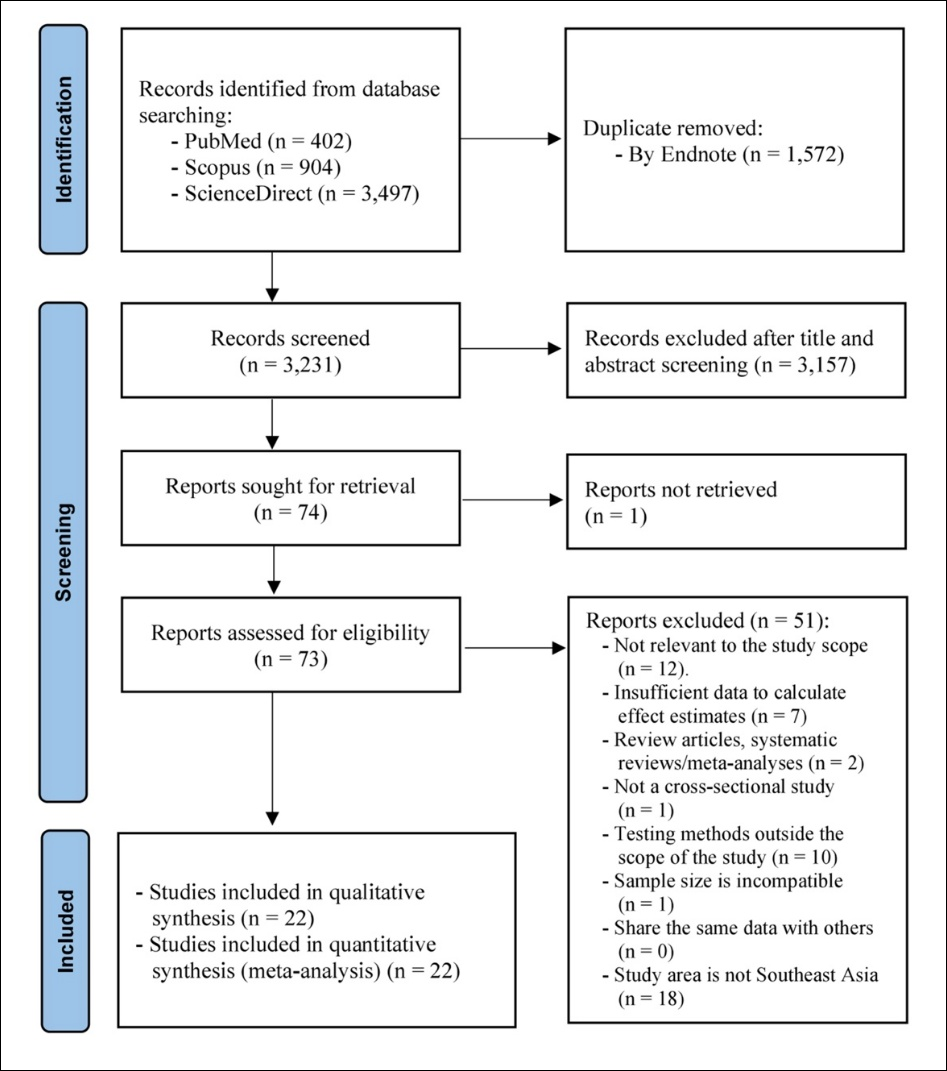
Figure 1. Preferred Reporting Items for Systematic Reviews and Meta-Analyses (PRISMA) flow diagram illustrating the identification, screening, eligibility assessment, and inclusion of studies in the systematic review.
A total of 22 cross-sectional studies were included in the qualitative and quantitative analyses, and their characteristics are summarized in Supplementary File 1. Among these studies, 14 investigated hemoparasites in both beef and dairy cattle [9, 75–87], three investigated buffaloes only [88–90], and five included both cattle and buffaloes [91–95]. Anaplasma spp. were reported in nine studies [9, 75, 76, 80–83, 85, 88], Babesia spp. in ten studies [77–81, 84, 87, 88, 90, 95], Theileria spp. in seven studies [9, 79–81, 88, 90, 92], Trypanosoma evansi in five studies [9, 86, 89, 91, 93], and Trypanosoma theileri in one study [91]. Two other pathogens, Candidatus Mycoplasma haemobos [9] and Mycoplasma wenyonii [94], were also reported.
Four Anaplasma species were identified, namely Anaplasma centrale [82], Anaplasma bovis [85], Anaplasma marginale [9, 75, 76, 80–83, 85, 88], and Anaplasma platys [9, 76, 85]. Three Babesia species were reported, including Babesia bigemina [77–81, 84, 87, 88, 90], Babesia bovis [77–81, 87, 88, 90, 95], and Babesia ovata [88]. Likewise, three Theileria species were identified, namely Theileria orientalis [9, 79–81, 88, 90], Theileria sinensis [9], and Theileria sp. [92]. These hemoparasites were reported from Indonesia [78, 86], Malaysia [9, 77, 82–84], the Philippines [88, 89, 91, 94], Thailand [75, 79–81, 85, 87, 90, 92, 93], and Vietnam [76, 95]. Quality assessment demonstrated that all 22 included studies were of high methodological quality (Figure 2).
Among the included studies, nine reported hemoparasite co-infections [9, 78–82, 88, 90, 91]. Three studies described co-infections in buffaloes, including dual infections [88, 90, 91] and triple infections [90]. The reported dual co-infection patterns included A. marginale with B. bigemina, A. marginale with B. bovis, B. bigemina with B. bovis, B. bigemina with T. orientalis, B. bovis with T. orientalis, and Tr. evansi with Tr. theileri. The only reported triple co-infection in buffaloes comprised B. bigemina, B. bovis, and T. orientalis.
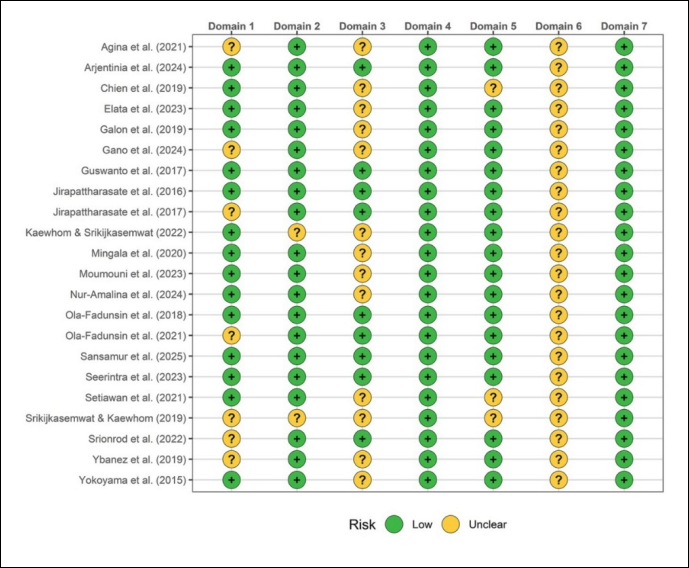
Figure 2. Quality assessment of the included studies. The assessment domains comprised selection bias (Domain 1 = Was the research question clearly described?; Domain 2 = Were the animal characteristics clearly described?), performance bias (Domain 3 = Was the sampling method clearly described?; Domain 4 = Was the polymerase chain reaction-based detection method clearly described?), detection bias (Domain 5 = Were the study subjects categorized into appropriate subgroups?; Domain 6 = Were outcome measurements performed using a blinded method?), and reporting bias (Domain 7 = Was selective reporting bias present?). The maximum quality assessment score was 14 (seven domains). Studies scoring 9–14 were classified as high quality, whereas those scoring 0–8 were classified as low quality. Each domain was scored as 2 (low risk of bias), 1 (unclear risk of bias), or 0 (high risk of bias).
Six studies reported co-infections in cattle, including dual [9, 78–82], triple [9, 79–81], and quadruple infections [81]. The dual co-infection patterns included A. centrale with A. marginale, A. marginale with B. bigemina, A. marginale with B. bovis, A. marginale with T. orientalis, A. platys with T. sinensis, B. bigemina with B. bovis, B. bigemina with T. orientalis, B. bovis with T. orientalis, T. orientalis with T. sinensis, and T. sinensis with Candidatus Mycoplasma haemobos. Triple co-infections included A. marginale, B. bigemina, and B. bovis; A. marginale, B. bigemina, and T. orientalis; A. marginale, B. bovis, and T. orientalis; A. marginale, T. sinensis, and Candidatus Mycoplasma haemobos; and B. bigemina, B. bovis, and T. orientalis. The only reported quadruple co-infection consisted of A. marginale, B. bigemina, B. bovis, and T. orientalis.
Crude prevalence of hemoparasites in cattle and buffaloes in Southeast Asia
The 22 included studies investigated 5,789 cattle and 901 buffaloes. Hemoparasite infections included Anaplasma spp. (932 cattle and 29 buffaloes), Babesia spp. (781 cattle and 77 buffaloes), Theileria spp. (141 cattle and 40 buffaloes), Tr. evansi (128 cattle and 99 buffaloes), Candidatus M. haemobos (25 cattle), and M. wenyonii (32 cattle and 80 buffaloes).
Among the identified parasite species, A. centrale was detected in 23 cattle, A. marginale in 868 cattle and 29 buffaloes, and A. platys in 41 cattle. Among Babesia species, B. bigemina was detected in 472 cattle and 33 buffaloes, whereas B. bovis was detected in 309 cattle and 44 buffaloes. Among Theileria species, T. orientalis was detected in 73 cattle and 37 buffaloes, whereas T. sinensis was detected in 22 cattle.
The highest reported prevalence of each parasite group was 72.63% for Anaplasma spp. in Malaysia [83], 71.13% for Babesia spp. in Indonesia [78], 32.79% for Theileria spp. in Malaysia [9], 35.45% for Tr. evansi in Thailand [93], and 12.58% for Tr. theileri in the Philippines [91]. Candidatus M. haemobos was reported only in Malaysia, with a prevalence of 40.99% [9], whereas M. wenyonii was reported only in the Philippines, with a prevalence of 80.00% [94].
Crude prevalence of hemoparasites in beef and dairy cattle
Anaplasma spp. infections in dairy cattle were reported in three studies [75, 81, 82], with the highest prevalence (31.40%) reported in Malaysia. In beef cattle, Anaplasma spp. infections were reported in two studies [9, 80], with the highest prevalence (26.23%) also reported in Malaysia.
Babesia spp. infections in dairy cattle were reported in two studies [81, 87], with the highest prevalence (8.39%) reported in Thailand. In beef cattle, Babesia spp. infections were reported in five studies [77, 79, 80, 84, 95], with the highest prevalence (37.14%) reported in Malaysia.
Theileria spp. infections in dairy cattle were reported in one study from Thailand [81], with a prevalence of 23.40%. In beef cattle, Theileria spp. infections were reported in five studies [9, 79, 80, 91, 92], with the highest prevalence (72.13%) reported in Malaysia.
Tr. evansi infection was reported exclusively in beef cattle in four studies [9, 86, 91, 93], with the highest prevalence (36.65%) reported in Thailand.
Target genes for PCR detection of hemoparasites
The PCR target genes identified for each hemoparasite are summarized as follows. A. centrale was detected using the 16S ribosomal ribonucleic acid (16S rRNA) gene [82]. A. marginale was detected using the 16S rRNA, groEL, and major surface protein 4 (MSP4) genes [9, 75, 76, 80–83, 85, 88]. A. platys was detected using the 16S rRNA gene [9].
For Babesia spp., B. bigemina was detected using the rhoptry-associated protein 1a (RAP-1a) and apical membrane antigen 1 (AMA-1) genes [77–81, 84, 87, 88, 90], whereas B. bovis was detected using spherical body protein 2 (SBP-2), spherical body protein 4 (SBP-4), and merozoite surface antigen (MSA) genes [77–81, 87, 88, 90, 95].
Among Theileria spp., T. orientalis and T. sinensis were detected using the major piroplasm surface protein (MPSP) gene [9, 79–81, 88, 90].
For Tr. evansi, the target genes included RoTat 1.2 variant surface glycoprotein (VSG) [9, 89], internal transcribed spacer (ITS) 1 [91], ITS2 [86], and satellite DNA [93]. Tr. theileri was detected using ITS1 [91]. Candidatus M. haemobos and M. wenyonii were detected using the 16S rRNA gene [9, 94].
This systematic review provides the first comprehensive, region-wide inventory of molecular diagnostic targets for major hemoparasites infecting cattle and buffaloes in Southeast Asia. The identified molecular targets included 16S rRNA, groEL, MSP4, RAP-1a, AMA-1, SBP-2, SBP-4, MSA, MPSP, RoTat 1.2 VSG, ITS1, ITS2, and satellite DNA. Collectively, these findings represent the first integrated regional synthesis of molecular diagnostic targets for these pathogens and the first comprehensive summary of molecular diagnostic evidence across multiple hemoparasite genera infecting both cattle and buffaloes.
Pooled prevalence of hemoparasites in cattle and buffaloes in Southeast Asia
The pooled prevalence estimates for the major hemoparasites are presented in Figure 3. Anaplasma spp. had a pooled prevalence of 12% (95% CI: 3%-38%; nine studies), with a 95% prediction interval (PI) of 0.37%-89.50% and substantial heterogeneity (I² = 98.6%). Babesia spp. had a pooled prevalence of 18% (95% CI: 11%-28%; ten studies), with a 95% PI of 3.16%-61.30% and substantial heterogeneity (I² = 97.0%). Theileria spp. had a pooled prevalence of 11% (95% CI: 3%-35%; seven studies), with a 95% PI of 0.43%-84.85% and substantial heterogeneity (I² = 94.8%).
Meta-analysis was not performed for Candidatus M. haemobos or M. wenyonii because fewer than three eligible studies were available. Species-specific analyses showed that Tr. evansi (Figure 3) had a pooled prevalence of 11% (95% CI: 4%-28%; five studies), with a 95% PI of 0.72%-70.64% and substantial heterogeneity (I² = 95.1%). A. marginale (Figure 4) had a pooled prevalence of 5% (95% CI: 1%-21%; nine studies), with a 95% PI of 0.29%-72.55% and substantial heterogeneity (I² = 94.7%). B. bigemina (Figure 4) had a pooled prevalence of 10% (95% CI: 5%-18%; nine studies), with a 95% PI of 0.88%-54.90% and substantial heterogeneity (I² = 94.6%). B. bovis (Figure 4) had a pooled prevalence of 9% (95% CI: 4%-17%; nine studies), with a 95% PI of 0.95%-52.07% and substantial heterogeneity (I² = 97.9%). T. orientalis (Figure 4) had a pooled prevalence of 10% (95% CI: 3%-31%; six studies), with a 95% PI of 0.77%-73.70% and substantial heterogeneity (I² = 90.2%).
Meta-regression and publication bias
The I² values for all pooled analyses exceeded 50% (Figures 3 and 4), indicating substantial between-study heterogeneity. Meta-regression analysis explored potential sources of heterogeneity and showed that the prevalence of A. marginale, B. bigemina, T. orientalis, and Tr. evansi was not significantly influenced by geographical region or host species (Table 1). In contrast, the prevalence of B. bovis differed significantly between mainland and maritime Southeast Asian countries (meta-regression, p = 0.0048), with a higher pooled prevalence observed in maritime countries.
Visual inspection of the funnel plot (Figure 5) suggested slight asymmetry, indicating possible publication bias. However, Egger's regression test did not detect statistically significant publication bias (p = 0.1293), suggesting no strong evidence of small-study effects. These findings should be interpreted with caution because of the limited number of included studies. Funnel plot assessment and Egger's regression test were performed only for Babesia spp., as fewer than ten studies were available for the remaining hemoparasite groups.

Figure 3. Forest plots showing the pooled prevalence of infections caused by Anaplasma spp., Babesia spp., Theileria spp., and Trypanosoma evansi in cattle and buffaloes in Southeast Asia. CI = Confidence interval; PI = Prediction interval.
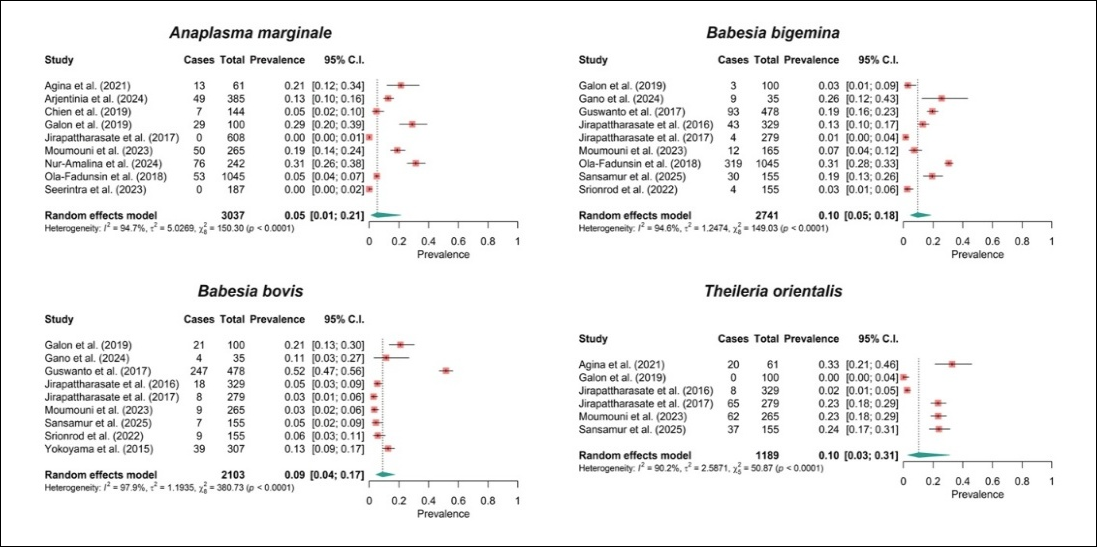
Figure 4. Forest plots showing the pooled prevalence of Anaplasma marginale, Babesia bigemina, Babesia bovis, and Theileria orientalis infections in cattle and buffaloes in Southeast Asia. CI = Confidence interval; PI = Prediction interval.

Figure 5. Funnel plot showing publication bias among studies reporting the prevalence of Babesia spp. infections in cattle and buffaloes in Southeast Asia.
| Variable | Category | No. of studies | No. examined | No. positive |
Pooled prevalence
(95% CI) | Q (χ²) | p-value | I² (%) | Meta-regression (p-value) |
|---|---|---|---|---|---|---|---|---|---|
| A. marginale | Region | ||||||||
| Mainland | 8 | 2,937 | 931 | 6.49% (1.93–19.70%) | 625.95 | <0.001 | 98.90 | 0.5522 | |
| Maritime | 1 | 100 | 29 | 29.00% (20.11–37.89%) | NA | NA | NA | ||
| Host species | |||||||||
| Cattle | 8 | 2,937 | 931 | 6.49% (1.93–19.70%) | 625.95 | <0.001 | 98.90 | 0.5522 | |
| Buffaloes | 1 | 100 | 29 | 29.00% (20.11–37.89%) | NA | NA | NA | ||
| B. bigemina | Region | ||||||||
| Mainland | 7 | 2,263 | 409 | 9.55% (3.87–21.68%) | 149.50 | <0.001 | 96.00 | 0.9222 | |
| Maritime | 2 | 578 | 96 | 16.61% (13.58–19.64%) | NA | NA | NA | ||
| Host species | |||||||||
| Cattle | 7 | 2,586 | 484 | 9.57% (3.88–21.72%) | 151.81 | <0.001 | 96.00 | 0.9112 | |
| Buffaloes | 2 | 255 | 33 | 12.94% (8.82–17.06%) | NA | NA | NA | ||
| B. bovis | Region | ||||||||
| Mainland | 7 | 1,525 | 94 | 9.55% (3.87–21.68%) | 54.44 | <0.001 | 87.10 | 0.0048* | |
| Maritime | 2 | 578 | 268 | 46.37% (42.30–50.43%) | NA | NA | NA | ||
| Host species | |||||||||
| Cattle | 7 | 1,799 | 318 | 9.57% (3.88–21.72%) | 358.68 | <0.001 | 98.30 | 0.4133 | |
| Buffaloes | 3 | 304 | 44 | 15.72% (4.65–41.64%) | 23.06 | <0.001 | 91.30 | ||
| T. orientalis | Region | ||||||||
| Mainland | 5 | 1,089 | 192 | 17.31% (7.14–36.29%) | 50.87 | <0.001 | 92.10 | 0.0463 | |
| Maritime | 1 | 100 | 0 | 0.00% (0.00–0.00%) | NA | NA | NA | ||
| Host species | |||||||||
| Cattle | 4 | 934 | 155 | 15.79% (4.93–40.40%) | 50.42 | <0.001 | 94.00 | 0.5197 | |
| Buffaloes | 2 | 255 | 37 | 14.51% (10.19–18.83%) | NA | NA | NA | ||
| Tr. evansi | Region | ||||||||
| Mainland | 2 | 439 | 137 | 31.21% (26.87–35.54%) | NA | NA | NA | 0.6143 | |
| Maritime | 4 | 527 | 93 | 13.35% (3.64–38.58%) | 61.44 | <0.001 | 95.10 | ||
| Host species | |||||||||
| Cattle | 4 | 518 | 131 | 13.24% (3.52–38.94%) | 38.48 | <0.001 | 92.20 | 0.6194 | |
| Buffaloes | 3 | 448 | 91 | 20.61% (5.80–52.25%) | 45.26 | <0.001 | 95.60 |
Table 1. Pooled prevalence, heterogeneity, and meta-regression of major hemoparasites in cattle and buffaloes in Southeast Asia.
| Variable | Category | No. of studies | No. examined | No. positive |
Pooled prevalence
(95% CI) | Q (χ²) | p-value | I² (%) | Meta-regression (p-value) |
|---|---|---|---|---|---|---|---|---|---|
| A. marginale | Region | ||||||||
| Mainland | 8 | 2,937 | 931 | 6.49% (1.93–19.70%) | 625.95 | <0.001 | 98.90 | 0.5522 | |
| Maritime | 1 | 100 | 29 | 29.00% (20.11–37.89%) | NA | NA | NA | ||
| Host species | |||||||||
| Cattle | 8 | 2,937 | 931 | 6.49% (1.93–19.70%) | 625.95 | <0.001 | 98.90 | 0.5522 | |
| Buffaloes | 1 | 100 | 29 | 29.00% (20.11–37.89%) | NA | NA | NA | ||
| B. bigemina | Region | ||||||||
| Mainland | 7 | 2,263 | 409 | 9.55% (3.87–21.68%) | 149.50 | <0.001 | 96.00 | 0.9222 | |
| Maritime | 2 | 578 | 96 | 16.61% (13.58–19.64%) | NA | NA | NA | ||
| Host species | |||||||||
| Cattle | 7 | 2,586 | 484 | 9.57% (3.88–21.72%) | 151.81 | <0.001 | 96.00 | 0.9112 | |
| Buffaloes | 2 | 255 | 33 | 12.94% (8.82–17.06%) | NA | NA | NA | ||
| B. bovis | Region | ||||||||
| Mainland | 7 | 1,525 | 94 | 9.55% (3.87–21.68%) | 54.44 | <0.001 | 87.10 | 0.0048* | |
| Maritime | 2 | 578 | 268 | 46.37% (42.30–50.43%) | NA | NA | NA | ||
| Host species | |||||||||
| Cattle | 7 | 1,799 | 318 | 9.57% (3.88–21.72%) | 358.68 | <0.001 | 98.30 | 0.4133 | |
| Buffaloes | 3 | 304 | 44 | 15.72% (4.65–41.64%) | 23.06 | <0.001 | 91.30 | ||
| T. orientalis | Region | ||||||||
| Mainland | 5 | 1,089 | 192 | 17.31% (7.14–36.29%) | 50.87 | <0.001 | 92.10 | 0.0463 | |
| Maritime | 1 | 100 | 0 | 0.00% (0.00–0.00%) | NA | NA | NA | ||
| Host species | |||||||||
| Cattle | 4 | 934 | 155 | 15.79% (4.93–40.40%) | 50.42 | <0.001 | 94.00 | 0.5197 | |
| Buffaloes | 2 | 255 | 37 | 14.51% (10.19–18.83%) | NA | NA | NA | ||
| Tr. evansi | Region | ||||||||
| Mainland | 2 | 439 | 137 | 31.21% (26.87–35.54%) | NA | NA | NA | 0.6143 | |
| Maritime | 4 | 527 | 93 | 13.35% (3.64–38.58%) | 61.44 | <0.001 | 95.10 | ||
| Host species | |||||||||
| Cattle | 4 | 518 | 131 | 13.24% (3.52–38.94%) | 38.48 | <0.001 | 92.20 | 0.6194 | |
| Buffaloes | 3 | 448 | 91 | 20.61% (5.80–52.25%) | 45.26 | <0.001 | 95.60 |
CI = Confidence interval; χ² = Cochran's Q statistic; I² = Percentage of total variation attributable to between-study heterogeneity; NA = Not available because fewer than three studies were included in the subgroup analysis; A. marginale = Anaplasma marginale; B. bigemina = Babesia bigemina; B. bovis = Babesia bovis; T. orientalis = Theileria orientalis; Tr. evansi = Trypanosoma evansi; p < 0.05 indicates a statistically significant meta-regression result.
DISCUSSION
Prevalence and environmental factors
This systematic review advances the understanding of hemoparasite epidemiology in Southeast Asia in four important ways. First, it provides the first PCR-based pooled prevalence estimates of multiple hemoparasite genera infecting cattle and buffaloes across Southeast Asia during 2015–2025. Second, it presents the first comprehensive inventory of molecular diagnostic targets used in regional studies. Third, it identifies a significant difference in B. bovis prevalence between mainland and maritime Southeast Asian countries. Finally, it translates these findings into practical recommendations to strengthen regional veterinary diagnostic capacity, extending the evidence beyond previous single-country reviews.
The pooled prevalence estimates were 12% for Anaplasma spp., 18% for Babesia spp., 11% for Theileria spp., and 11% for Tr. evansi. These hemoparasites adversely affect livestock health and negatively impact the livelihoods of resource-poor farming communities in developing countries [96]. The tropical climate of Southeast Asian countries, characterized by high temperatures and humidity [97], provides favorable conditions for arthropod vector development [7]. In addition, the region harbors high arthropod vector diversity [8, 15], including 19, 61, 11, 48, 62, and 65 tick species reported from Cambodia, Indonesia, Laos, Malaysia, Thailand, and Vietnam, respectively [7]. Thailand alone has reported 128 tabanid species and 14 Stomoxyinae species, which serve as important vectors of hemoparasitic diseases [15]. Collectively, these environmental and ecological factors emphasize the continued risk of vector-borne diseases throughout Southeast Asian countries.
Meta-regression analysis further demonstrated a significant difference in B. bovis prevalence between mainland and maritime Southeast Asian countries (p = 0.0048). The higher prevalence observed in maritime countries may reflect ecological conditions that favor tick survival and B. bovis transmission. Differences in cattle movement and livestock trade may also contribute to the observed regional variation. However, the interpretation of this finding is limited by the availability of data on vector abundance, environmental conditions, livestock movement, and management practices across the two regions. These knowledge gaps highlight the importance of adopting a One Health approach, together with consideration of socioeconomic factors, to improve the understanding, surveillance, and control of hemoparasitic and other zoonotic diseases in Southeast Asian countries.
Co-infection patterns, economic impacts, and zoonotic potential
The synthesized evidence demonstrated diverse hemoparasite co-infection patterns in both cattle and buffaloes. Cattle exhibited dual, triple, and quadruple co-infections, whereas buffaloes exhibited only dual and triple co-infections. Co-infections involving multiple hemoparasites are likely to result in more severe clinical manifestations than single-species infections because of the combined pathogenic effects of different parasites. For example, A. marginale induces anemia through splenic clearance of infected erythrocytes, whereas Babesia spp. directly destroy erythrocytes during intracellular replication [10, 11]. Concurrent infection with these pathogens may therefore contribute to more severe disease.
Previous studies have reported substantial production losses associated with Anaplasma, Babesia, and Theileria infections, resulting in considerable economic losses due to reduced productivity and increased mortality [98]. In addition, A. platys and Tr. evansi have been reported in human infections, suggesting potential zoonotic importance, although their zoonotic roles remain to be fully established [14, 99]. The findings of the present study provide baseline information to support future epidemiological and molecular investigations of transmission pathways, zoonotic potential, vector control, acaricide resistance, and the effects of climate change on hemoparasite distribution. A One Health approach will be essential to strengthen surveillance systems and improve the prevention and control of these diseases in Southeast Asia.
Diagnostic techniques for hemoparasites in cattle and buffaloes
The diagnosis of hemoparasite infections has traditionally relied on clinical signs together with laboratory detection of the causative agents [96]. PCR has been demonstrated to be a sensitive and reliable method for the molecular detection of hemoparasites in animals [100]. This systematic review provides the first comprehensive, region-wide synthesis of molecular diagnostic targets for the major hemoparasites infecting cattle and buffaloes in Southeast Asia by integrating evidence across multiple parasite genera. The compiled molecular targets may serve as a useful reference for veterinary diagnostic laboratories and help improve laboratory diagnostic capacity and technical competency.
However, PCR-based assays may not be readily available in all settings because of financial and technical constraints. In such circumstances, conventional methods, including blood smear and buffy coat smear examinations, remain practical and cost-effective diagnostic alternatives [101], particularly in rural areas where cattle and buffaloes are raised as sources of household income and financial security. The molecular and parasitological information summarized in this review may also help veterinary technicians and laboratory personnel improve their diagnostic competency for hemoparasitic diseases.
Limitations of the systematic review and meta-analysis
This systematic review and meta-analysis has several limitations. First, substantial between-study heterogeneity was observed, with I² values of 98.60%, 97.00%, 94.80%, and 95.10% for Anaplasma, Babesia, Theileria, and Trypanosoma, respectively. This heterogeneity may reflect differences in geographical location, study populations, host species, sample size, and study methodology. Although meta-regression identified geographical region and host species as significant contributors to heterogeneity for Babesia infections, a considerable proportion remained unexplained.
Second, although visual inspection of the funnel plot suggested possible publication bias for Babesia studies, Egger's regression test did not provide statistically significant evidence of publication bias. Moreover, these analyses could not be performed for the remaining hemoparasites because fewer than ten studies were available for each group, limiting the ability to assess potential publication bias and the possibility of underestimated pooled prevalence estimates.
Finally, the inclusion criteria restricted the analysis to PCR-based studies published in the English language and excluded studies using serological methods. These selection criteria may have introduced publication and language biases and should be considered when interpreting the findings of this review.
CONCLUSION
This systematic review and meta-analysis provides the first comprehensive synthesis of PCR-confirmed prevalence and molecular diagnostic targets of major hemoparasites infecting cattle and buffaloes across Southeast Asia during 2015–2025. Analysis of 22 cross-sectional studies demonstrated pooled prevalences of 12% for Anaplasma spp., 18% for Babesia spp., 11% for Theileria spp., and 11% for Tr. evansi, indicating that these pathogens remain widely distributed throughout the region. The study further identified a significantly higher prevalence of Babesia bovis in maritime than mainland Southeast Asian countries and compiled the principal molecular targets currently used for PCR-based diagnosis, including 16S rRNA, groEL, MSP4, RAP-1a, AMA-1, SBP-2, SBP-4, MSA, MPSP, RoTat 1.2 VSG, ITS1, ITS2, and satellite DNA.
The findings have important practical implications for veterinary diagnostics and disease surveillance. The consolidated molecular diagnostic targets provide a valuable reference for selecting appropriate PCR assays and may help harmonize molecular diagnostic protocols among veterinary laboratories in Southeast Asia. At the same time, conventional diagnostic approaches, such as blood smear and buffy coat smear examinations, remain practical and cost-effective alternatives for routine screening in resource-limited settings where molecular techniques are unavailable.
A major strength of this study is that it represents the first PRISMA-guided, region-wide meta-analysis integrating PCR-confirmed prevalence estimates, molecular diagnostic targets, co-infection patterns, and meta-regression analyses across multiple hemoparasite genera in cattle and buffaloes.
Future research should expand molecular surveillance to underrepresented Southeast Asian countries, standardize molecular diagnostic methodologies, integrate vector ecology and livestock movement data with molecular epidemiology, and investigate the influence of environmental and management factors on hemoparasite transmission using a One Health framework. Longitudinal studies and genomic surveillance will further improve understanding of pathogen diversity, transmission dynamics, and emerging epidemiological trends.
In conclusion, this study provides robust regional evidence on the molecular epidemiology of major bovine hemoparasites in Southeast Asia and establishes a comprehensive reference for molecular diagnosis and disease surveillance. The findings contribute to strengthening veterinary diagnostic capacity, supporting evidence-based surveillance programs, and improving the prevention and control of hemoparasitic diseases in cattle and buffaloes, thereby enhancing livestock productivity, food security, and the sustainability of the livestock sector across the Southeast Asian countries.
DATA AVAILABILITY
The data generated during the study are included in the manuscript.
GENERATIVE AI DECLARATION
The authors declare that no generative AI was used in the preparation of this manuscript.
AUTHORS’ CONTRIBUTIONS
NP, NS, and PP: Conceptualization, methodology, data collection, and data curation. NP, NS, TNT, and PP: Investigation and formal analysis. PP: Software and validation. NS: Writing—original draft. NP, TNT, and PP: Writing—review and editing. All authors have read and approved the final manuscript.
COMPETING INTERESTS
The authors declare that they have no competing interests.
PUBLISHER’S NOTE
Veterinary World remains neutral with regard to jurisdictional claims in the published institutional affiliations.
ACKNOWLEDGMENTS
The authors sincerely thank the Akkhraratchakumari Veterinary College, Walailak University, Thailand, for organizing the systematic review workshop that supported the development of this study. No external funding was received for this study.
REFERENCES
- Trakem V, Fan H. Agricultural trade liberalization, governance quality, and technical efficiency in the agricultural sector of Southeast Asia. Heliyon 2024;10:e39553. [Google Scholar]
- General Statistics Office of Vietnam. Socio-economic situation in the fourth quarter and 2025. 2026. [Google Scholar]
- Office of the National Economic and Social Development Council. Gross domestic product of Thailand: Q4/2025. 2026. [Google Scholar]
- Bush RD. Advances in smallholder large ruminant production and profitability in Southeast Asia over the past decade – lessons from the Mekong region: a review. Anim Prod Sci 2024;64(13):AN23406. [Google Scholar]
- Office of Agricultural Economics. Agricultural statistics of Thailand 2025. 2026. [Google Scholar]
- Sivakumar T, Lan DT, Long PT, Yoshinari T, Tattiyapong M, Guswanto A. PCR detection and genetic diversity of bovine hemoprotozoan parasites in Vietnam. J Vet Med Sci 2013;75(11):1455-1462. [Google Scholar]
- Yean S, Prasetyo DB, Marcombe S, Hadi UK, Kazim AR, Tiawsirisup S. Challenges for ticks and tick-borne diseases research in Southeast Asia: insight from the first international symposium in Cambodia. PLoS Negl Trop Dis 2024;18(7):e0012269. [Google Scholar]
- Yean S, Krib D, Chea R, Sum S, Ren T, San S. Tick diversity and tick-borne pathogens in livestock and companion animals in Cambodia: a narrative review and new field data (2022−2023). Vet Parasitol Reg Stud Rep 2026;67:101407. [Google Scholar]
- Agina OA, Shaari MR, Nur-Mahiza NMM, Ajat M, Zamri-Saad M, Mazlan M. Molecular detection of Theileria species, Anaplasma species, Candidatus Mycoplasma haemobos, Trypanosoma evansi and first evidence of Theileria sinensis-associated bovine anaemia in crossbred Kedah-Kelantan × Brahman cattle. BMC Vet Res. 2021;17(1). [Google Scholar]
- Ierardi RA. A review of bovine anaplasmosis (Anaplasma marginale) with emphasis on epidemiology and diagnostic testing. J Vet Diagn Invest 2025;37(4):517-538. [Google Scholar]
- Hakimi H, Yamagishi J, Kawazu SI, Asada M. Advances in understanding red blood cell modifications by Babesia. PLoS Pathog 2022;18(9):e1010770. [Google Scholar]
- Gebrekidan H, Perera PK, Ghafar A, Abbas T, Gasser RB, Jabbar A. An appraisal of oriental theileriosis and the Theileria orientalis complex, with an emphasis on diagnosis and genetic characterisation. Parasitol Res 2020;119:11-12. [Google Scholar]
- Morrison WI. The aetiology, pathogenesis and control of theileriosis in domestic animals. Rev Sci Tech Off Int Epiz 2015;34(2):599-611. [Google Scholar]
- Desquesnes M, Holzmuller P, Lai DH, Dargantes A, Lun ZR, Jittaplapong S. Trypanosoma evansi and surra: a review and perspectives on origin, history, distribution, taxonomy, morphology, hosts, and pathogenic effects. BioMed Res Int 2013;2013:194176. [Google Scholar]
- Phetcharat Y, Wongtawan T, Fungwithaya P, Amendt J, Sontigun N. Species diversity and seasonal abundance of Stomoxyinae (Diptera: Muscidae) and tabanid flies (Diptera: Tabanidae) on a beef cattle and a buffalo farm in Nakhon Si Thammarat province, Southern Thailand. Insects 2024;15:818. [Google Scholar]
- Soe BK, Huertas-Lopez A, Sato H, Adisakwattana P. Ticks and tick-borne pathogens with zoonotic importance in animals in Southeast Asia: a decade of evidence from systematic review and meta-analysis. Acta Trop 2026;274:107974. [Google Scholar]
- Firdausy LW, Fikri F, Wicaksono AP, Çalışkan H, Purnama MTE. Prevalence of trypanosomiasis in domesticated animals in Indonesia: a systematic review and meta-analysis. Vet World 2025;18(5):1333-1344. [Google Scholar]
- Page MJ, McKenzie JE, Bossuyt PM, Boutron I, Hoffmann TC, Mulrow CD. The PRISMA 2020 statement: an updated guideline for reporting systematic reviews. BMJ 2021;372:n71. [Google Scholar]
- Zhou S, Sang Z, Wang L, Zhang T. Seroprevalence of Toxoplasma gondii in cats in mainland China 2016–2020: a meta-analysis. J Vet Sci 2022;23(1):e13. [Google Scholar]
- R: a language and environment for statistical computing. Vienna: R Foundation for Statistical Computing; 2026. [Google Scholar]
- Wang N. Conducting meta-analyses of proportions in R. J Behav Data Sci 2023;3:64-126. [Google Scholar]
- Huedo-Medina TB, Sánchez-Meca J, Marín-Martínez F, Botella J. Assessing heterogeneity in meta-analysis: Q statistic or I² index? Psychol Methods. 2006;11(2):193-206. [Google Scholar]
- Sukati S, Kotepui KU, Masangkay FR, Tseng CP, Mahittikorn A, Anabire NG. Elevations in D-dimer levels in patients with Plasmodium infections: a systematic review and meta-analysis. Sci Rep 2025;15:858. [Google Scholar]
- Abd-Elrahman SM, Kamel FA, Abdel-Hakeem SS, Khedr AA, Mohamed SM, Abdelgaber AA. Piroplasm infestations in cattle: exploring tick control using Chrysanthemum extract and neem oil emulsion. Front Vet Sci 2025;12:1543162. [Google Scholar]
- Bibi S, Abbas S, Zaman MA, Gul R, Batool AI, Khalil I. Comparative efficacy of imidocarb dipropionate with additive in naturally infected cattle against bovine babesiosis. Vet Parasitol 2025;337:110495. [Google Scholar]
- Elata A, Galon EM, Moumouni PFA, Ybanez RHD, Mossaad E, Salces CB. First molecular detection and identification of Trypanosoma evansi in goats from Cebu, Philippines using a PCR-based assay. Vet Parasitol Reg Stud Rep 2020;21:100414. [Google Scholar]
- Ma Q, Liu J, Li Z, Xiang Q, Wang J, Liu A. Clinical and pathological studies on cattle experimentally infected with Theileria annulata in China. Pathogens 2020;9(9):727. [Google Scholar]
- Park MH, Cho SJ, Kim Y, Cho HC, Park YJ, Ji MJ. First molecular evidence of bovine hemoplasmas in houseflies (Musca domestica). BMC Vet Res 2024;20(1):497. [Google Scholar]
- Sharma A, Singla LD, Batth BK, Kaur P. Clinicopatho-biochemical alterations associated with subclinical babesiosis in dairy animals. J Arthropod Borne Dis 2016;10(2):258-266. [Google Scholar]
- Ahlawat S, Choudhary V, Kaur R, Arora R, Sharma R, Chhabra P. Unraveling the genetic mechanisms governing the host response to bovine anaplasmosis. Gene 2023;877:147532. [Google Scholar]
- Arnuphapprasert A, Nugraheni YR, Aung A, Asada M, Kaewthamasorn M. Detection of Babesia bovis using loop-mediated isothermal amplification (LAMP) with improved thermostability, sensitivity and alternative visualization methods. Sci Rep 2023;13:1838. [Google Scholar]
- El-Alfy ES, Abbas I, Elseadawy R, El-Sayed SAE S, Rizk MA. Genetic diversity of merozoite surface antigens in global Babesia bovis populations. Genes 2023;14(10):1936. [Google Scholar]
- Muriuki R, Ndichu M, Githigia S, Svitek N. Novel CRISPR-Cas-powered pen-side test for East Coast fever. Int J Parasitol 2024;54(10):507-521. [Google Scholar]
- Muriuki R, Ndichu M, Githigia S, Svitek N. CRISPR-Cas-based pen-side diagnostic tests for Anaplasma marginale and Babesia bigemina. Microorganisms 2024;12(12):2595. [Google Scholar]
- Hamid PH, Cahyadi M, Wardhana AH, Sawitri DH, Setya NNR, Insyariati T. First autochthonous report on cattle Babesia naoakii in Central Java, Indonesia, and identification of Haemaphysalis bispinosa ticks in the investigated area. Pathogens 2023;12(1):59. [Google Scholar]
- Aktas M, Özübek S. Outbreak of anaplasmosis associated with novel genetic variants of Anaplasma marginale in a dairy cattle. Comp Immunol Microbiol Infect Dis 2017;54:20-26. [Google Scholar]
- Chaisi ME, Baxter JR, Hove P, Choopa CN, Oosthuizen MC, Brayton KA. Comparison of three nucleic acid-based tests for detecting Anaplasma marginale and Anaplasma centrale in cattle. Onderstepoort J Vet Res 2017;84(1):e1-e9. [Google Scholar]
- Ganguly A, Maharana BR, Ganguly I. Pentaplex PCR assay for rapid differential detection of Babesia bigemina, Theileria annulata, Anaplasma marginale and Trypanosoma evansi in cattle. Biologicals 2020;63:81-88. [Google Scholar]
- Gebrekidan H, Nelson L, Smith G, Gasser RB, Jabbar A. An outbreak of oriental theileriosis in dairy cattle imported to Vietnam from Australia. Parasitology 2017;144(6):738-746. [Google Scholar]
- Sharma B, Ganta RR, Stone D, Alhassan A, Lanza-Perea M, Belmar VM. Development of a multiplex PCR and magnetic DNA capture assay for detecting six species pathogens of the genera Anaplasma and Ehrlichia in canine, bovine, caprine and ovine blood samples from Grenada, West Indies. Pathogens 2021;10(2):192. [Google Scholar]
- Zhang B, Sambono JL, Morgan JAT, Venus B, Rolls P, Lew-Tabor AE. An evaluation of quantitative PCR assays (TaqMan® and SYBR green) for the detection of Babesia bigemina and Babesia bovis, and a novel fluorescent-ITS1-PCR capillary electrophoresis method for genotyping B. bovis isolates. Vet Sci 2016;3(3):23. [Google Scholar]
- Lakew BT, Kheravii SK, Wu SB, Eastwood S, Andrew NR, Nicholas AH. Detection and distribution of haematophagous flies and lice on cattle farms and potential role in the transmission of Theileria orientalis. Vet Parasitol 2021;298:109516. [Google Scholar]
- Garcia MC, Walshe E, Steketee PC, Paxton E, Lopez-Vidal J, Pearce MC. Comparative sensitivity and specificity of the 7SL sRNA diagnostic test for animal trypanosomiasis. Front Vet Sci 2022;9:868912. [Google Scholar]
- Jansaento W, Osiriphan M, Kongta N, Modethed W, Rompo T, Duangmano S. Enhanced detection of Trypanosoma evansi in cattle: superior performance of LAMP compared to PCR and CATT/T. evansi test. J Assoc Med Sci 2025;58(3):278-287. [Google Scholar]
- Jenkins C, Bogema DR. Factors associated with seroconversion to the major piroplasm surface protein of the bovine haemoparasite Theileria orientalis. Parasit Vectors 2016;9:106. [Google Scholar]
- Shahzad M, Garg R, Yadav S, Devi A, Ram H, Banerjee PS. Comparative evaluation of Babesia bigemina truncated C-terminal rhoptry associated protein-1 and 200 kDa merozoite protein in indirect enzyme-linked immunosorbent assay. Ticks Tick Borne Dis 2021;12(5):101783. [Google Scholar]
- Wibowo SE, Andityas M, Nuraini DM, Nugraheni YR, Awaludin A. Spatial analysis of bovine anaplasmosis in Jambi province, Indonesia: 2018-2022. Vet Integr Sci 2024;22(3):857-869. [Google Scholar]
- Bitrus AA, Abba Y, Jesse FFA, Pei JLX, Peter ID, Hambali IU. Seroprevalence of anaplasmosis in dairy cattle from Peninsular Malaysia. Adv Anim Vet Sci 2018;6(2):70. [Google Scholar]
- Koh FX, Kho KL, Kisomi MG, Wong LP, Bulgiba A, Tan PE. Ehrlichia and Anaplasma infections: serological evidence and tick surveillance in Peninsular Malaysia. J Med Entomol 2018;55(2):269-276. [Google Scholar]
- Tong Q, Chen R, Kong Q, Goossens J, Radwanska M, Lou D. DNA detection of Trypanosoma evansi: diagnostic validity of a new assay based on loop-mediated isothermal amplification (LAMP). Vet Parasitol 2018;250:1-6. [Google Scholar]
- Ryskeldina A, Korobeinikov A, Tursunbay N, Berdikulov M, Shevtsov A, Bauer C. A novel recombinant Theileria annulata surface protein as an antigen in indirect enzyme-linked immunosorbent assay for the serological diagnosis of tropical theileriosis. Vet World 2024;17(8):1936-1942. [Google Scholar]
- Paliwal S, Sudan V, Shanker D. Comparative diagnostic performance of recombinant Tams1 protein based dot-ELISA in detecting tropical theileriosis in naturally infected cattle. Sci Rep 2025;15(1):431. [Google Scholar]
- Nugraheni YR, Ariyadi B, Kesumaningrum N, Imran K, Kartiko BP. Molecular detection of Babesia infection in cattle in Yogyakarta, Indonesia. Biodiversitas 2023;24(7):4192-4198. [Google Scholar]
- Bohman W, Chooruang N, Sakuna K, Jarujareet W, Areekit K, Chantip D. Prevalence of hemoparasitic infections and influencing factors among fighting bulls in Southern Thailand: a retrospective analysis. Open Vet J 2024;14(10):2587-2598. [Google Scholar]
- Firdausy LW, Fikri F, Wicaksono AP, Çalışkan H, Purnama MTE. Prevalence of trypanosomiasis in domesticated animals in Indonesia: a systematic review and meta-analysis. Vet World 2025;18(5):1333-1344. [Google Scholar]
- Flores-García DL, Aguilar-Díaz H, Amaro-Estrada I, Martínez-Ocampo F, Quiroz-Castañeda RE. An update of bovine hemoplasmas based on phylogenetic and genomics analysis. Microorganisms 2022;10(10):1916. [Google Scholar]
- Fiorin FE, Casa MS, Griebeler LB, Goedel MF, Do Nascimento LFN, Das Neves GB. Prevalence of natural infection by Trypanosoma evansi in Crioula LAGEANA cattle. Microb Pathog 2023;180:106143. [Google Scholar]
- Getange D, Mukaratirwa S, Bargul JL, Khogali R, Ng’iela J, Kabii J. Molecular characterisation of tick-borne pathogens in cattle in Kenya: insights from blood, ticks, and skin swab analyses. BMC Vet Res 2025;21:552. [Google Scholar]
- Giglioti R, Filho AEV, Domingos AG, Silva SS, Cunha RC, Ibelli AMG. Detection and quantification of Babesia bovis and Babesia bigemina using different target genes. Res Vet Sci 2024;168:105122. [Google Scholar]
- Giglioti R, Okino CH, Azevedo BT, Wedy BCR, Gutmanis G, Veríssimo CJ. Semi-quantitative evaluation of Babesia bovis and B. bigemina infection levels estimated by HRM analysis. Ticks Tick Borne Dis 2021;12(5):101753. [Google Scholar]
- Guo QY, Cao WL, Wang BJ, Wang ZB, Wang S, Bayin C. Development and application of real-time PCR assay for detection of Theileria annulata infection in cattle in Xinjiang Uygur Autonomous Region, China. Trop Biomed 2016;33(1):27-34. [Google Scholar]
- Hussain MF, Qamar M, Malik MI, Hussain M, Saeed Z, Shaikh RS. Molecular detection of Anaplasma in apparently healthy Cholistan breed of cattle from the Bahawalpur district, Pakistan. Trop Biomed 2017;34(1):37-44. [Google Scholar]
- Kamani J, Vieira TSWJ, Vieira RFC, Shekaro A, Nahum-Biala Y, Olubade T. Molecular detection of Theileria annulata, Theileria mutans and Theileria velifera but no evidence of Theileria parva infected or vaccinated cattle in Nigeria despite extensive transboundary migrations. Vet Parasitol Reg Stud Rep 2023;41:100887. [Google Scholar]
- Kaur R, Ahlawat S, Choudhary V, Kumari A, Kumar A, Kaur M. Expression profiling of cytokine genes in peripheral blood mononuclear cells from Anaplasma marginale infected and healthy cattle. Anim Biotechnol 2023;34:4281-4290. [Google Scholar]
- Kumar P, Kumar A, Sarma K, Sharma P, Kumari RR, Kumar M. Development of novel multiplex PCR for diagnosis of co-infected hemo-parasites in cattle. Indian J Anim Res 2021;55(2):1504-1509. [Google Scholar]
- Lim MM, Jia LJ, Cao SN, Moumouni PFA, Jirapattharasate C, Wang GB. Molecular detection of Theileria species in cattle from Jilin province, China. Trop Biomed 2017;34(3):598-606. [Google Scholar]
- Nazar M, Khan MA, Shah AA, Rahman SU, Khan I, Ullah A. Occurrence and transplacental transmission of Anaplasma marginale in dairy cattle. Slovenian Vet Res 2018;55(3):183-191. [Google Scholar]
- Paoletta MS, Arias LLS, DLF S, Guillemi EC, Luciani C, Sarmiento NF. Epidemiology of Babesia, Anaplasma and Trypanosoma species using a new expanded reverse line blot hybridization assay. Ticks Tick Borne Dis 2018;9(2):155-163. [Google Scholar]
- Paucar-Quishpe V, Berkvens D, Pérez-Otáñez X, Rodríguez-Hidalgo R, Cepeda-Bastidas D, Perez C. What is the value of testing for tick-borne diseases in cattle in endemic areas? A case study of bovine anaplasmosis. PLoS One 2025;20(3):e0315202. [Google Scholar]
- Romero-Salas D, Mira A, Mosqueda J, García-Vázquez Z, Hidalgo-Ruiz M, Vela NAO. Molecular and serological detection of Babesia bovis- and Babesia bigemina-infection in bovines and water buffaloes raised jointly in an endemic field. Vet Parasitol 2016;217:101-107. [Google Scholar]
- Saad ASA, Hegab AA, Osman MM. Insights into some tick-borne pathogens in cows. J Adv Vet Res 2025;15(3):320-324. [Google Scholar]
- Salazar A, Ochoa-Corona FM, Talley JL, Noden BH. Recombinase polymerase amplification (RPA) with lateral flow detection for three Anaplasma species of importance to livestock health. Sci Rep 2021;11:15962. [Google Scholar]
- Sinha S, Behera BK, Padhi SK, Sahoo S, Sahoo N, Biswal S. Comparative evaluation of diagnostic methods for detection of Theileria spp. in cows. Anim Biotechnol 2023;34(8):3514-3518. [Google Scholar]
- Sudan V, Shanker D, Jaiswal A, Singh A, Pandey V. Standardization and validation of simple PCR, duplex PCR and RAPD in comparison to blood smear examination for diagnosing bovine tropical theileriosis. Biologicals 2017;46:88-91. [Google Scholar]
- Arjentinia IPGY, Keomoungkhoun B, Thamrongyoswittayakul C, Sangmaneedet S, Taweenan W. First report on the molecular detection and genetic diversity of Anaplasma marginale in healthy dairy cattle in Khon Kaen province, Thailand. Vet World 2024;17(2):389-397. [Google Scholar]
- Chien NTH, Nguyen TL, Bui KL, Nguyen TV, Le TH. Anaplasma marginale and A. platys characterized from dairy and indigenous cattle and dogs in northern Vietnam. Korean J Parasitol 2019;57(1):43-48. [Google Scholar]
- Gano AI, Ramanoon SZ, Aziz NA, Mazlan M, Shaari MR, Aliyu A. Genetic characterization of the RAP-1A and SBP-4 genes of Babesia species infecting cattle from Selangor, Malaysia, and Ribah, Nigeria. Pathogens. 2024;13(3). [Google Scholar]
- Guswanto A, Allamanda P, Mariamah ES, Sodirun S, Wibowo PE, Indrayani L. Molecular and serological detection of bovine babesiosis in Indonesia. Parasit Vectors. 2017;10(1). [Google Scholar]
- Jirapattharasate C, Adjou Moumouni PF, Cao S, Iguchi A, Liu M, Wang G. Molecular epidemiology of bovine Babesia spp. and Theileria orientalis parasites in beef cattle from northern and northeastern Thailand. Parasitol Int 2016;65(1):62-69. [Google Scholar]
- Jirapattharasate C, Adjou Moumouni PF, Cao S, Iguchi A, Liu M, Wang G. Molecular detection and genetic diversity of bovine Babesia spp., Theileria orientalis, and Anaplasma marginale in beef cattle in Thailand. Parasitol Res 2017;116(2):751-762. [Google Scholar]
- Moumouni PFA, Galon EM, Tumwebaze MA, Byamukama B, Ngasaman R, Tiwananthagorn S. Tick-borne pathogen detection and its association with alterations in packed cell volume of dairy cattle in Thailand. Animals. 2023;13(18). [Google Scholar]
- Nur-Amalina N, Nur-Sabrina AM, Muhamad-Ali HAM, Mohammad-Sabri AR, Nor-Azlina AA, Basripuzi NH. Molecular identification and phylogenetic analysis of Anaplasma marginale and Anaplasma centrale isolated from commercial Mafriwal cattle in Johor, Malaysia. Trop Biomed 2024;41:385-391. [Google Scholar]
- Ola-Fadunsin SD, Gimba FI, Abdullah DA, Sharma RSK, Jesse FFA, Sani RA. Epidemiology and risk factors associated with Anaplasma marginale infection of cattle in Peninsular Malaysia. Parasitol Int 2018;67(6):659-665. [Google Scholar]
- Ola-Fadunsin SD, Sharma RSK, Abdullah DA, Gimba FI, Jesse FJF, Sani RA. The molecular prevalence, distribution and risk factors associated with Babesia bigemina infection in Peninsular Malaysia. Ticks Tick Borne Dis. 2021;12(3). [Google Scholar]
- Seerintra T, Saraphol B, Thanchomnang T, Piratae S. Molecular prevalence of Anaplasma spp. in cattle and assessment of associated risk factors in Northeast Thailand. Vet World 2023;16(8):1702-1707. [Google Scholar]
- Setiawan A, Nurcahyo W, Priyowidodo D, Budiati RT, Susanti DSR. Genetic and parasitological identification of Trypanosoma evansi infecting cattle in South Sulawesi, Indonesia. Vet World 2021;14(1):113-119. [Google Scholar]
- Srionrod N, Nooroong P, Poolsawat N, Minsakorn S, Watthanadirek A, Junsiri W. Molecular characterization and genetic diversity of Babesia bovis and Babesia bigemina of cattle in Thailand. Front Cell Infect Microbiol. 2022;12. [Google Scholar]
- Galon EMS, Adjou Moumouni PF, Ybañez RHD, Ringo AE, Efstratiou A, Lee SH. First molecular detection and characterization of tick-borne pathogens in water buffaloes in Bohol, Philippines. Ticks Tick Borne Dis 2019;10(4):815-821. [Google Scholar]
- Mingala CN, Abenoja JA, Rivera CV, Balbin MM, Venturina VM, Villanueva MA. Trypanosoma evansi and Neospora caninum among water buffaloes (Bubalus bubalis) in the Philippines. Arch Vet Sci 2020;25(1):10-19. [Google Scholar]
- Sansamur C, Boonchuay K, Ngasaman R, Olana KOA, Punyapornwithaya V. Epidemiology and factors associated with the infection of Babesia bigemina, Babesia bovis, and Theileria orientalis in Thale Noi Wetland buffaloes (Bubalus bubalis), Southern Thailand. BMC Vet Res. 2025;21(1). [Google Scholar]
- Elata A, Galon EM, Moumouni PFA, Ybañez RH, Mossaad E, Salces CB. Molecular detection of animal trypanosomes in different animal species in the Visayas Region of the Philippines. Acta Parasitol 2023;68(3):604-611. [Google Scholar]
- Kaewhom P, Srikijkasemwat K. A molecular survey of Theileria spp. in ruminants in the Thailand-Cambodia border region. Int J Agric Technol 2022;18(1):205-214. [Google Scholar]
- Srikijkasemwat K, Kaewhom P. Prevalence and genetic diversity of Trypanosoma evansi infection causing abortion among cattles and buffaloes in Eastern border area of Thailand-Cambodia. Int J Agric Technol 2019;15(6):1021-1032. [Google Scholar]
- Ybañez AP, Ybañez RHD, Armonia RKM, Chico JKE, Ferraren KJV, Tapdasan EP. First molecular detection of Mycoplasma wenyonii and the ectoparasite biodiversity in dairy water buffalo and cattle in Bohol, Philippines. Parasitol Int 2019;70:77-81. [Google Scholar]
- Yokoyama N, Sivakumar T, Tuvshintulga B, Hayashida K, Igarashi I, Inoue N. Genetic variations in merozoite surface antigen genes of Babesia bovis detected in Vietnamese cattle and water buffaloes. Infect Genet Evol 2015;30:288-295. [Google Scholar]
- Salih DA, Hussein AME, Singla LD. Diagnostic approaches for tick-borne haemoparasitic diseases in livestock. J Vet Med Anim Health 2015;7(2):45-56. [Google Scholar]
- Swangneat K, Srikacha N, Soulinthone N, Paudel S, Srisanyong W, Stott CJ. Molecular prevalence of avian haemosporidian parasites in Southeast Asia: systematic review and meta-analysis. Animals 2025;15:636. [Google Scholar]
- Koonyosying P, Rittipornlertrak A, Chomjit P, Sangkakam K, Muenthaisong A, Nambooppha B. Incidence of hemoparasitic infections in cattle from central and northern Thailand. PeerJ 2022;10:e13835. [Google Scholar]
- Mnisi ZTH, Makgabo SM, Byaruhanga C. Anaplasma platys beyond canines: a systematic review of host range, phylogenetic relatedness, and knowledge gaps in Africa. Parasit Vectors 2026;19:128. [Google Scholar]
- Bhagwan J, Singh Y, Jhambh R, Chaudhari M, Kumar P. Molecular and microscopic detection of haemoprotozoan diseases in dogs from Haryana, India. Parasitol Res 2024;123:354. [Google Scholar]
- Pornpanom P, Valkiūnas G, Paudel S. Morphological and molecular characterization of avian trypanosomes in domestic chickens (Gallus gallus domesticus) in Southeast Asia and review of the parasite morphometry in different avian hosts. Avian Pathol 2025;54(4):489-497. [Google Scholar]