

ABSTRACT
Background and Aim: Free-grazing duck (FGD) production systems play a vital economic role in Thailand but are also recognized as potential sources and amplifiers of avian influenza (AI) viruses at the human–animal–environment interface. Understanding the knowledge, attitudes, and practices (KAP) of individuals involved in FGD production is crucial for effective prevention and control of AI. This study aimed to assess AI-related KAP levels among FGD farmers and related workers in central Thailand and to identify demographic, occupational, and behavioral factors linked to these KAP outcomes.
Materials and Methods: An analytical cross-sectional survey was conducted from January to May 2023, involving 101 participants working in FGD production systems across Ayutthaya, Suphan Buri, and Nakhon Sawan provinces. Data were obtained through face-to-face interviews using a structured, expert-validated questionnaire that covered socio-demographic details, animal exposure, vaccination history, and AI-related knowledge, attitudes, and practices. KAP scores were determined using standardized scoring criteria. The relationships between KAP scores and explanatory variables were analyzed using simple and multiple linear regression.
Results: The average knowledge score was 8.65 ± 2.39 (out of 12), the average attitude score was 3.63 ± 0.36 (out of 5), and the average practice score was 3.17 ± 0.38 (out of 5). Overall, 58.4% of participants demonstrated good knowledge, 66.3% exhibited positive attitudes, and 38.6% reported good preventive practices against AI. Knowledge scores were significantly linked to daily working hours with FGDs, contact with other animals, and influenza vaccination history. Positive attitudes were significantly influenced by educational level and occupation, while good practices were associated with higher education, type of FGD production system, animal contact, and vaccination during poultry work. Moderate positive correlations were observed between knowledge and attitude scores and between attitude and practice scores.
Conclusion: This study offers the first comprehensive assessment of KAP regarding AI among FGD farmers in Thailand. Although knowledge and attitudes about AI were generally adequate, preventive measures were relatively inadequate. Improving targeted public health education, increasing vaccination awareness, and implementing One Health–based biosecurity measures are recommended to boost AI prevention and readiness in FGD production systems.
Keywords: attitude, avian influenza, free-grazing ducks, knowledge, One Health, practice, public health, Thailand.
INTRODUCTION
Avian influenza (AI) is a viral zoonotic disease primarily transmitted from birds to humans and represents a major public health issue. Over the last two decades, AI has gained increased global attention due to the rising number of interspecies transmissions of AI viruses (AIVs). Since the first human case was reported in Hong Kong in 1997, the highly pathogenic AI (HPAI) subtype H5N1 (HPAI-H5N1) has resulted in 992 laboratory-confirmed human cases and 476 deaths worldwide as of November 2025 [1]. AIVs cause severe respiratory illness in poultry, including chickens, ducks, turkeys, quail, and other bird species. Importantly, HPAI-H5N1 viruses can infect a wide range of mammals, such as humans, dogs, cats, tigers, and cattle, often with fatal outcomes [2, 3]. In Thailand, multiple HPAI-H5N1 outbreaks have been reported since 2004, causing significant poultry deaths and severe economic losses across commercial farms, backyard flocks, live-poultry markets, and free-grazing duck (FGD). Although no poultry outbreaks have been reported since the last epidemic wave in 2008, several studies have shown ongoing circulation of low-pathogenic AI (LPAI) viruses among poultry and wild birds in Thailand [4–6].
FGDs serve as a key reservoir for AIVs. These layer ducks are raised extensively in rice paddies and often move across large areas in search of food, which increases the potential for virus spread. FGDs frequently share habitats with wild birds and backyard poultry, creating opportunities for interspecies transmission and viral dissemination. Additionally, the coexistence of multiple AIV subtypes in FGDs may promote viral reassortment. Previous studies in Thailand have identified several AIV subtypes in FGDs, including H10N6, H10N7, H11N6, H11N7, and H11N9 [4, 7, 8]. Serological evidence of antibodies against AIV-H5 has also been found in FGDs during a nationwide survey in 2012 [9]. Although Thailand has not reported any AI outbreaks in birds or humans since 2008, recent incidents of HPAI and LPAI in poultry and humans have occurred in neighboring countries such as Cambodia, Laos, and Vietnam, highlighting the ongoing regional risk [10–14].
Knowledge, attitude, and practice (KAP) studies are commonly used to evaluate a population’s understanding, perceptions, and behaviors related to specific health issues [15]. These studies typically use standardized, structured questionnaires administered during interviews [16] and offer valuable insights to enhance disease prevention and control efforts. Previous KAP surveys in China showed insufficient influenza knowledge among older and less educated poultry farmers, while studies in Taiwan found limited risk awareness and preventive practices among poultry workers following H5N2 outbreaks [17]. In Thailand, KAP studies have explored influenza-related awareness among Thai–Myanmar border populations during the H1N1 pandemic [18] and risk perceptions of AI among poultry farmers and traders in border regions with Laos [19]. Additional research has assessed farmers’ knowledge and practices related to poultry production systems [20].
Despite extensive virological surveillance and outbreak investigations of AI in Thailand, most existing research has concentrated on virus detection, molecular characterization, and ecological risk factors in poultry and wild birds. Although FGDs are widely recognized as key reservoirs and amplifiers of AIVs, especially in Southeast Asia, little attention has been paid to the human behavioral aspects related to FGD production systems. In Thailand, previous KAP studies have mainly focused on general poultry farmers, traders, border populations, or communities affected by specific influenza outbreaks, such as the H1N1 pandemic. These studies offer valuable insights but do not sufficiently address the unique occupational, ecological, and management features of FGD systems, which involve frequent duck movement, close human–animal contact, and shared environments with wild birds.
Furthermore, no comprehensive KAP assessment has been conducted specifically among individuals directly involved in FGD farming, trading, and related activities in central Thailand, a region with historically high FGD densities and past outbreaks of HPAI. The lack of recent AI outbreaks in Thailand since 2008 may also lead to risk complacency, which could affect preventive behaviors and biosecurity compliance among FGD stakeholders. Additionally, limited evidence exists on how demographic factors, educational level, vaccination history, animal contact patterns, and production practices impact AI-related knowledge, attitudes, and preventive behaviors within this high-risk group.
Given these gaps, the current study aimed to systematically evaluate levels of KAP regarding AI among people involved in FGD production in central Thailand. Specifically, the study intended to (i) measure AI-related knowledge, attitudes, and preventive behaviors among FGD farmers and their workers; (ii) identify socio-demographic, occupational, and exposure factors linked to differences in KAP levels; and (iii) explore the connections between knowledge, attitudes, and practices to better understand behavioral factors affecting AI prevention and control. By providing context-specific evidence from a high-risk yet understudied group, this research seeks to guide targeted risk communication, biosecurity measures, and One Health–based policies to improve AI prevention and preparedness in Thailand.
MATERIALS AND METHODS
Ethical approval
The study protocol was reviewed and approved by the Human Research Ethics Review Board of Chulalongkorn University, Thailand (IRB No. 152.1/63). All procedures were conducted in accordance with the ethical principles outlined in the Declaration of Helsinki. Before participation, all individuals were informed about the study objectives, procedures, the voluntary nature of participation, and their right to withdraw at any time without consequences. Written informed consent was obtained from all participants and, where applicable, from their legal guardians. Participant confidentiality was strictly maintained by anonymizing all data, securely storing records, and restricting access to authorized personnel only. Data were used exclusively for research purposes. Although no direct benefits were provided to participants, the findings are expected to contribute to a better understanding of AI-related KAPs, thereby supporting disease prevention and control efforts.
Study period and location
An analytical cross-sectional study was carried out from January to May 2023 to evaluate AI-related KAP among individuals involved in FGD production systems. This study design was chosen for its efficiency in measuring KAP prevalence at a single point and for identifying links between KAP outcomes and related factors. The approach was cost-effective, time-efficient, and appropriate for targeted population assessments.
The study was conducted in three provinces in central Thailand: Ayutthaya, Nakhon Sawan, and Suphan Buri (Figure 1). These provinces were chosen because they have a high density of FGD flocks, especially in Suphan Buri, where rice farming provides plentiful feeding grounds. The areas also serve as shared habitats for wild birds, increasing the risk of cross-species transmission of AIV. Importantly, outbreaks of AI were reported in backyard poultry, commercial farms, and FGDs in these provinces between 2004 and 2008. Site selection was further validated by historical outbreak data, ongoing FGD activity, and cooperation from farmers and local authorities.
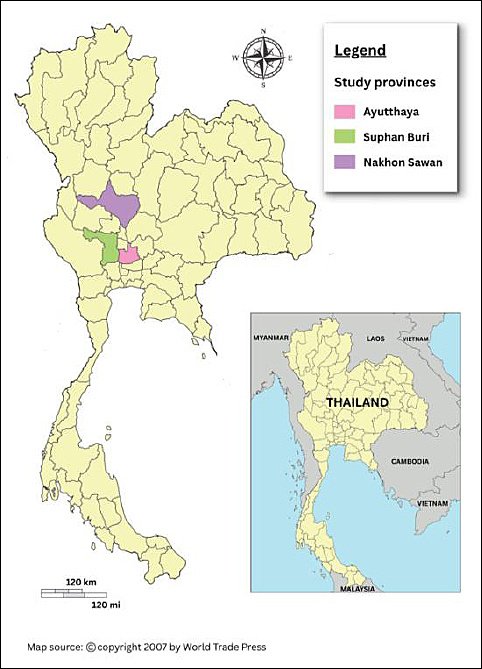
Figure 1. Map of three provinces in central Thailand for the knowledge, attitude, and practice study on avian influenza in free-grazing duck farmers.
Study population and eligibility criteria
A total of 101 participants from Ayutthaya, Nakhon Sawan, and Suphan Buri provinces volunteered for the study. The target population included individuals involved in FGD farming, trading, and breeding, who were considered to have frequent human–animal interactions. Eligible participants needed to have been involved in the FGD production system and in contact with FGDs for at least three months before data collection to ensure sufficient experience and exposure.
Inclusion criteria were: (i) Thai nationality; (ii) age between 20 and 75 years; and (iii) willingness to participate and provide informed consent. Exclusion criteria included individuals who were unwilling to complete the study or who were unable to communicate effectively due to substance use or mental health conditions.
Sample size determination and sampling method
The sample size was determined using a standard formula for estimating population proportions, assuming an estimated proportion (p) of 0.5 to maximize variance, a 95% confidence level (CI), and a margin of error (Δ) of 0.1. Based on these parameters, the minimum required sample size was 96 participants. To account for potential non-response or missing data, the sample size was increased to over 100 participants.
Participants were selected using simple random sampling from lists of registered FGD farmers provided by the Department of Livestock Development, Ministry of Agriculture and Cooperatives. Recruitment was facilitated through local authorities in the study areas, and all selected individuals agreed to participate.
Questionnaire development and validation
Data were gathered using a structured questionnaire designed to evaluate AI-related KAPs. The questionnaire was created based on relevant literature and then reviewed and validated by three subject-matter experts to ensure content accuracy and consistency with the study objectives [21–23]. The Index of Item-Objective Congruence score was 0.98, showing excellent content validity.
Internal consistency reliability was evaluated using Cronbach’s alpha, resulting in values of 0.78 for knowledge (95% CI: 0.72–0.84), 0.51 for attitude (95% CI: 0.37–0.65), and 0.74 for practice (95% CI: 0.67–0.81). The lower reliability score for the attitude section was due to the limited number and diversity of items.
The questionnaire included 60 items divided into six sections: (i) socio-demographic features; (ii) contact with animals and exposure; (iii) health condition; (iv) knowledge of AI; (v) attitudes and perceptions about AI; and (vi) preventive behaviors and practices. The knowledge part contained 12 questions about clinical signs, transmission methods, and prevention strategies. The attitude part included 10 items on hygiene, food handling, and risk perception, while the practice part included 11 items focused on preventive actions such as handwashing, mask-wearing, respiratory hygiene, and seeking healthcare. The questionnaire was pretested with FGD farmers outside the study group, and their feedback was used to improve the tool before data collection.
Data collection procedures
Data were gathered through face-to-face interviews to accommodate different literacy levels and ensure precise responses. Interviews were carried out by trained field enumerators, including master’s and Ph.D. students, at participants’ workplaces. The enumerators received two days of training from experienced researchers on interview techniques, ethical considerations, and cultural sensitivity. Field notes and observation checklists were used to enhance data accuracy. The principal investigator and senior researchers supervised all field activities. Data were checked for completeness and consistency before entry, anonymized, and organized using a codebook prepared by a statistician. No translation was needed, as all participants communicated in the central Thai dialect.
Statistical analysis
Descriptive statistics, including frequencies, percentages, means, medians, and standard deviations, were used to summarize participant characteristics and KAP scores. Knowledge scores were categorized as good (≥80%), moderate (60%–79%), or poor (<60%) based on established criteria [24]. For regression analyses, total knowledge scores were converted to percentages and treated as continuous variables [25].
Attitude and practice scores were calculated as average values across their respective items, with response scales ranging from 0 to 5. Negative items were reverse-coded before analysis. Inferential analyses were performed in two stages. First, simple linear regression was used to identify associations between independent variables and KAP outcomes. Variables with p-values <0.2 were then included in multiple linear regression models using a backward stepwise approach, with statistical significance set at p <0.05.
Pearson’s correlation coefficients were calculated to evaluate the relationships between KAP scores. All analyses were conducted using R statistical software version 4.4.1 [26]. Model assumptions, including normality of residuals, homoscedasticity, and multicollinearity, were checked; variance inflation factor values ≤2 indicated acceptable collinearity. Interaction terms were tested but did not significantly enhance the model fit. A small number of outliers were removed to improve residual normality; however, some minor variance remained.
RESULTS
Characteristics of study participants
A total of 101 participants consented to join the study, including 73 FGD farmers (72.4%), 25 traders (24.7%), 2 students (1.9%), and one truck driver (1.0%). Participants were recruited from three provinces in central Thailand: Ayutthaya, Nakhon Sawan, and Suphan Buri. Of these, 60 (59.4%) were male and 41 (40.6%) were female. The average age was 48.68 ± 10.08 years, with most participants aged 41–50 years (37.6%) and 51–60 years (30.7%) (Table 1).
| Demographic information of the participants | Number (Percentage) |
|---|---|
| Gender | |
| Male | 60 (59.4) |
| Female | 41 (40.6) |
| Age | |
| < 30 | 3 (3.0) |
| 31-40 | 16 (15.8) |
| 41-50 | 38 (37.6) |
| 51-60 | 31 (30.7) |
| > 60 | 13 (12.9) |
| The highest educational level | |
| No education | 1 (1.0) |
| Primary school | 63 (62.4) |
| Junior high school | 25 (24.8) |
| High school | 6 (5.9) |
| Vocational Certificate/High Vocational Certificate | 2 (2.0) |
| Bachelor’s Degrees | 4 (3.9) |
| Occupation | |
| Farmer | 73 (72.4) |
| Trader | 25 (24.7) |
| Transporter | 1 (1.0) |
| Other | 2 (1.9) |
| Type of raised FGD | |
| 1 day old – start laying | 27 (26.7) |
| 1 day old – slaughtered (female) | 1 (1.0) |
| 1 day old – slaughtered (male) | 1 (1.0) |
| Start laying—slaughtered | 69 (68.3) |
| No duck | 3 (3.0) |
| Main responsibility | |
| Take care of the duck hatching | 2 (2.0) |
| Raise FGD | 97 (96.0) |
| Buy FGD from the farmer | 2 (2.0) |
| Number of years involved with FGD | |
| < 1 | 2 (2.0) |
| 1-5 | 26 (25.7) |
| 6-10 | 30 (29.7) |
| > 10 | 43 (42.6) |
| Vaccination | |
| No vaccination | 6 (5.9) |
| Influenza vaccine | 22 (21.8) |
| COVID-19 | 73 (72.3) |
Table 1. Demographic information of study participants (N = 101).
| Demographic information of the participants | Number (Percentage) |
|---|---|
| Gender | |
| Male | 60 (59.4) |
| Female | 41 (40.6) |
| Age | |
| < 30 | 3 (3.0) |
| 31-40 | 16 (15.8) |
| 41-50 | 38 (37.6) |
| 51-60 | 31 (30.7) |
| > 60 | 13 (12.9) |
| The highest educational level | |
| No education | 1 (1.0) |
| Primary school | 63 (62.4) |
| Junior high school | 25 (24.8) |
| High school | 6 (5.9) |
| Vocational Certificate/High Vocational Certificate | 2 (2.0) |
| Bachelor’s Degrees | 4 (3.9) |
| Occupation | |
| Farmer | 73 (72.4) |
| Trader | 25 (24.7) |
| Transporter | 1 (1.0) |
| Other | 2 (1.9) |
| Type of raised FGD | |
| 1 day old – start laying | 27 (26.7) |
| 1 day old – slaughtered (female) | 1 (1.0) |
| 1 day old – slaughtered (male) | 1 (1.0) |
| Start laying—slaughtered | 69 (68.3) |
| No duck | 3 (3.0) |
| Main responsibility | |
| Take care of the duck hatching | 2 (2.0) |
| Raise FGD | 97 (96.0) |
| Buy FGD from the farmer | 2 (2.0) |
| Number of years involved with FGD | |
| < 1 | 2 (2.0) |
| 1-5 | 26 (25.7) |
| 6-10 | 30 (29.7) |
| > 10 | 43 (42.6) |
| Vaccination | |
| No vaccination | 6 (5.9) |
| Influenza vaccine | 22 (21.8) |
| COVID-19 | 73 (72.3) |
Data are presented as number (percentage). FGD = Free-grazing duck. Participants could report more than one type of vaccination; therefore, vaccination categories are not mutually exclusive.
Regarding educational attainment, most participants had completed primary education (62.4%), followed by junior high school (24.8%), high school (5.9%), vocational training (2.0%), and a bachelor’s degree (3.9%). The majority were directly involved as FGD farmers, with smaller numbers working as traders, transporters, or students. Concerning FGD production systems, 69 participants (68.3%) raised ducks from the start of laying until slaughter, while 27 (26.7%) raised ducks from 1 day old to the start of laying. Most participants (96.0%) reported being directly responsible for raising and managing FGDs. The length of involvement in the FGD business varied, with 42.6% reporting more than 10 years of experience, followed by 6–10 years (29.7%) and 1–5 years (25.7%) (Table 1).
Influenza vaccination and general health information
Among the study participants, 73 (73.74%) reported receiving at least one vaccination while working with poultry. The majority had received the COVID-19 vaccine (69.31%), while only 25 participants (24.75%) reported getting an influenza vaccine. Of those vaccinated against influenza, just six participants (5.94%) received the vaccine annually, whereas 19 (18.81%) did not. Most influenza vaccinations were administered through local public health agencies (20.79%), while a smaller number of participants arranged and paid for their own vaccinations (2.97%). Influenza vaccination services were mainly accessed at local health facilities, followed by hospitals and workplace or private clinics (Table S1).
Exposure to FGDs and other animals
Participants reported a mean duration of FGD involvement of 145.8 months (12.15 ± 11.44 years) and spent an average of 10.03 ± 6.27 hours per day working with FGDs. In the 12 months prior to the study, 38.61% of participants reported contact exclusively with FGDs, while 61.39% had contact with other domestic animals. Among those with additional animal contact, dogs were the most frequently reported (47.52%), followed by cats and chickens (both 19.80%). Contact frequency varied, with 23.76% of participants reporting daily contact.
Most participants (96.04%) reported that FGDs were not housed with other domestic animals. Only four participants reported mixed housing with dogs or birds (Supplementary Table 2).
Overall KAP scores related to AI
The overall AI-related KAP scores are summarized in Table 2. The average knowledge score was 8.65 ± 2.39 out of 12, with a range of 3 to 11. The average attitude score was 3.63 ± 0.36 out of 5, while the average practice score was 3.17 ± 0.38 out of 5.
| KAP score | n | Min. | Max. | Mean ± SD | Median | IQR |
|---|---|---|---|---|---|---|
| The AI-related knowledge score | 101 | 3.00 | 11.00 | 8.65 ± 2.39 | 9.00 | (7, 11) |
| AI-related attitudes score | 101 | 2.40 | 4.60 | 3.63 ± 0.36 | 3.60 | (3.50, 3.83) |
| Score of AI-related practices | 101 | 2.00 | 4.09 | 3.17 ± 0.38 | 3.27 | (3.00, 3.44) |
|
| ||||||
| Variable(s) | Knowledge | Attitude | Practice | |||
|
| ||||||
| Knowledge | 1 | - | - | |||
| Attitude | 0.20 | 1 | - | |||
| Practice | 0.11 | 0.40 | 1 | |||
Table 2. Means, SD, minimum, maximum, and correlation of avian influenza-related knowledge, attitudes, and practices scores among study participants (n = 101).
| KAP score | n | Min. | Max. | Mean ± SD | Median | IQR |
|---|---|---|---|---|---|---|
| The AI-related knowledge score | 101 | 3.00 | 11.00 | 8.65 ± 2.39 | 9.00 | (7, 11) |
| AI-related attitudes score | 101 | 2.40 | 4.60 | 3.63 ± 0.36 | 3.60 | (3.50, 3.83) |
| Score of AI-related practices | 101 | 2.00 | 4.09 | 3.17 ± 0.38 | 3.27 | (3.00, 3.44) |
|
| ||||||
| Variable(s) | Knowledge | Attitude | Practice | |||
|
| ||||||
| Knowledge | 1 | - | - | |||
| Attitude | 0.20 | 1 | - | |||
| Practice | 0.11 | 0.40 | 1 | |||
Data are presented as mean ± standard deviation (SD). IQR = Interquartile range. Correlation coefficients are Pearson’s correlation coefficients.
* Correlation is statistically significant at p < 0.05 (two-tailed). Knowledge, attitude, and practice scores were treated as continuous variables.
Correlation analysis showed a moderate positive relationship between attitude and practice scores (r = 0.40, p < 0.05) and a weaker, yet significant, link between knowledge and attitude scores (r = 0.20, p < 0.05). There was no significant relationship between knowledge and practice scores (r = 0.11, p > 0.05). Most participants exhibited good knowledge (58.4%) and positive attitudes (66.3%) toward AI, while 38.6% demonstrated good preventive practices (Table 3). No significant gender differences were found across KAP levels.
| AI-related knowledge score group | K score (0-100%) | Frequency (%) |
|---|---|---|
| Good | 75%–100% | 59 (58.4) |
| Moderate | 50%–74% | 29 (28.7) |
| Poor | <50% | 13 (12.9) |
|
| ||
| AI-related attitudes score group | A score (1-5) | Frequency (%) |
|
| ||
| Good | 3.6–5.00 | 67 (66.3) |
| Moderate | 3.1–3.5 | 31 (30.7) |
| Poor | <3 | 3 (3.0) |
|
| ||
| AI-related practices score group | P score (1-5) | Frequency (%) |
|
| ||
| Good | 3.3–5.00 | 39 (38.6) |
| Moderate | 3.1–3.2 | 37 (36.6) |
| Poor | <3 | 25 (24.8) |
Table 3. Frequency distribution of the avian influenza-related knowledge, attitudes, and practices scores among the study participants (N = 101).
| AI-related knowledge score group | K score (0-100%) | Frequency (%) |
|---|---|---|
| Good | 75%–100% | 59 (58.4) |
| Moderate | 50%–74% | 29 (28.7) |
| Poor | <50% | 13 (12.9) |
|
| ||
| AI-related attitudes score group | A score (1-5) | Frequency (%) |
|
| ||
| Good | 3.6–5.00 | 67 (66.3) |
| Moderate | 3.1–3.5 | 31 (30.7) |
| Poor | <3 | 3 (3.0) |
|
| ||
| AI-related practices score group | P score (1-5) | Frequency (%) |
|
| ||
| Good | 3.3–5.00 | 39 (38.6) |
| Moderate | 3.1–3.2 | 37 (36.6) |
| Poor | <3 | 25 (24.8) |
K score was calculated as (knowledge score/12 × 100). Cut-off points for knowledge were defined as good (75%–100%), moderate (50%–74%), and poor (<50%). Attitude and practice scores represent mean item scores on a 1–5 scale. Cut-off points for attitude were defined as good (≥3.6), moderate (3.1–3.5), and poor (<3). Cut-off points for practice were defined as good (≥3.3), moderate (3.1–3.2), and poor (<3). Data are presented as number (percentage).
Knowledge of AI
AI-related knowledge was evaluated using 12 items (K1–K12). Overall, 72.11% of responses were correct, with a median knowledge score of 9 out of 12 (75%), indicating a good level of understanding. The highest correct response rates were observed for questions about AIV pathogenicity (K1), distinguishing between avian and human influenza viruses (K5), and the risks associated with undercooked poultry products (K11). Conversely, knowledge about handwashing with soap as a preventive measure against AIV was significantly low, with 97.03% of participants answering incorrectly (Table 4).
| AI-related knowledge among participants | Frequency (%) | ||
|---|---|---|---|
|
| |||
| Correct answer | Incorrect answer | ||
| K.1 | AIVs can be highly or low-pathogenic strains | 96 (95.05) | 5 (4.95) |
| K.2 | AIV-infected ducks show no or mild clinical signs | 65 (64.36) | 36 (35.64) |
| K.3 | AIV can be transmitted from avian to human | 68 (67.33) | 33 (32.67) |
| K.4 | AIV can be transmitted from an avian to other animals | 76 (75.25) | 25 (24.75) |
| K.5 | AIVs are not the same as influenza viruses in humans | 93 (92.08) | 8 (7.92) |
| K.6 | Clinical signs of AIV infection include sudden death, respiratory distress, swollen head, and cyanosis of the comb and wattle. | 86 (85.15) | 15 (14.85) |
| K.7 | AIV-infected avian may show clinical signs | 79 (78.22) | 22 (21.78) |
| K.8 | Clinical signs of AIV infection include high fever, cough, muscle or body aches, shortness of breath or difficulty breathing, pneumonia, and/or death. | 77 (76.24) | 24 (23.76) |
| K.9 | Humans can infect AIV from infected avian by contacting the body or secreting saliva, nasal discharge, or feces. | 70 (69.31) | 31 (30.69) |
| K.10 | Humans can infect AIV by contacting the body or secreting saliva, nasal discharge, or stool. | 67 (66.34) | 34 (33.66) |
| K.11 | Undercooked chicken or eggs can cause AIV infection | 94 (93.07) | 7 (6.93) |
| K.12 | Frequent hand washing with soap can prevent AIV from occurring | 3 (2.97) | 98 (97.03) |
Table 4. Factors influencing avian influenza-related knowledge among study participants.
| AI-related knowledge among participants | Frequency (%) | ||
|---|---|---|---|
|
| |||
| Correct answer | Incorrect answer | ||
| K.1 | AIVs can be highly or low-pathogenic strains | 96 (95.05) | 5 (4.95) |
| K.2 | AIV-infected ducks show no or mild clinical signs | 65 (64.36) | 36 (35.64) |
| K.3 | AIV can be transmitted from avian to human | 68 (67.33) | 33 (32.67) |
| K.4 | AIV can be transmitted from an avian to other animals | 76 (75.25) | 25 (24.75) |
| K.5 | AIVs are not the same as influenza viruses in humans | 93 (92.08) | 8 (7.92) |
| K.6 | Clinical signs of AIV infection include sudden death, respiratory distress, swollen head, and cyanosis of the comb and wattle. | 86 (85.15) | 15 (14.85) |
| K.7 | AIV-infected avian may show clinical signs | 79 (78.22) | 22 (21.78) |
| K.8 | Clinical signs of AIV infection include high fever, cough, muscle or body aches, shortness of breath or difficulty breathing, pneumonia, and/or death. | 77 (76.24) | 24 (23.76) |
| K.9 | Humans can infect AIV from infected avian by contacting the body or secreting saliva, nasal discharge, or feces. | 70 (69.31) | 31 (30.69) |
| K.10 | Humans can infect AIV by contacting the body or secreting saliva, nasal discharge, or stool. | 67 (66.34) | 34 (33.66) |
| K.11 | Undercooked chicken or eggs can cause AIV infection | 94 (93.07) | 7 (6.93) |
| K.12 | Frequent hand washing with soap can prevent AIV from occurring | 3 (2.97) | 98 (97.03) |
Data are presented as number (percentage). K1–K12 represent individual knowledge items included in the questionnaire. Correct and incorrect responses were classified based on predefined answer keys validated by subject-matter experts. AIV = Avian influenza virus.
Multiple linear regression analysis identified four factors significantly linked to higher knowledge scores: fewer daily working hours with FGDs (β = −0.04, p = 0.03), contact with pet birds in the past year (β = 5.40, p = 0.03), history of vaccination while working with poultry (β = 2.46, p < 0.01), and self-managed influenza vaccination (β = 4.45, p < 0.01) (Table 5; Supplementary Table 3).
| Factors | Adjusted Coefficient | p-value | p-value |
|---|---|---|---|
|
| |||
| (95% CI) | (t-test) | (F-test) | |
| Knowledge (n = 99) | |||
| Hours per day that you work with FGD (hours) | –0.37 (-0.71, -0.04) | 0.03* | 0.03* |
| Kind of animals that you have ever been involved, raised, or contacted during the past year (Pet bird) | 0.03* | ||
| No (Ref.) | - | - | |
| Yes | 44.98 (4.36, 85.6) | 0.03* | |
| Ever been vaccinated while working with poultry? | <0.01* | ||
| No (Ref.) | - | - | |
| Yes | 20.52 (12.82, 28.21) | <0.01* | |
| Who provided or arranged the influenza vaccination for you | <0.01* | ||
| Never been vaccinated | - | - | |
| Yourself | –37.06 (–61.55, –12.57) | <0.01* | |
| Local public health organizations | 9.47 (0.58, 18.36) | 0.04* | |
| Adjusted R2: 0.31, F: 9.86, α =0.05, *Statistically significant at p < 0.05 | |||
| Attitude (n = 101) | |||
| The highest educational level | <0.01* | ||
| No education (Ref) | - | - | |
| Primary school or below | 16.9 (5.25, 28.54) | <0.01* | |
| Junior high school | 18.24 (6.49, 29.99) | <0.01* | |
| High school | 22.81 (10.46, 35.15) | <0.01* | |
| Vocational/High Vocational Certificate | 14.5 (0.32, 28.68) | 0.045* | |
| Bachelor’s Degrees | 32.94 (18.76, 47.13) | <0.01* | |
| Occupation | <0.01* | ||
| Trader | - | - | |
| Farmer | 6.39 (3.65, 9.13) | <0.01* | |
| Others | 3.05 (–3.18, 9.28) | 0.33 | |
| Student | 4.06 (–7.63, 15.74) | 0.49 | |
| Transporter | 4.53 (–7.11, 16.18) | 0.44 | |
| Multiple R2: 0.44, F: 7.93, α =0.05, *Statistically significant at p < 0.05 | |||
| Practice (n = 99) | |||
| The highest educational level | 0.01* | ||
| No education (Ref) | - | - | |
| Primary school or below | 3.16 (–11.27, 17.6) | 0.66 | |
| Junior high school | 6.41 (–8.18, 21.01) | 0.39 | |
| High school | 8.83 (–6.33, 23.98) | 0.25 | |
| Vocational/High Vocational Certificate | 4.55 (–12.45, 21.55) | 0.6 | |
| Bachelor’s Degrees | 16.42 (0.88, 31.95) | 0.04* | |
| Kind of animals have you ever been involved, raised, or contacted during the past year? (Dog) | 0.02* | ||
| No (ref.) | - | - | |
| Yes | 3.42 (0.53,6.31) | 0.02* | |
| Have you ever been vaccinated while working with poultry? | <0.01* | ||
| No (Ref.) | - | - | |
| Yes | 5.89 (2.21, 9.57) | <0.01* | |
Table 5. Multiple linear regression analysis of factors influencing avian influenza-related knowledge, attitudes, and practices scores among participants.
| Factors | Adjusted Coefficient | p-value | p-value |
|---|---|---|---|
|
| |||
| (95% CI) | (t-test) | (F-test) | |
| Knowledge (n = 99) | |||
| Hours per day that you work with FGD (hours) | –0.37 (-0.71, -0.04) | 0.03* | 0.03* |
| Kind of animals that you have ever been involved, raised, or contacted during the past year (Pet bird) | 0.03* | ||
| No (Ref.) | - | - | |
| Yes | 44.98 (4.36, 85.6) | 0.03* | |
| Ever been vaccinated while working with poultry? | <0.01* | ||
| No (Ref.) | - | - | |
| Yes | 20.52 (12.82, 28.21) | <0.01* | |
| Who provided or arranged the influenza vaccination for you | <0.01* | ||
| Never been vaccinated | - | - | |
| Yourself | –37.06 (–61.55, –12.57) | <0.01* | |
| Local public health organizations | 9.47 (0.58, 18.36) | 0.04* | |
| Adjusted R2: 0.31, F: 9.86, α =0.05, *Statistically significant at p < 0.05 | |||
| Attitude (n = 101) | |||
| The highest educational level | <0.01* | ||
| No education (Ref) | - | - | |
| Primary school or below | 16.9 (5.25, 28.54) | <0.01* | |
| Junior high school | 18.24 (6.49, 29.99) | <0.01* | |
| High school | 22.81 (10.46, 35.15) | <0.01* | |
| Vocational/High Vocational Certificate | 14.5 (0.32, 28.68) | 0.045* | |
| Bachelor’s Degrees | 32.94 (18.76, 47.13) | <0.01* | |
| Occupation | <0.01* | ||
| Trader | - | - | |
| Farmer | 6.39 (3.65, 9.13) | <0.01* | |
| Others | 3.05 (–3.18, 9.28) | 0.33 | |
| Student | 4.06 (–7.63, 15.74) | 0.49 | |
| Transporter | 4.53 (–7.11, 16.18) | 0.44 | |
| Multiple R2: 0.44, F: 7.93, α =0.05, *Statistically significant at p < 0.05 | |||
| Practice (n = 99) | |||
| The highest educational level | 0.01* | ||
| No education (Ref) | - | - | |
| Primary school or below | 3.16 (–11.27, 17.6) | 0.66 | |
| Junior high school | 6.41 (–8.18, 21.01) | 0.39 | |
| High school | 8.83 (–6.33, 23.98) | 0.25 | |
| Vocational/High Vocational Certificate | 4.55 (–12.45, 21.55) | 0.6 | |
| Bachelor’s Degrees | 16.42 (0.88, 31.95) | 0.04* | |
| Kind of animals have you ever been involved, raised, or contacted during the past year? (Dog) | 0.02* | ||
| No (ref.) | - | - | |
| Yes | 3.42 (0.53,6.31) | 0.02* | |
| Have you ever been vaccinated while working with poultry? | <0.01* | ||
| No (Ref.) | - | - | |
| Yes | 5.89 (2.21, 9.57) | <0.01* | |
Values are adjusted regression coefficients with 95% confidence intervals (CI). Variables with p < 0.20 in simple linear regression were entered into multiple linear regression models using a backward stepwise approach. Reference categories (Ref.) are indicated for categorical variables. Model fit is presented as adjusted R² and F-statistic. Statistical significance was set at p < 0.05. FGD = Free-grazing duck.
Attitudes toward AI
Attitudes toward AI were evaluated using 10 items (A1–A10). Overall, 72.89% of responses indicated positive attitudes, with a median attitude score of 3.6 out of 5. The highest-rated statements involved handwashing after FGD contact, cleaning equipment and work areas, and avoiding the consumption or sale of dead ducks (Table 6).
| AI-related attitudes among participants | Number (Percentage) | Mean ± SD | Attitude Level | ||||||
|---|---|---|---|---|---|---|---|---|---|
|
| |||||||||
| Do not know/did not answer | Strongly disagree | Disagree | Uncertain | Agree | Strongly agree | ||||
| A.1 | Do you agree that AI is a highly contagious disease to humans? | 9 (8.91) | 5 (4.95) | 14 (13.86) | 15 (14.85) | 52 (51.49) | 6 (5.94) | 3.44 ± 1.01 | Agree |
| A.2 | Do you agree that those who contact the FGD are at risk of AIV infection? | 10 (9.90) | 6 (5.94) | 16 (15.84) | 37 (36.63) | 29 (28.71) | 3 (2.97) | 3.07 ± 0.97 | Uncertain |
| A.3 | Do you think that raising FGD in a farm system can prevent AIV transmission more effectively than a free-grazing system? | 10 (9.90) | 14 (13.86) | 24 (23.76) | 27 (26.73) | 24 (23.76) | 2 (1.98) | 2.74 ± 1.08 | Uncertain |
| A.4 | Do you think that moving FGDs from one area to another increases the spread of AIV? | - | 6 (5.94) | 14 (13.86) | 40 (39.60) | 34 (33.66) | 7 (6.93) | 3.22 ± 0.98 | Uncertain |
| A.5 | Do you agree that you should wear gloves, masks, and boots when working with FGD to prevent AIV infection? | - | - | 11 (10.89) | 3 (2.97) | 73 (72.28) | 14 (13.86) | 3.89 ± 0.77 | Agree |
| A.6 | Do you think that wearing gloves, masks, or boots while working makes it more difficult for you to work?" | 1 (0.99) | 5 (4.95) | 16 (15.84) | 19 (18.81) | 55 (54.46) | 5 (4.95) | 3.39 ± 0.98 | Agree |
| A.7 | Do you agree that your hands should be washed with soap after touching FGD? | - | - | 1 (0.99) | 2 (1.98) | 66 (65.35) | 32 (31.68) | 4.28 ± 0.55 | Strongly agree |
| A.8 | Do you agree that you should frequently clean the equipment and areas in contact with FGD or its secretions after work? | - | 3 (2.97) | 6 (5.94) | 5 (4.95) | 70 (69.31) | 17 (16.83) | 3.91 ± 0.85 | Agree |
| A.9 | Do you agree that unusual dead FGD should not be eaten or sold to others? | 3 (2.97) | 1 (0.99) | 3 (2.97) | 2 (1.98) | 50 (49.50) | 42 (41.58) | 4.32 ± 0.75 | Strongly agree |
| A.10 | If you have a high fever with muscle ache, sore throat, and cough, do you agree that you should see a doctor immediately or within 24 h? | - | - | 3 (2.97) | 29 (28.71) | 49 (48.51) | 20 (19.80) | 3.85 ± 0.77 | Agree |
Table 6. Factors influencing avian influenza-related attitudes among participants.
| AI-related attitudes among participants | Number (Percentage) | Mean ± SD | Attitude Level | ||||||
|---|---|---|---|---|---|---|---|---|---|
|
| |||||||||
| Do not know/did not answer | Strongly disagree | Disagree | Uncertain | Agree | Strongly agree | ||||
| A.1 | Do you agree that AI is a highly contagious disease to humans? | 9 (8.91) | 5 (4.95) | 14 (13.86) | 15 (14.85) | 52 (51.49) | 6 (5.94) | 3.44 ± 1.01 | Agree |
| A.2 | Do you agree that those who contact the FGD are at risk of AIV infection? | 10 (9.90) | 6 (5.94) | 16 (15.84) | 37 (36.63) | 29 (28.71) | 3 (2.97) | 3.07 ± 0.97 | Uncertain |
| A.3 | Do you think that raising FGD in a farm system can prevent AIV transmission more effectively than a free-grazing system? | 10 (9.90) | 14 (13.86) | 24 (23.76) | 27 (26.73) | 24 (23.76) | 2 (1.98) | 2.74 ± 1.08 | Uncertain |
| A.4 | Do you think that moving FGDs from one area to another increases the spread of AIV? | - | 6 (5.94) | 14 (13.86) | 40 (39.60) | 34 (33.66) | 7 (6.93) | 3.22 ± 0.98 | Uncertain |
| A.5 | Do you agree that you should wear gloves, masks, and boots when working with FGD to prevent AIV infection? | - | - | 11 (10.89) | 3 (2.97) | 73 (72.28) | 14 (13.86) | 3.89 ± 0.77 | Agree |
| A.6 | Do you think that wearing gloves, masks, or boots while working makes it more difficult for you to work?" | 1 (0.99) | 5 (4.95) | 16 (15.84) | 19 (18.81) | 55 (54.46) | 5 (4.95) | 3.39 ± 0.98 | Agree |
| A.7 | Do you agree that your hands should be washed with soap after touching FGD? | - | - | 1 (0.99) | 2 (1.98) | 66 (65.35) | 32 (31.68) | 4.28 ± 0.55 | Strongly agree |
| A.8 | Do you agree that you should frequently clean the equipment and areas in contact with FGD or its secretions after work? | - | 3 (2.97) | 6 (5.94) | 5 (4.95) | 70 (69.31) | 17 (16.83) | 3.91 ± 0.85 | Agree |
| A.9 | Do you agree that unusual dead FGD should not be eaten or sold to others? | 3 (2.97) | 1 (0.99) | 3 (2.97) | 2 (1.98) | 50 (49.50) | 42 (41.58) | 4.32 ± 0.75 | Strongly agree |
| A.10 | If you have a high fever with muscle ache, sore throat, and cough, do you agree that you should see a doctor immediately or within 24 h? | - | - | 3 (2.97) | 29 (28.71) | 49 (48.51) | 20 (19.80) | 3.85 ± 0.77 | Agree |
Data are presented as number (percentage) and mean ± standard deviation (SD). Attitude items (A.1–A.10) were assessed using a 5-point Likert scale (1 = strongly disagree, 2 = disagree, 3 = uncertain, 4 = agree, 5 = strongly agree). Higher mean scores indicate more positive attitudes toward avian influenza prevention. Attitude levels were interpreted based on the mean item score. AI = Avian influenza, AIV = Avian influenza virus, FGD = Free-grazing duck.
Regression analysis showed that educational level and occupation were significantly linked to AI-related attitudes. Participants with higher levels of education, especially those with a bachelor’s degree, had more positive attitudes. Additionally, FGD farmers had significantly more positive attitudes than traders (Table 5; Supplementary Table 4).
Practices related to AI prevention
AI-related practices were evaluated using 11 items (P1–P11). About 40.0% of responses reflected proactive behaviors, while 41.0% showed infrequent or no preventive practices. The median practice score was 3.27 out of 5. The top practices included handwashing after FGD contact, wearing surgical masks, and consistently washing hands during work activities (Table 7).
| AI-related practices among the study participants | Number (Percentage) | Mean ± SD | Practice level | ||||||
|---|---|---|---|---|---|---|---|---|---|
|
| |||||||||
| Do not know/did not answer | Never (0%) | Rarely (25%) | Sometimes (50%) | Often (75%) | Always (100%) | ||||
| P.1 | Do you see a doctor immediately or within 24 h after experiencing high fever with muscle ache, sore throat, and cough? | 1 (0.99) | 1 (0.99) | 8 (7.92) | 50 (49.50) | 21 (20.79) | 20 (19.80) | 3.51 ± 0.94 | Often |
| P.2 | Do you wash your hands with soap after contact or work with FGD? | - | 1 (0.99) | 3 (2.97) | 17 (16.83) | 51 (50.50) | 29 (28.71) | 4.03 ± 0.82 | Often |
| P.3 | Do you wear a surgical mask when contacting or working with the FGD? | - | 16 (15.84) | 3 (2.97) | 10 (9.90) | 39 (38.61) | 33 (32.67) | 3.69 ± 1.38 | Often |
| P.4 | Do you wear a plastic apron when contacting or working with the FGD? | - | 52 (51.49) | 41 (40.59) | 6 (5.94) | 2 (1.98) | - | 1.58 ± 0.70 | Never |
| P.5 | Do you wear boots when contacting or working with the FGD? | - | 15 (14.85) | 8 (7.92) | 12 (11.88) | 51 (50.50) | 15 (14.85) | 3.43 ± 1.27 | Often |
| P.6 | Do you wash your hands with soap every time you come in contact with FGD? | - | - | 4 (3.96) | 23 (22.77) | 46 (45.54) | 28 (27.72) | 3.97 ± 0.82 | Often |
| P.7 | Do you frequently clean the equipment or areas that come in contact with FGD or its secretions after use? | - | 8 (7.92) | 12 (11.88) | 42 (41.58) | 36 (35.64) | 3 (2.97) | 3.14 ± 0.95 | Sometimes |
| P.8 | Do you have a rest day for the hatchery, slaughterhouse, duck house, or areas that are in contact with FGD? | 19 (9.90) | 25 (24.75) | - | 16 (15.84) | 26 (25.74) | 24 (23.76) | 3.26 ± 1.55 | Sometimes |
| P.9 | Do you raise other animals with FGD or do you share the area with FGD? | - | 88 (87.13) | 6 (5.94) | 1 (0.99) | 3 (2.97) | 3 (2.97) | 1.29 ± 0.88 | Never |
| P.10 | If an FGD or AIV outbreak usually results in death, do you move your FGD flock to other areas? | 8 (7.92) | 41 (40.59) | 23 (22.77) | 14 (13.86) | 6 (5.94) | 9 (8.91) | 2.13 ± 1.31 | Rarely |
| P.11 | If an FGD gets sick or dies from an unknown cause, you will eat or sell that FGD. N | 1 (0.99) | 94 (93.07) | 1 (0.99) | 3 (2.97) | - | 2 (1.98) | 1.15 ± 0.66 | Never |
Table 7. Factors influencing avian influenza-related practices among study participants.
| AI-related practices among the study participants | Number (Percentage) | Mean ± SD | Practice level | ||||||
|---|---|---|---|---|---|---|---|---|---|
|
| |||||||||
| Do not know/did not answer | Never (0%) | Rarely (25%) | Sometimes (50%) | Often (75%) | Always (100%) | ||||
| P.1 | Do you see a doctor immediately or within 24 h after experiencing high fever with muscle ache, sore throat, and cough? | 1 (0.99) | 1 (0.99) | 8 (7.92) | 50 (49.50) | 21 (20.79) | 20 (19.80) | 3.51 ± 0.94 | Often |
| P.2 | Do you wash your hands with soap after contact or work with FGD? | - | 1 (0.99) | 3 (2.97) | 17 (16.83) | 51 (50.50) | 29 (28.71) | 4.03 ± 0.82 | Often |
| P.3 | Do you wear a surgical mask when contacting or working with the FGD? | - | 16 (15.84) | 3 (2.97) | 10 (9.90) | 39 (38.61) | 33 (32.67) | 3.69 ± 1.38 | Often |
| P.4 | Do you wear a plastic apron when contacting or working with the FGD? | - | 52 (51.49) | 41 (40.59) | 6 (5.94) | 2 (1.98) | - | 1.58 ± 0.70 | Never |
| P.5 | Do you wear boots when contacting or working with the FGD? | - | 15 (14.85) | 8 (7.92) | 12 (11.88) | 51 (50.50) | 15 (14.85) | 3.43 ± 1.27 | Often |
| P.6 | Do you wash your hands with soap every time you come in contact with FGD? | - | - | 4 (3.96) | 23 (22.77) | 46 (45.54) | 28 (27.72) | 3.97 ± 0.82 | Often |
| P.7 | Do you frequently clean the equipment or areas that come in contact with FGD or its secretions after use? | - | 8 (7.92) | 12 (11.88) | 42 (41.58) | 36 (35.64) | 3 (2.97) | 3.14 ± 0.95 | Sometimes |
| P.8 | Do you have a rest day for the hatchery, slaughterhouse, duck house, or areas that are in contact with FGD? | 19 (9.90) | 25 (24.75) | - | 16 (15.84) | 26 (25.74) | 24 (23.76) | 3.26 ± 1.55 | Sometimes |
| P.9 | Do you raise other animals with FGD or do you share the area with FGD? | - | 88 (87.13) | 6 (5.94) | 1 (0.99) | 3 (2.97) | 3 (2.97) | 1.29 ± 0.88 | Never |
| P.10 | If an FGD or AIV outbreak usually results in death, do you move your FGD flock to other areas? | 8 (7.92) | 41 (40.59) | 23 (22.77) | 14 (13.86) | 6 (5.94) | 9 (8.91) | 2.13 ± 1.31 | Rarely |
| P.11 | If an FGD gets sick or dies from an unknown cause, you will eat or sell that FGD. N | 1 (0.99) | 94 (93.07) | 1 (0.99) | 3 (2.97) | - | 2 (1.98) | 1.15 ± 0.66 | Never |
Data are presented as number (percentage) and mean ± standard deviation (SD). Practice items (P.1–P.11) were assessed using a 5-point Likert scale (0 = never, 1 = rarely, 2 = sometimes, 3 = often, 4 = always). Higher mean scores indicate more frequent adoption of recommended preventive practices. Practice levels were interpreted based on the mean item score. Item P.11 is a negatively worded question (N) and was reverse-coded before analysis. FGD = Free-grazing duck, AIV = Avian influenza virus.
Multiple linear regression analysis identified four factors significantly associated with better AI-related practices: higher educational level, involvement in FGD rearing from early production stages, contact with other animals during the past year, and a history of vaccination while working with poultry (Table 5; Supplementary Table 5).
DISCUSSION
Ecological and production significance of FGDs
FGDs are important reservoirs of AIVs. Their ecological uniqueness, including free-ranging behavior and frequent movement through rice fields, helps spread influenza viruses over large geographic areas. FGDs also share habitats with wild birds, which may facilitate AIV transmission and spread among different species. The economic importance of FGD systems is tied to a specific duck production method commonly used in Southeast Asia that aims to reduce feeding costs. In this system, FGDs are raised in harvested rice paddies to consume leftover rice grains, snails, and insects, thereby helping farmers with pest control [27]. According to national policy, FGDs in Thailand must be vaccinated against duck plague and fowl cholera; however, there is currently no policy on the use of AI vaccines in poultry.
Overview of study findings
This study provides initial insights into the KAP regarding AI among farmers participating in FGDs in Thailand. From January to May 2023, 101 participants from Ayutthaya, Nakhon Sawan, and Suphan Buri provinces were surveyed. The participants included FGD farmers (72.4%), FGD traders (24.7%), truck drivers (1.0%), and others (1.9%). Most were male (59.4%) and aged 40–50 years (37.6%). The survey found that most participants possessed good knowledge of AI, with an average score of 8.65 out of 12. Participants also held positive attitudes toward AI (average score of 3.63 out of 5) and engaged in proactive preventive practices (average score of 3.17 out of 5).
Factors associated with KAP
Several factors were notably associated with AI-related knowledge, including the hours spent daily working with FGDs, contact with other animals in the past year, vaccination while working with FGDs, and self-arranged influenza vaccination. Factors significantly linked to AI-related attitudes included participants’ education level and occupation. AI-related practices were heavily influenced by education level, the type of FGD conducted, contact with other animals, and vaccination during FGD activities. These results imply that vaccination history might affect both knowledge and practices and could serve as a predictor of KAP within the community.
Notably, participants showed limited knowledge about handwashing with soap as a way to prevent AI (2.96%). However, despite this knowledge gap, their attitudes and practices suggested they often washed their hands with soap after contact with FGDs. This finding contrasts with a previous study reporting that Thai residents in AI outbreak areas typically practiced handwashing after slaughtering or cooking meat but were less likely to do so during poultry contact or egg collection activities [28]. Certain confounding variables may influence the observed link between higher education levels and better preventive practices. For example, farmers with higher levels of education might have greater access to healthcare services and health information, which could lead to higher KAP scores.
Comparison with previous KAP studies
This study shows that FGD farmers in Thailand generally know about AI. The findings agree with earlier research among poultry farm workers in Indonesia, where most participants (91%) showed good knowledge of AI [18, 29]. Similar results have also been seen in studies measuring H1N1-related KAP among university students in South Korea and the United Kingdom [30, 31]. In contrast, the findings differ from a KAP study conducted with poultry farm workers in Guinea, which reported low levels of knowledge about AI (42.9%) [32]. The results also differ from a KAP study on H1N1 among communities along the Thai–Myanmar border, where knowledge levels were found to be low [18].
In the present study, FGD farmers who spent more hours working with FGDs demonstrated higher AI-related knowledge. Educational level was significantly associated with attitudes toward AI, consistent with findings from China, where participants in urban areas with higher levels of education exhibited greater AI awareness [33]. Notably, FGD farmers showed higher AI-related attitude scores compared with traders and transporters. Educational level was also a key factor influencing AI-related practices (p < 0.05). Farmers who raised FGDs from the duckling stage scored significantly higher on practice measures. Additionally, FGD farmers commonly wore masks and boots while working with FGDs and frequently washed their hands with soap afterward, a practice known to significantly reduce the risk of AI [34]. However, some preventive measures, such as wearing aprons and implementing flock resting periods, were rarely adopted and merit further research because of their potential to prevent disease transmission.
Surveillance context and study limitations
Thailand maintains an active annual AI surveillance program carried out by government agencies, including the Department of Livestock Development, as well as by our research team. Both FGD flocks and farmers must register with the Department of Livestock Development (DLD), and official certification is required for flock movement. Despite this structured surveillance system, several limitations of the current study should be acknowledged.
First, the cross-sectional design limits the ability to establish causal relationships between KAP variables. Second, the non-normal distribution of KAP scores may have constrained differentiation among participants, although the results were interpreted cautiously. Third, participants were recruited solely from three central provinces of Thailand, which may limit the generalizability of the findings to other regions. Finally, recall and interview bias may have influenced the accuracy of self-reported past activities.
CONCLUSION
This study offers the first comprehensive assessment of KAP related to AI among individuals involved in FGD production systems in Thailand. Overall, the findings show that most participants possessed good knowledge of AI, held positive attitudes toward disease prevention, and practiced preventive measures at a moderate level. The average knowledge score was 8.65 out of 12, while attitude and practice scores averaged 3.63 and 3.17 out of 5, respectively. Knowledge was significantly associated with daily working hours, FGDs, contact with other animals, and influenza vaccination history. Attitudes were mainly influenced by educational level and occupation, whereas preventive practices were affected by education, the type of FGD production system, animal contact, and vaccination while working with poultry. Although awareness of handwashing as a preventive measure was notably low, self-reported attitudes and practices indicated frequent handwashing after FGD contact.
These findings have important implications for AI prevention and One Health–based disease control strategies in Thailand. The observed associations between vaccination history and improved knowledge and practices highlight the potential role of vaccination programs as entry points for health education and risk communication. Targeted educational interventions focusing on practical biosecurity measures, particularly hand hygiene, use of personal protective equipment, and flock management, are warranted, especially for individuals with lower educational attainment. Strengthening coordination between veterinary and public health authorities can further improve surveillance, risk awareness, and adherence to preventive measures among FGD farmers, traders, and related workers.
A major strength of this study is its focus on a high-risk yet understudied population directly involved in FGD production systems. The use of a validated, structured questionnaire, face-to-face interviews, and multivariable statistical analyses enabled a detailed assessment of KAP levels and related factors. Additionally, the study offers context-specific evidence from central Thailand, a region historically linked to AI outbreaks and intensive FGD activity.
Several limitations should be acknowledged. First, the cross-sectional design prevents establishing causality between related factors and KAP outcomes. Second, KAP scores did not follow a normal distribution, which could have limited the ability to distinguish between participant groups. Third, the study was conducted in only three central provinces, which may limit the applicability of the findings to the entire country. Lastly, recall bias and social desirability bias might have affected self-reported responses.
Future studies should expand geographic coverage to include other regions of Thailand and neighboring countries where FGD systems are common. Longitudinal studies are recommended to evaluate changes in KAP over time and to assess the effectiveness of targeted interventions. Combining behavioral assessments with virological surveillance and environmental data would further improve One Health risk evaluations. Additionally, qualitative research could explore contextual barriers to adopting specific biosecurity practices, such as apron use and flock resting periods.
In conclusion, FGD farmers in Thailand generally have adequate knowledge and positive attitudes toward AI; however, gaps still exist in preventive practices. Addressing these gaps through targeted education, vaccination awareness programs, and strengthened One Health collaboration is crucial to reducing the risk of AI transmission at the human–animal–environment interface. The findings of this study provide valuable evidence to support policy development, surveillance improvements, and practical interventions to enhance AI preparedness and prevention in FGD production systems.
DATA AVAILABILITY
The supplementary data can be made available from the corresponding author upon request.
AUTHORS’ CONTRIBUTIONS
SB: Drafted the manuscript. SB, KC, and NB: Designed the questionnaire and prepared the data. SB, SC, CN, and KT: Performed the questionnaire interviews and statistical analysis. KT, CS, and KS: Participated in the statistical analysis. SP, KS, and AA: Designed the study, performed the data analysis, and drafted, revised, and approved the manuscript. All authors have read and approved the final version of the manuscript.
COMPETING INTERESTS
The authors declare that they have no competing interests.
PUBLISHER’S NOTE
Veterinary World remains neutral with regard to jurisdictional claims in the published institutional affiliations.
ACKNOWLEDGMENTS
We would like to thank the local human and animal health authorities in the three provinces for their guidance in implementing the study. We would also like to thank Mr. Sarawut Sukkhum for his valuable suggestions on data analysis and coding. The Thailand Science Research and Innovation Fund, Chulalongkorn University, FF69 (HEA_FF69_076_3100_006), supported this study. Chulalongkorn University also provided financial support to the Center of Excellence for Emerging and Re-emerging Infectious Diseases in Animals and the One Health Research Cluster.
REFERENCES
- Cumulative number of confirmed human cases for avian influenza A(H5N1) reported to WHO, 2003–2025 2025. Retrieved on 25-12-2025. [Available from] | [Google Scholar]
- Loeb J. HPAI in US cattle discussed at OV conference. Vet Rec 2024;195(7):268. [Google Scholar] | [Crossref]
- Parums DV. Editorial:Concerns as highly pathogenic avian influenza (HPAI) virus of the H5N1 subtype is identified in dairy cows and other mammals. Med Sci Monit 2024;30:e945315. [Google Scholar] | [Crossref]
- Chaiyawong S, Boonyapisitsopa S, Jairak W, Nonthabenjawan N, Tangwangvivat R, Bunpapong N, Amonsin A. Genetic characterization of H1N3 and H1N9 influenza A virus subtypes isolated from free-grazing ducks in Thailand. Arch Virol 2016;161(10):2819-2824. [Google Scholar] | [Crossref]
- Wisedchanwet T, Wongpatcharachai M, Boonyapisitsopa S, Bunpapong N, Jairak W, Kitikoon P, Sasipreeyajun J, Amonsin A. Influenza A virus surveillance in live-bird markets:first report of influenza A virus subtypes H4N6, H4N9, and H10N3 in Thailand. Avian Dis 2011;55(4):593-602. [Google Scholar] | [Crossref]
- Wongphatcharachai M, Wisedchanwet T, Lapkuntod J, Nonthabenjawan N, Jairak W, Amonsin A. Genetic characterization of the influenza A virus subtype H12N1 isolated from a watercock and lesser whistling ducks in Thailand. Arch Virol 2012;157(6):1123-1130. [Google Scholar] | [Crossref]
- Boonyapisitsopa S, Chaiyawong S, Charoenkul K, Udom K, Chamsai E, Jairak W, Tunterak W, Bunpapong N, Amonsin A. Genetic characterization of the low-pathogenic avian influenza subtypes H10N6 and H10N7 from free-grazing ducks in Thailand. Vet World 2024;17(9):2166-2176. [Google Scholar] | [Crossref]
- Chaiyawong S, Charoenkul K, Udom K, Chamsai E, Jairak W, Boonyapisitsopa S, Bunpapong N, Amonsin A. Genetic characterization of influenza A virus subtypes H11N6, H11N7, and H11N9 isolated from free-grazing ducks in Thailand. Influenza Other Respir Viruses 2022;16((4)):726-739. [Google Scholar] | [Crossref]
- Beaudoin AL, Kitikoon P, Schreiner PJ, Singer RS, Sasipreeyajan J, Amonsin A, Gramer MR, Pakinsee S, Bender JB. Risk factors for exposure to influenza A viruses, including subtype H5 viruses, in Thai free-grazing ducks:a systematic review. Transbound Emerg Dis 2014;61(4):362-374. [Google Scholar] | [Crossref]
- Dao DT, Coleman KK, Bui VN, Bui AN, Tran LH, Nguyen QD, Than S, Pulscher LA, Marushchak LV, Robie ER. High prevalence of highly pathogenic avian influenza A virus in live bird markets in Vietnam. Open Forum Infect Dis 2024;11(7):ofae355. [Google Scholar] | [Crossref]
- Adlhoch C, Fusaro A. Avian influenza overview December 2022–March 2023. EFSA J 2023;21(3):e07917. [Google Scholar] | [Crossref]
- Guan L, Babujee L, Presler R, Pattinson D, Nguyen HLK, Hoang VMP, Le MQ, van Bakel H, Kawaoka Y, Neumann G. Avian H6 influenza viruses in live bird markets during 2018–2021. Viruses 2024;16((3)). [Google Scholar] | [Crossref]
- Park YR, Lee YN, Lee DH, Baek YG, Si YJ, Meeduangchanh P, Theppangna W, Douangngeun B, Kye SJ, Lee MH. Genetic and pathogenic characteristics of H5N1 clade 2.3.2.1c highly pathogenic avian influenza viruses isolated from poultry outbreaks in Laos during 2015–2018. Transbound Emerg Dis 2020;67(2):947-955. [Google Scholar] | [Crossref]
- Tran TD, Kasemsuwan S, Sukmak M, Phimpraphai W, Prarakamawongsa T. Field and laboratory investigation of H5N6 and H5N8 highly pathogenic avian influenza in Quang Ninh province, Vietnam, 2020–2021. J Vet Sci 2024;25(2):e20. [Google Scholar] | [Crossref]
- Zarei F, Dehghani A, Ratanasiri A, Ghaffari M, Raina SK, Halimi A, Rakhshanderou SA, Ismael SA, Amiri P, Aminafshar A. ChecKAP:a checklist for reporting a knowledge, attitude, and practice (KAP) study. Asian Pac J Cancer Prev 2024;25(7):2573. [Google Scholar] | [Crossref]
- Liao X, Nguyen TPL, Sasaki N. Use of the KAP model to examine sustainable agriculture in Thailand. Reg Sustain 2022;3(1):41-52. [Google Scholar] | [Crossref]
- Liu MD, Chan TC, Wan CH, Lin HP, Tung TH, Hu FC, King CC. Changes in risk awareness and personal protection measures for low-to-high pathogenic avian influenza in live-poultry markets in Taiwan from, 2007 to 2012. BMC Infect Dis 2015;15:241. [Google Scholar] | [Crossref]
- Rukmanee N, Yimsamran S, Rukmanee P, Thanyavanich N, Maneeboonyang W, Puangsa-art S, Wuthisen P, Lawpoolsri S, Prommongkol S, Chaimoongkun W. Knowledge, attitudes, and practices regarding influenza A (H1N1) among a population living along the Thai–Myanmar border, Ratchaburi Province, Thailand. Southeast Asian J Trop Med Public Health 2014;45(4):825-833. [Google Scholar] | [Crossref]
- Hinjoy S, Thumrin P, Sridet J, Chaiyaso C, Smithsuwan P, Rodchangphuen J, Thukngamdee Y, Suddee W. Risk perceptions of avian influenza among smallholder poultry farmers in border areas of Thailand. Front Vet Sci 2023;10:1075308. [Google Scholar] | [Crossref]
- Thongpalad K, Kuwornu JK, Datta A, Chulakasian S, Anal AK. On-farm food safety knowledge, attitudes and self-reported practices of layer hen farmers. Br Food J 2019;121(8):1912-1925. [Google Scholar] | [Crossref]
- Lei X, Jing S, Zeng X, Lin Y, Li X, Xing Q, Zhong X, Ostbye T. Knowledge, attitudes, and practices toward avian influenza among live poultry market workers in Chongqing, China. Prev Vet Med 2019;162:151-159. [Google Scholar] | [Crossref]
- Tsang S, Royse CF, Terkawi AS. Guidelines for developing, translating, and validating a questionnaire for use in perioperative and pain medicine. Saudi J Anaesth 2017;11((Suppl 1)):S80-S89. [Google Scholar] | [Crossref]
- Zhou X, Zhang Y, Shen C, Liu A, Wang Y, Yu Q, Guo F, Clements ACA, Smith C, Edwards J. Knowledge, attitudes, and practices associated with avian influenza along the live chicken market chains in Eastern China:a cross-sectional survey in Shanghai, Anhui, and Jiangsu, China. Transbound Emerg Dis 2019;66(4):1529-1538. [Google Scholar] | [Crossref]
- Bloom BS, Engelhart MD, Furst EJ, Hill WH, Krathwohl DR. Handbook I:Cognitive domain. New York: David McKay; 1956. p. 483-498. [Google Scholar]
- Lake EA, Demissie BW, Gebeyehu NA, Wassie AY, Gelaw KA, Azeze GA. Knowledge, attitude and practice toward COVID-19 among health professionals in Ethiopia:a systematic review and meta-analysis. PLoS One 2021;16(2):e0247204. [Google Scholar] | [Crossref]
- R:a language and environment for statistical computing 2024. [Available from] | [Google Scholar]
- Gilbert M, Chaitaweesub P, Parakamawongsa T, Premashthira S, Tiensin T, Kalpravidh W, Wagner H, Slingenbergh J. Free-grazing ducks and highly pathogenic avian influenza in Thailand. Emerg Infect Dis 2006;12(2):227-234. [Google Scholar] | [Crossref]
- Somrongthong R, Beaudoin A, Bender J, Sasipreeyajan J, Laosee O, Pakinsee S, Sitthi-amorn C. Use of personal protective measures by Thai households in areas affected by avian influenza outbreaks. Zoonoses Public Health 2012;59(5):339-346. [Google Scholar] | [Crossref]
- Rehman S, Shehzad A, Andriyani LD, Effendi MH, Abadeen ZU, Ilyas Khan M, Bilal M. A cross-sectional survey of avian influenza knowledge among poultry farmworkers in Indonesia. PeerJ 2023;11:e14600. [Google Scholar] | [Crossref]
- Park JH, Cheong HK, Son DY, Kim SU, Ha CM. Perceptions and behaviors related to hand hygiene for the prevention of H1N1 influenza transmission among Korean university students during the peak pandemic period. BMC Infect Dis 2010;10:1-8. [Google Scholar] | [Crossref]
- Rubin GJ, Amlot R, Page L, Wessely S. Public perceptions, anxiety, and behavior change in relation to the swine flu outbreak:a cross-sectional telephone survey. BMJ 2009;339:b2651. [Google Scholar] | [Crossref]
- Diaby M, Bangoura ST, Hounmenou CG, Kadio KJO, Toure AB, Berete K. Exploratory analysis of poultry workers'knowledge and practices regarding highly pathogenic avian influenza in Guinea. PLoS One 2025;20(3):e0320890. [Google Scholar] | [Crossref]
- Xiang N, Shi Y, Wu J, Zhang S, Ye M, Peng Z, Zhou L, Zhou H, Liao Q, Huai Y. Knowledge, attitudes and practices relating to avian influenza in urban and rural areas of China. BMC Infect Dis 2010;10:34. [Google Scholar] | [Crossref]
- Islam A, Rahman MZ, Hassan MM, Epstein JH, Klaassen M. Farm biosecurity practices affecting the circulation of avian influenza virus in commercial chicken farms in Bangladesh. One Health 2024;18:100681. [Google Scholar] | [Crossref]